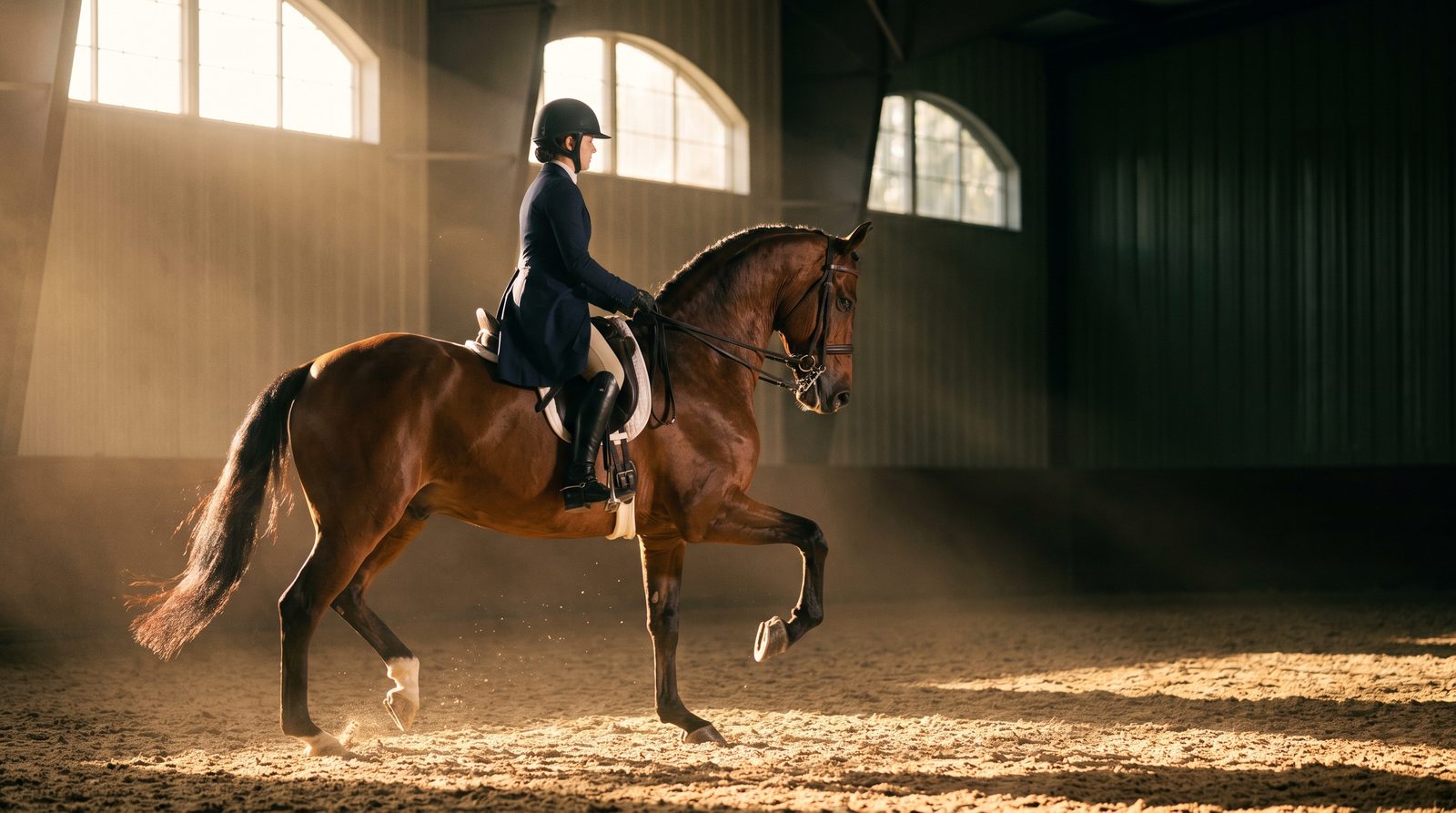
Saddle seat is an English riding discipline built for one purpose: to show off a horse's high, animated way of moving. The rider sits tall and slightly further back than in most other English styles, and the horse carries its head and neck up, with a lifted, springy trot that looks a little like dancing.
If you just heard the term for the first time, that's the short answer. The rest of this is the honest, longer version, written by people who ride it here in Phillipsburg, NJ.
Saddle seat is our specialty, so we're going to be straight with you about what it is, what it isn't, and who it actually suits.
Where saddle seat riding came from
Saddle seat grew out of American show and road-horse traditions, in a part of the country where people bred horses with a naturally high, comfortable, showy way of going. Those horses were used on the road and in the ring, and riders wanted a saddle and a seat that let that movement happen instead of dampening it.
That's the whole origin story in one line: the style was designed around the horse's movement, not the other way around. Almost everything odd-looking about saddle seat makes sense once you know that.
It sits inside the broader English family, alongside disciplines like hunt seat and dressage, but it is its own thing. Saddle seat is not hunt seat. It is not dressage. There is no jumping in it. If someone tells you saddle seat is "English riding," they're half right, the same way "a hatchback is a car" is half right.
The tack and the position, and why they look that way
Two things usually catch a newcomer's eye at a saddle seat barn: the saddle, and where the rider is sitting in it.
- A flat, lightweight cutback saddle. No horn, very little padding, and cut away at the front so it sits clear of the horse's withers. It's the least saddle you can reasonably ride in.
- The rider sits further back. Not slouched, but positioned behind the horse's shoulder rather than over the top of it.
- Hands carried up and forward. Often on a double bridle at the show level, with a longer, more upright rein than you'd see in western.
- Long legs, heels down, shoulders square. Upright and still, with the movement absorbed through the rider's back.
The seat position is the part that gets asked about most, so here's the reason. A horse lifts its front end from the shoulder. Weight sitting directly on or ahead of that shoulder pins it down. Sitting a little further back frees the shoulder to swing up and forward, which is exactly the motion the discipline exists to display.
So the flat saddle, the position, the carried hands — none of it is decoration. Each piece is getting out of the horse's way so the horse can do what it was bred to do.
In saddle seat, the horse is the star and the rider is the frame. A good saddle seat rider looks almost still. That stillness is the skill.
Which horses saddle seat suits
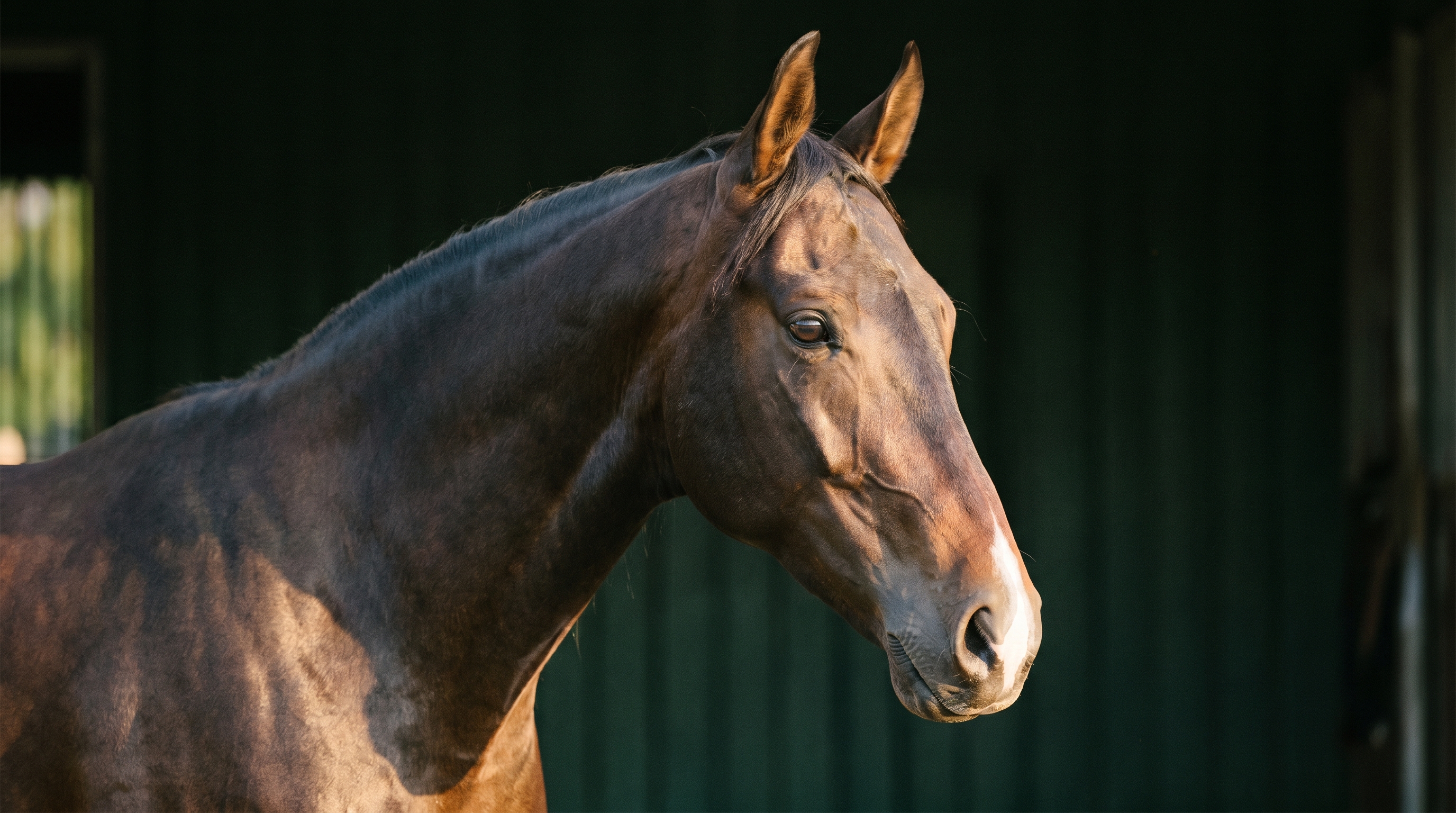
Saddle seat is built for high-stepping and gaited breeds, and above all for the American Saddlebred. That's the horse most people picture when they picture the discipline, and it's the breed we specialize in.
Saddlebreds have naturally elevated, brilliant movement and a famously people-loving temperament, which is a rare and useful combination. Other breeds you'll see in saddle seat classes include Morgans, Arabians, and National Show Horses. If you want the full picture of the breed at the center of it, our guide to the American Saddlebred covers temperament, history, and why they're easier to be around than their show-ring reputation suggests.
What matters for you as a beginner is simpler: you don't need a fancy horse to start. You learn saddle seat basics on a calm, experienced school horse that has already taught this to a lot of nervous people.
Is saddle seat riding abuse? An honest answer
This question comes up in searches, so we're going to answer it plainly rather than pretend it isn't asked.
Saddle seat itself is a riding position and a set of tack. There's nothing inherently harmful about a flat saddle, an upright rider, or a horse that moves with a lot of natural lift. Breeds like the Saddlebred move that way on their own, loose in a field, with nobody on them.
The concerns people have read about are generally aimed at specific practices used to artificially exaggerate a horse's action — most famously the soring of Tennessee Walking Horses, which is illegal under federal law. Those practices are not what saddle seat riding is, and they are not standard. It's a fair thing to worry about and a fair thing to ask out loud.
Here's the standard we'd hold any barn to, including ours:
- The horses are sound. They move freely and comfortably, in the ring and out of it.
- The horses are willing. They come to the gate, they tolerate handling, and they aren't braced or fearful.
- The barn is open. You can visit, watch a lesson, walk down the aisle, and ask questions without anyone getting cagey.
Our advice to any prospective student — and we'd give the same advice about a barn we'd never heard of — is go look. Watch a lesson before you sign up anywhere. Horses are not subtle about how they feel, and neither are the people who care for them. Ten minutes standing in a barn aisle will tell you more than any article, ours included.
What a saddle seat lesson actually feels like
Most people arrive expecting something stiff and formal, because the show photos look stiff and formal. A lesson is not that.
A first saddle seat lesson starts on the ground: meeting the horse, learning where to stand, and how to lead safely. Then you mount and walk. You spend the early lessons on the same things every beginner works on in every discipline — balance, steering, stopping, and getting used to how much a horse actually moves underneath you.
What's different is the emphasis. From early on, your instructor will talk about your posture more than you might expect, because in saddle seat your position is what lets the horse move well. That isn't fussiness for its own sake. It's the mechanism.
What you won't find is a rush. Nobody puts a beginner on a hot show horse at a big trot. If you want the full step-by-step, our walkthrough of what to expect in a first riding lesson covers the whole visit from the parking lot on.
Who saddle seat is a good fit for
Saddle seat suits you if a few of these ring true:
- You like precision. Posture, stillness, and small corrections feel satisfying rather than tedious.
- The look pulled you in. You saw a Saddlebred move and wanted to be part of that.
- You want something to work toward. Saddle seat is a show-ring tradition, and having classes and ribbons on the horizon motivates a lot of riders, kids especially.
- You want a discipline with depth. It takes a long time to get genuinely good at, which is a feature if you're the kind of person who likes that.
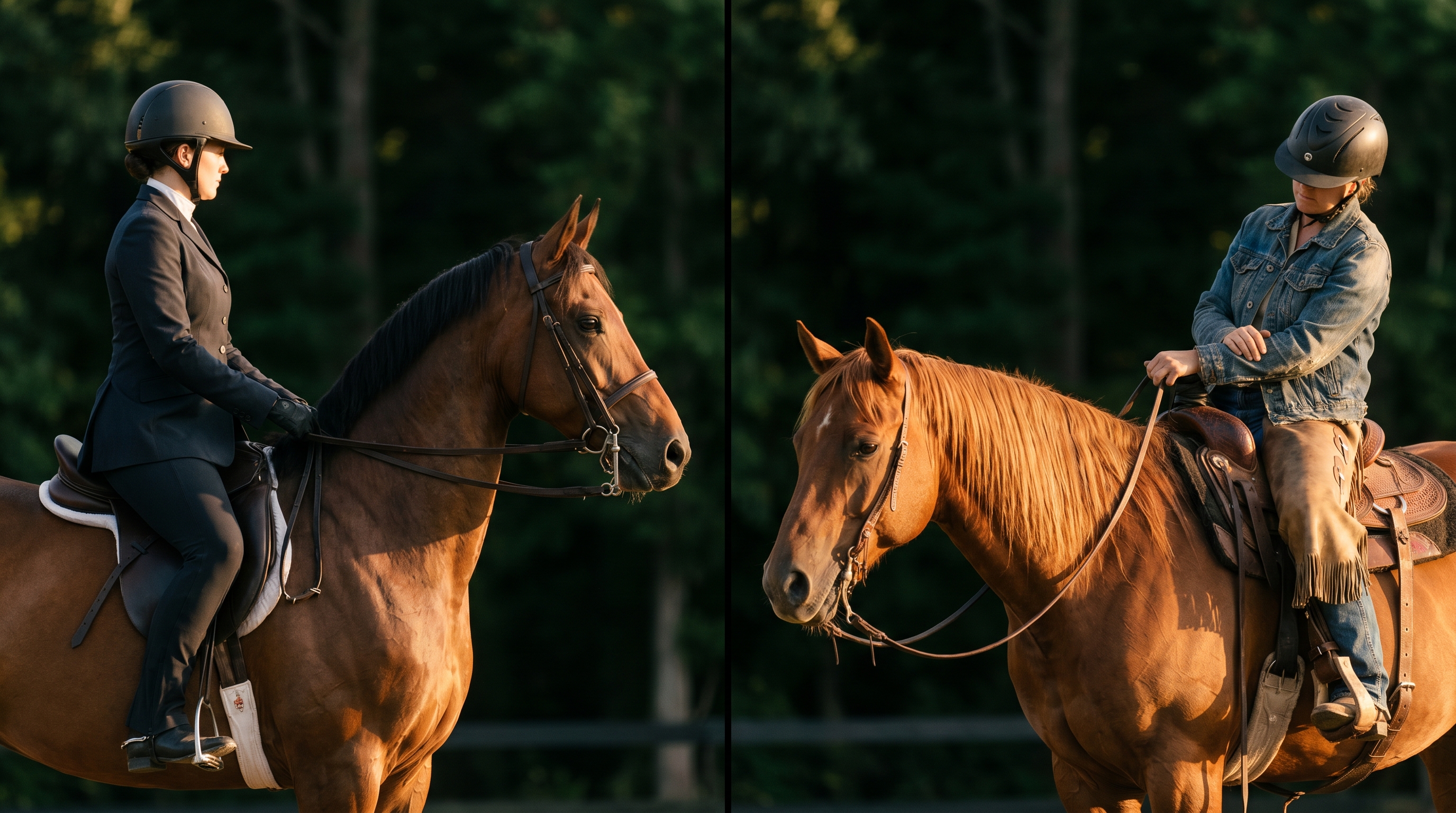
It may be less of a fit if you want the most cushioned, secure-feeling first ride possible. Plenty of nervous beginners start in western for exactly that reason, and there's no shame in it. We teach both, so we've got no stake in pushing you one way. Our side-by-side breakdown of saddle seat vs. western riding lays out the trade-offs without a sales pitch.
Lessons here start at age 6 and there's no upper limit. Plenty of our riders are adults who had never sat on a horse before they walked in.
See it in person
Reading about saddle seat only gets you so far. Watching a Saddlebred lift into a trot ten feet from where you're standing does the rest.
We're at 160 Esposito Road in Phillipsburg, open Tuesday through Sunday, 10 AM to 8 PM, closed Mondays. If you're weighing up barns and styles in the area, our complete guide to horse riding lessons in Phillipsburg, NJ puts the whole picture in one place.
When you're ready to try it, book the 30-minute trial lesson for $60 and your instructor will pair you with a horse suited to a first-timer. No experience, no gear, no obligation afterward. You can also call us at (484) 221-3950 or email info@thunderridgefarms.biz with any question, including the hard ones.