If you've never been on a horse, the hardest part of a first lesson is the part that happens in your head the night before. You picture something going wrong. You wonder if you'll look foolish, or if your kid will freeze, or if the horse will somehow sense that you're nervous.
Most of that fear comes from not knowing. So let's walk through what to expect in your first horse riding lesson, start to finish, the way it goes at Thunder Ridge Farms in Phillipsburg, NJ. No surprises, no hype. Just an honest picture of a first time on a working horse farm.
You don't need experience. You don't need to own a single piece of gear. You just need to show up.
Before you arrive: what to bring and how to feel ready
The night before, there's nothing special to do. No homework, no video to watch, no terms to memorize. You'll learn everything you need at the barn, in person, at your own pace.
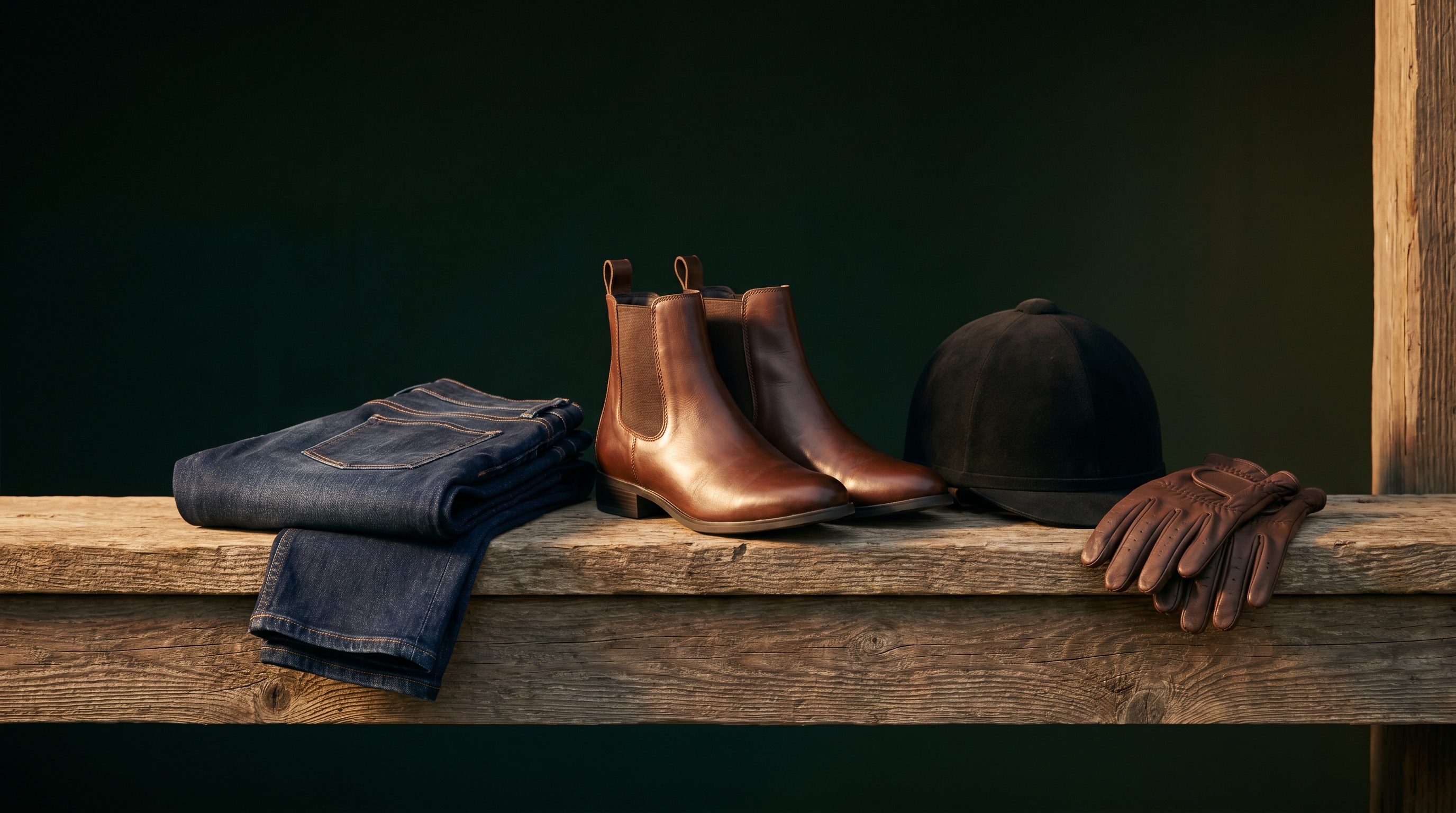
The only real prep is clothing, and it's simple:
- Long pants. Jeans are perfect. They protect your legs from the saddle and the stirrup leathers.
- Closed-toe shoes. Sneakers, boots, anything closed. A small heel helps your foot sit in the stirrup, but it isn't required for a first lesson.
- Skip the shorts, sandals, and dangly jewelry. That covers the don'ts.
We provide the helmet and everything else. If you want the full rundown before you come, we put together a short beginner clothing checklist that covers footwear and kids' outfits in more detail.
As for how to feel ready: come a few minutes early so you're not rushing in. A country road and Phillipsburg traffic can throw off your timing. Use the extra minutes to breathe, look around, and let the place settle you. A working horse farm tends to do that on its own.
You're not being tested. A first lesson is a meeting, not an exam. Nobody is grading your posture on day one.
Step 1 — Meeting your horse (the part most kids fall in love with)
When you arrive, someone from our team walks you out to the barn. You won't be pointed at a horse and left to figure it out. The first thing that happens is an introduction.
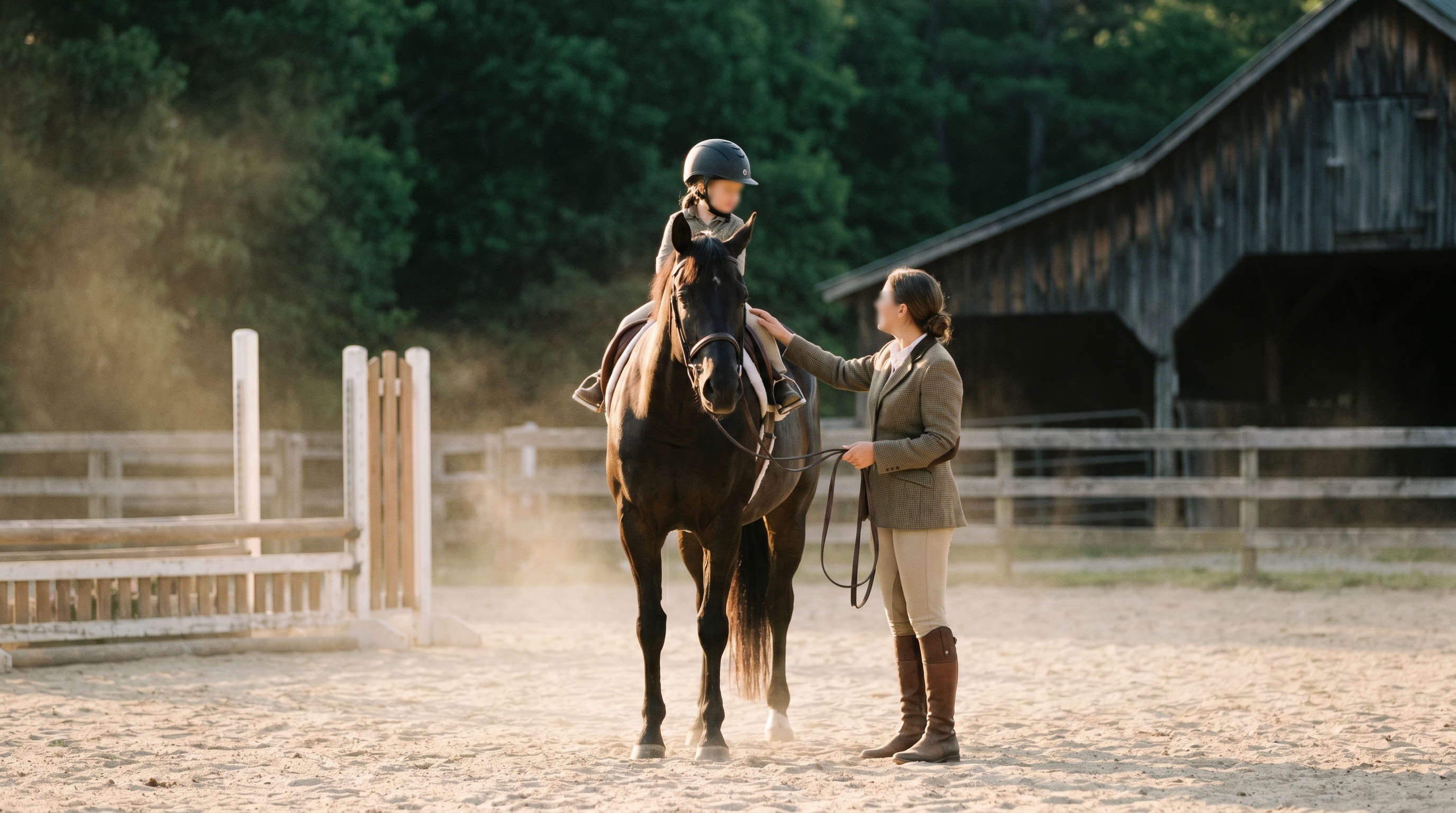
We match first-time riders with a calm, well-trained horse that has done this many times before. These are patient, people-loving animals that have spent years around beginners. You'll learn how to approach safely, where to stand, how to offer your hand, and how to pet them so both of you relax.
This is the moment that catches people off guard. A horse up close is enormous and warm and gentle, and the fear you carried in usually melts the second you feel one breathe against your palm. For a lot of kids, it's the part they talk about all week. They came for the riding and fell for the horse.
Take your time here. There's no clock on getting comfortable, and a rider who's at ease on the ground learns faster once they're in the saddle.
Step 2 — Learning the safety basics on the ground
Before anyone gets on a horse, we cover the ground rules. This is the quiet, important part that good barns never skip, and everything else is built on it.
On the ground, you'll learn:
- How to stand and move safely around a horse — where the safe zones are and the spots to avoid.
- How to lead a horse — walking beside them calmly and confidently.
- How to mount — the step-by-step of getting on, done slowly the first time.
- What to do with your hands and feet — how to hold the reins and where your feet sit in the stirrups.
We teach all of it in plain language, for someone who has never touched a horse. No jargon, no assumed knowledge. If something doesn't click, we explain it a different way until it does.
This step is also where a lot of first-timers stop being nervous for good. Once you understand why a horse reacts the way it does, it stops feeling unpredictable. Teaching safety first is what keeps the whole hour calm. If safety is your biggest worry, especially for a child, we go deeper on how we handle it in our honest guide on whether horse riding is safe for beginners.
Step 3 — Your first guided ride with a trainer beside you
Now the part you came for. With everything you just learned, you'll mount up and ride, and a trainer stays right beside you the whole time.
You're never alone on the horse. For a first lesson, that usually means the trainer keeps a hand close or the horse on a lead, so there's always a second set of eyes and hands on the situation. Nobody gets sent off to figure it out solo.
What you'll actually do on a first ride is gentle and achievable:
- Walk — getting used to the rhythm and balance of a moving horse.
- Steer — learning how the reins and your body cue the horse left and right.
- Stop — the most reassuring skill there is, and one of the first you'll master.
No galloping. No jumping. Nothing that gets faster than you're ready for. The point of a first ride is to discover what riding actually feels like, not what it looks like from the fence. The difference is real, and you understand it the second you feel a horse move underneath you.
By the end, most people are grinning. The nerves they walked in with seem a little silly in hindsight, which is the whole point.
How long the lesson lasts and what happens after
Give yourself an unhurried block of time. We won't rush the meet-and-greet, the ground basics, or the ride itself. We'd rather you leave relaxed and confident than crammed through a checklist, so the visit takes as long as it takes.
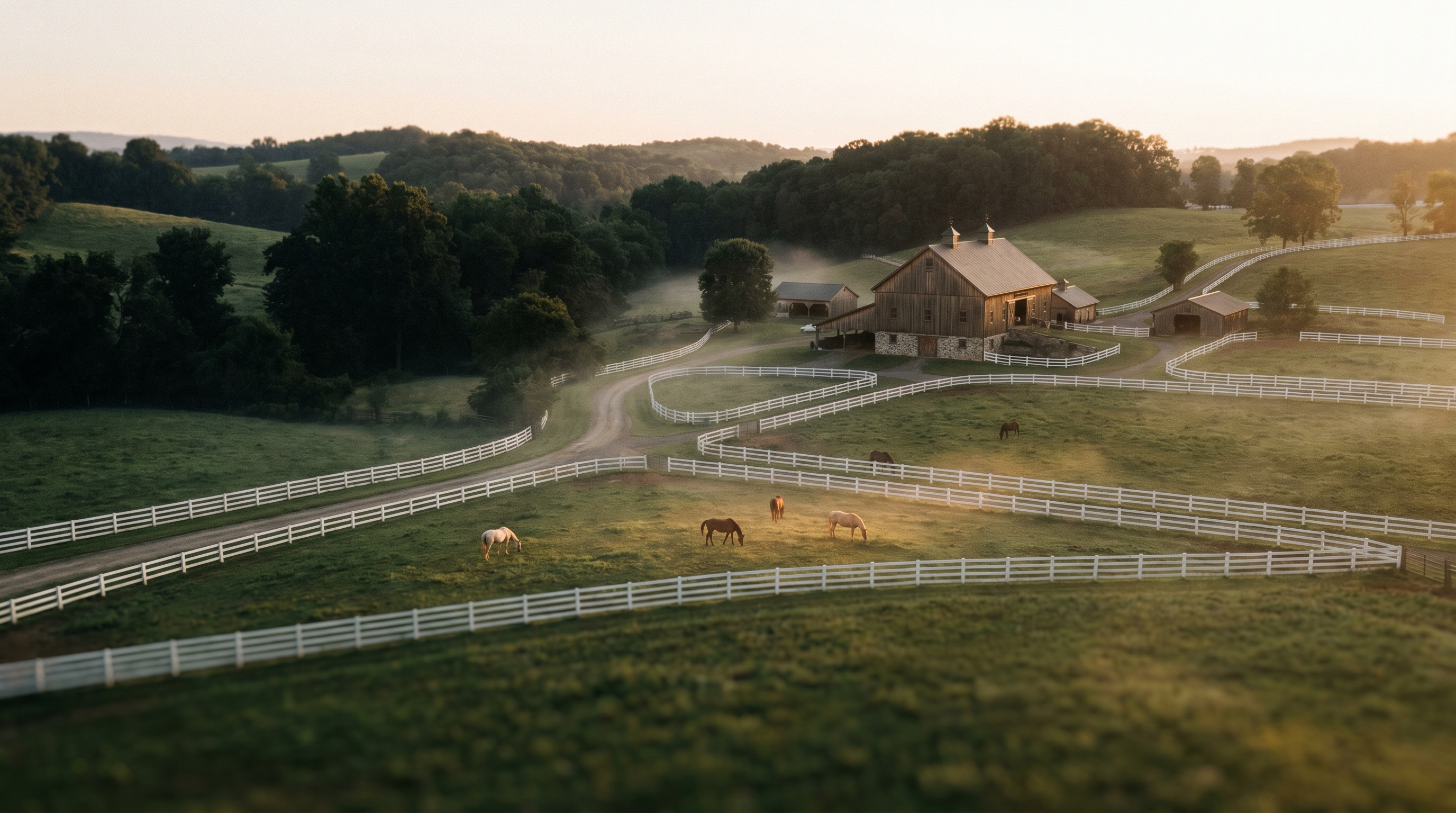
When the riding wraps up, you'll learn a little about cooling the horse down and saying goodbye, and then you're free to look around. The farm sits on rolling Warren County hills with white fences and quiet pastures. Plenty of families linger afterward, walk the grounds, and meet a few more horses before they head home.
After your 30-minute trial lesson, there's no obligation to do anything. If you'd like to keep going, we'll talk through lesson options in person and find the right fit for your goals and schedule. Part of that is picking a direction: most beginners start by weighing the difference between English and Western riding, and every so often someone decides they'd rather learn driving a horse from a cart than ride at all. If it turns out riding isn't for you, you've still spent a genuinely good morning on a beautiful farm. Either way, you leave knowing.
For the bigger picture of how lessons work, who they're for, and the two riding styles we teach, our complete guide to horse riding lessons in Phillipsburg, NJ pulls it all together in one place.
Ready to try it? Book your 30-minute trial lesson
If you've read this far, the unknown probably feels a lot smaller than it did. A first lesson is calm, guided, and built around one beginner at a time, which is why we keep first-lesson spots limited each week. Every new rider gets real one-on-one attention from a trainer, and that only works in small numbers.
We're open Tuesday through Sunday, 10 AM to 8 PM, and closed Mondays. Weekend spots fill up first, so the sooner you reach out, the sooner we can get your rider on a horse.
When you're ready, book your 30-minute trial and we'll call to confirm a day and time that works. You can also reach us anytime at (484) 221-3950 or info@thunderridgefarms.biz. We can't wait to meet you at the barn.