If you're asking whether horse riding is safe for beginners, you're asking the right question, and you deserve a real answer instead of a sales pitch. The honest version: riding carries some inherent risk, because a horse is a large animal with a mind of its own. A good barn doesn't pretend that away. It plans around it, teaches you to manage it, and never puts a beginner in a spot they're not ready for.
So when a parent asks us "how dangerous is horseback riding for a child," we answer the way we'd answer a friend: far safer than most people picture, as long as it's taught properly, on the right horse, with the right gear and a trainer who stays at your side. Here's how that actually works at Thunder Ridge Farms.
The honest answer: riding has risks, and good barns plan for them
Start with the honest part. Horses are big. They can spook. Someone who has never been around one doesn't yet know how to stand, how to lead, or how to sit. Those are real factors, and anyone who tells you riding carries zero risk isn't someone you want teaching your kid.
What matters is where the risk actually comes from. In our experience, the trouble almost always traces to a few avoidable things: the wrong horse for the rider, no helmet or a badly fitted one, a beginner left alone before they were ready, or skipping the ground lesson to "just get on." A barn that takes safety seriously closes every one of those on purpose. That's the line between riding being dangerous and riding being one of the best things a kid or an adult ever talks themselves into.
The point of a first lesson isn't to look impressive. It's to send you home thinking "I can do this" — calm, in control, and not rushed for one second of it.
How we keep first-time riders safe at Thunder Ridge
Our whole approach to horse riding safety for beginners runs on one rule: never rushed, never alone. Here's what that looks like in a first lesson.
- Safety comes first, before anyone gets on. Before a foot goes near a stirrup, we cover the ground rules — how to walk up to a horse, where to stand, how to lead, how to mount, what to do with your hands and feet. Slow and simple, built for someone who has never done any of this.
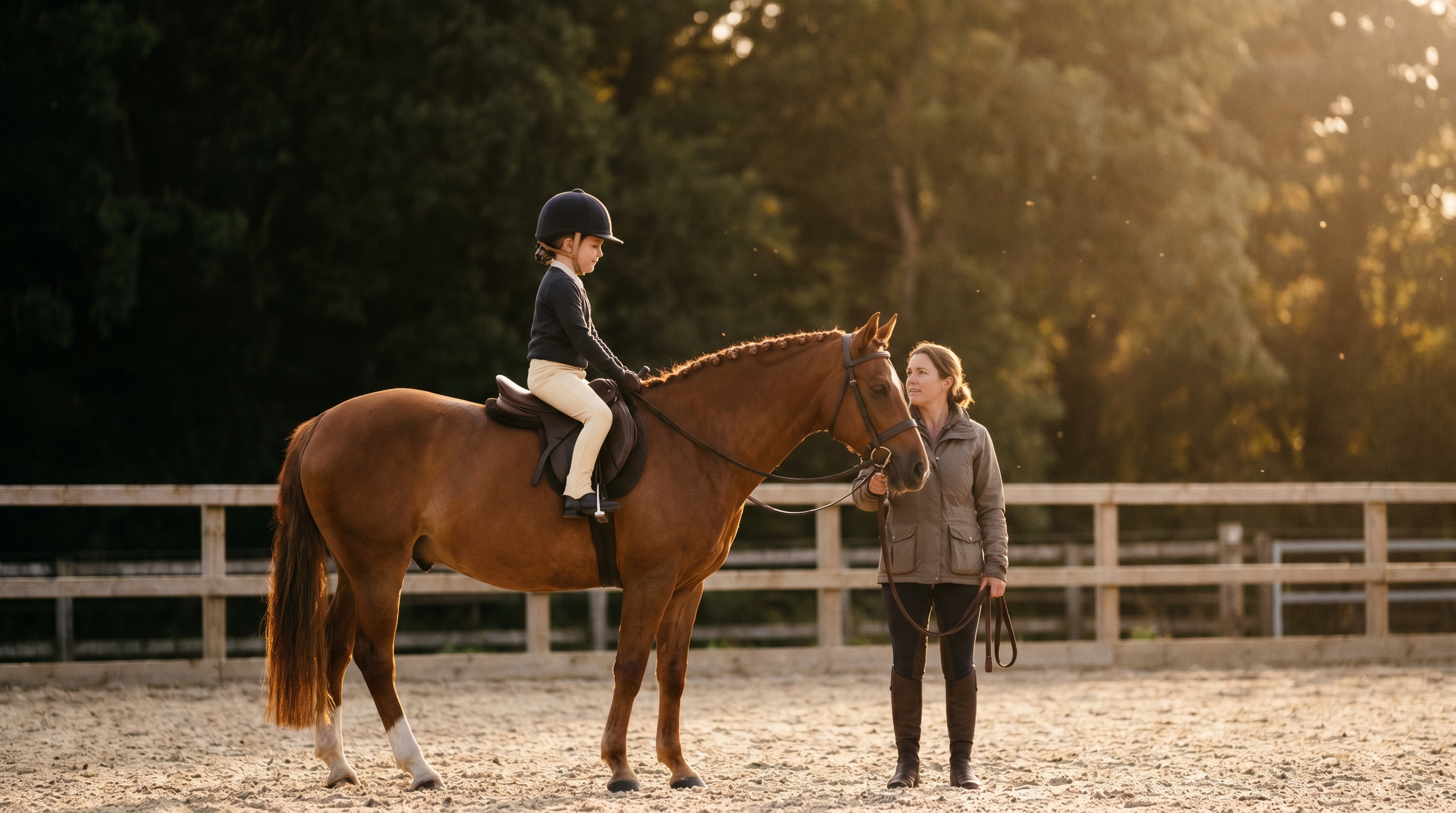
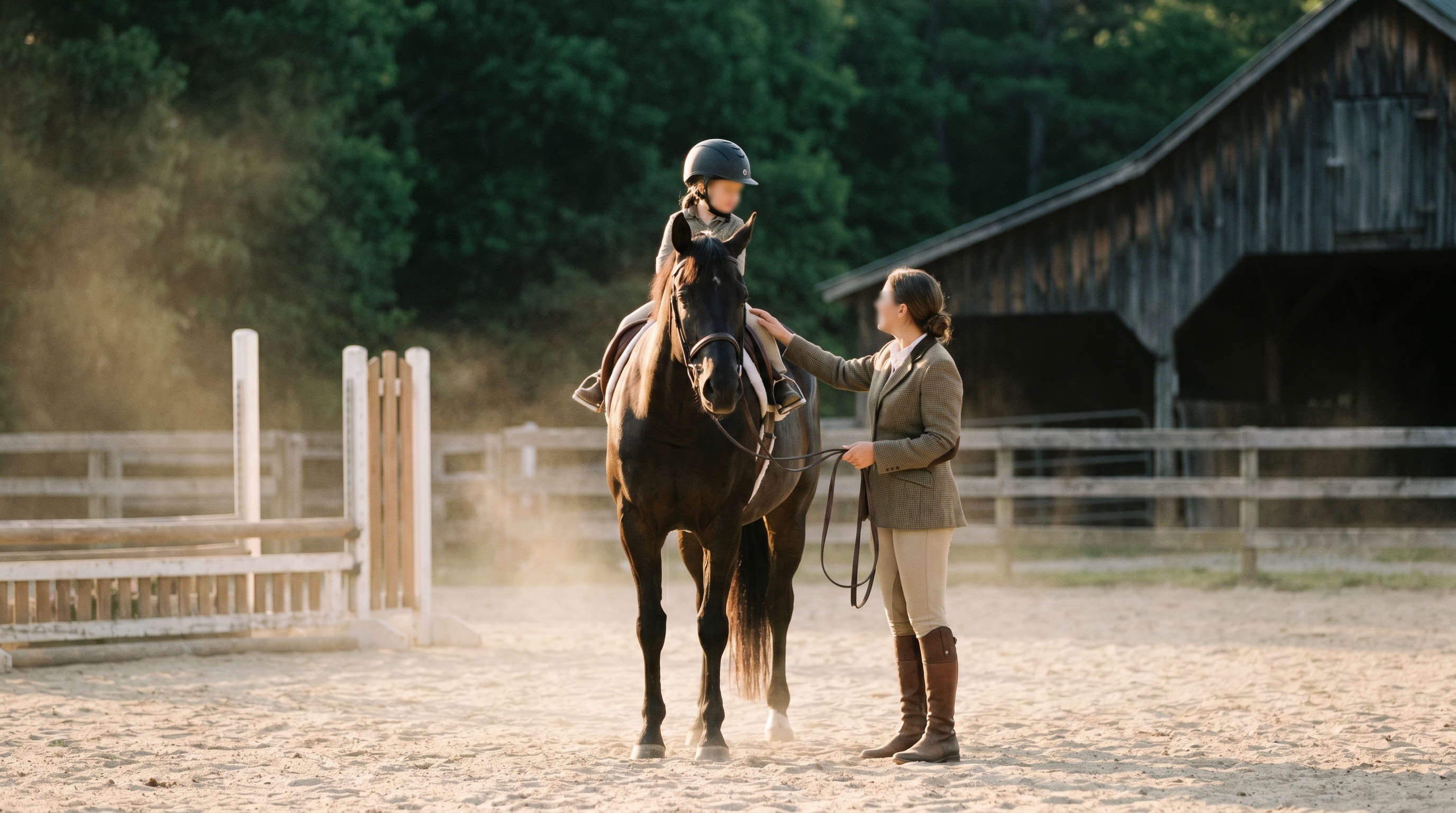
- A trainer stays beside you the whole ride. For a first-timer, that means a trainer right at your side — hand on the lead, watching your seat, talking you through each step. You're never sent off to figure it out on your own.
- We move at your pace. Walk, steer, stop. We don't push ahead because a lesson is "supposed" to cover more ground. A nervous rider gets extra time at the walk; a confident one earns the next step when they're ready.
- The horse is chosen for the rider. First-timers ride a steady, well-trained horse picked for beginners, never a young or high-energy one. More on why that matters in a second.
If you want the fuller picture of how a first session unfolds minute by minute, we walk through it in our guide to what to expect at your first horse riding lesson.
Why the right lesson horse matters most for beginners
Most people assume safety comes mainly from the rider's skill. For a beginner, it comes mainly from the horse. The single biggest safety call a barn makes for a first-timer is which horse they sit on, and it should never be a young, green, or high-energy animal.
This is one reason we specialize in the American Saddlebred. They're smart, elegant, and genuinely fond of people — a breed that tends to stay calm and responsive with a beginner on board. Our lesson horses are used to new riders who wobble, grab the reins too tight, or freeze up for a second, and they take it in stride instead of reacting to it. A horse like that forgives the mistakes a beginner is going to make, and that does more for safety in the first hour than anything the rider does. Breed is only part of it, though. Plenty of breeds produce steady school horses, and our rundown of the best horse breeds for beginners explains why an individual horse's training and age matter far more than the name on its papers.
So when a parent asks "is horseback riding safe for kids," a big part of the real answer is: it depends on the horse you put them on. We make sure it's the patient one.
Helmets and gear: what's required and what we provide
A properly fitted helmet is required for every rider at Thunder Ridge, beginner or not, and you don't need to own one. We fit you with one when you arrive, so there's nothing to buy ahead of time.
For everything else, the only thing we ask you to bring is sensible clothes:
- Long pants — jeans are perfect. They keep your legs from rubbing against the saddle and stirrup leathers.
- Closed-toe shoes — boots, sneakers, anything closed. A small heel helps stop your foot from sliding through the stirrup, but it's not required for a first lesson.
- No shorts, no sandals. That's honestly the whole dress code.
We handle the helmet and the rest. No gear to buy, no special equipment, no reason to put off a first lesson until you are "properly kitted out."
Special safety notes for kids (and what we tell parents)
Parents of younger riders tend to ask us the same three things, so here's what we tell them straight.
On age: we start riders at 6 and up. If you're not sure your child is ready, call and we'll talk it through — readiness is about attention span and willingness to listen, not just a birthday. There's more on that in our note on what age kids can start riding lessons.
On supervision: a trainer is hands-on beside your child for the entire ride, and you're welcome to watch the whole thing from the rail. A lot of parents tell us watching that first lesson did more for their nerves than anything we could have said.
On pressure: there isn't any. If a child shows up and decides they'd rather pet the horse than ride today, that's a perfectly good first lesson. We'd rather build a confident rider over a few visits than talk a nervous one into the saddle on day one.
See our safety approach in person: book a 30-minute trial
The thing that settles nerves isn't reading about safety — it's standing at the rail watching it. You see the helmet go on, the ground rules get taught first, the steady horse, and the trainer who doesn't step away. That's why your first lesson is a 30-minute trial for just $60, with no obligation.
We keep first-lesson spots limited each week so every new rider gets real one-on-one time with a trainer, and weekend slots go first. If you'd like to come see how we keep beginners safe, book your 30-minute trial or call us at (484) 221-3950. You can also read more about our horse riding lessons in Phillipsburg, NJ before you visit.
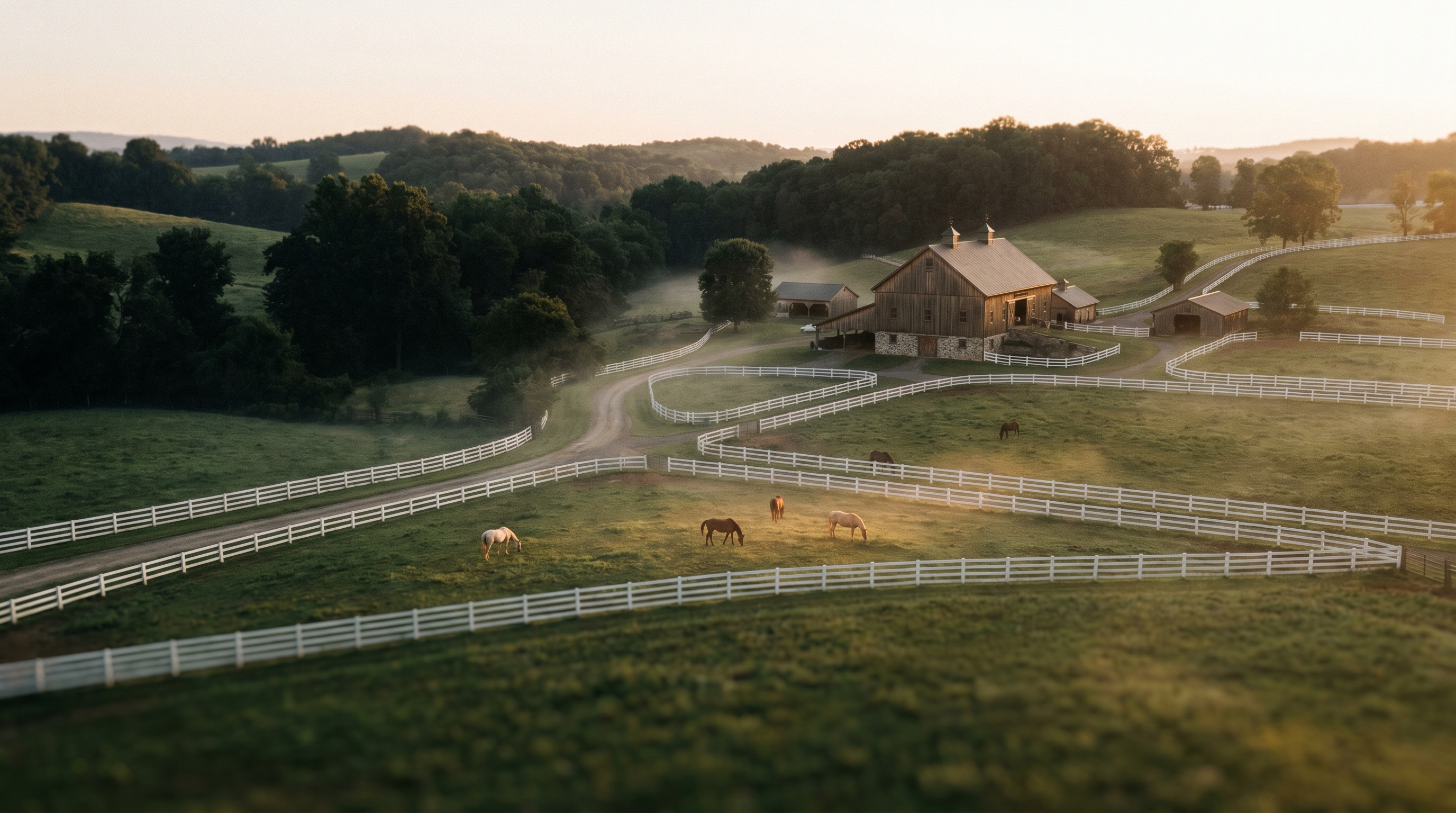
Come see if it fits. If it does, we'll talk about what comes next. If it doesn't, you'll have spent a good hour on a beautiful farm — and you'll know firsthand that riding done right is a lot safer than it looks from the outside.