If you're picking a first riding style, the saddle seat vs western riding question is one of the first forks in the road. And most beginners have no idea what either term actually means. That's normal. You're not behind. You just haven't seen the two disciplines up close yet.
We teach both here in Phillipsburg, NJ, so we have no reason to nudge you one way or the other. This is the honest version: what each style is, how the saddle and the posture and the whole feel differ, and a simple way to decide where to begin. No glossary required.
What is saddle seat riding?
Saddle seat is a refined, English-based discipline built to show off a horse's high, animated way of moving. It came up around the showiest breeds, and the one it's tied to most closely is the American Saddlebred, the horse we specialize in.
So when people ask what saddle seat riding actually is, the short version is this: it's the upright, elegant style you've probably seen at a horse show, where the horse carries its head and neck up tall and the rider sits straight and still while the horse does something dramatic underneath.
A few things set it apart:
- The horse is the star. The whole point is to display lifted, brilliant movement, especially at the trot.
- The rider sits tall and slightly back. Long posture, square shoulders, hands carried up.
- It's a show-ring tradition. Most saddle seat riders are working toward classes, ribbons, and that polished presentation.
If you've ever watched a Saddlebred float around a ring and thought it looked like dancing, that was saddle seat. Want the full story on the breed behind it? We wrote a whole guide to the American Saddlebred.
What is western riding?
Western riding comes straight out of ranch work: moving cattle, covering long miles, staying secure and comfortable in the saddle for hours. Everything about it is built around control, calm, and a grounded seat.
You'll know it on sight. The deep saddle with the horn on the front. The rider holding the reins loosely in one hand. The easy, unhurried posture. It's the picture most people have in their head when they imagine riding a horse.
What defines western:
- A big, supportive saddle. Heavier and deeper, with that signature horn, and built to keep you secure.
- One-handed, light contact. The horse learns to read subtle rein and leg cues instead of constant hand pressure.
- A relaxed, balanced seat. You sit deep and easy, weight dropped down through your heels.
For a lot of nervous first-timers, western feels safer to start in. There's more saddle around you and the pace is calmer. That's not automatically the right call, but it's a real reason plenty of beginners lean toward it.
Saddle seat vs. western: tack, posture, and how each one feels
Here's the difference between saddle seat and western, side by side. This is the part most beginners actually came for.
Tack: what you're actually sitting in
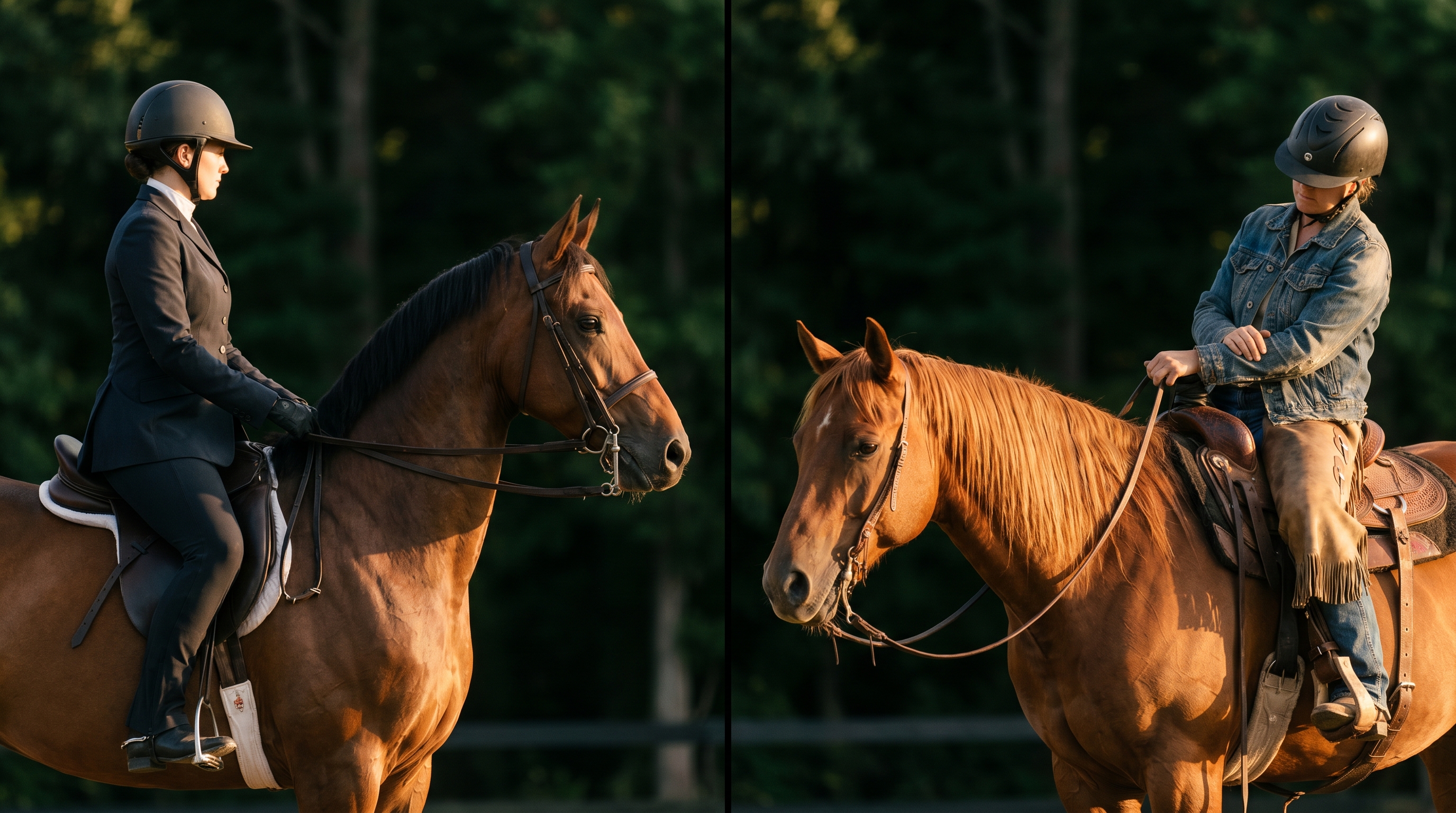
- Saddle seat: a flat, lightweight English-style saddle with no horn. It keeps you in close contact with the horse and frees the shoulders to move.
- Western: a deep, heavy saddle with a horn, fenders, and a lot more leather around you. More security, more bulk, more seat to settle into.
The two saddles hold you differently. Western gives a beginner more to sit in; a flat English saddle gives closer contact and asks more of your balance. Neither one prevents a fall, and correct fit with properly set stirrups matters more than which tradition it came from.
Posture: what your body is asked to do
- Saddle seat: tall and upright, sitting slightly back, hands carried high. Formal and precise. It asks for core strength and stillness.
- Western: relaxed and grounded, shoulders soft, one hand low. Less rigid, more about staying quietly balanced.
How each one feels to ride
Saddle seat asks you to perform with the horse. Western asks you to partner with the horse. Neither one is harder across the board. They just test different things.
Saddle seat tends to suit riders who like precision, presentation, and a goal to chase, like shows and ribbons. Western tends to suit riders who want a calm, confidence-building start and a more casual feel. This is also where folks searching English versus Western riding usually land: saddle seat is one branch of the English tree, and western is its own thing entirely. If you're still deciding between the two big traditions rather than between two specific styles, start with that wider comparison and come back here afterward.
Which style should a beginner or child start with?
Here's the honest answer most barns won't lead with: for your first few lessons, the style matters less than the fundamentals. Balance, steering, stopping, and getting comfortable around an animal that weighs half a ton are the same skills no matter which saddle you're sitting in.
That said, here's a simple way to think about which riding style is best for beginners in your situation:
- Start western if you (or your child) want the most secure, calming first ride, or you're not yet sure riding will stick. The bigger saddle and slower pace take the edge off the nerves.
- Start saddle seat if you're drawn to the elegance and the show ring, or you already love the look of a Saddlebred moving and want to work toward competition.
- Honestly? Try both. Most kids and adults can't say what they prefer until they've sat in each saddle once.
If it's your child asking for lessons, our companion piece on what to expect at a first riding lesson walks through exactly how that first day goes, for both styles.
Why Thunder Ridge teaches both (and how that helps you decide)
A lot of barns only teach one discipline, so their advice naturally points you toward what they happen to offer. We teach both saddle seat and western, plus driving, which means we can put you on the right horse for the style you want to explore instead of steering you somewhere just because it's all we do.
It also means you're not locked in. Start western, fall for the show ring, and want to switch to saddle seat? Easy. Same instructors, same farm, no starting over somewhere new. As a riding lesson barn serving Warren County and the Lehigh Valley, we'd rather help you find the style that actually fits than push you into one.
We're American Saddlebred specialists, so saddle seat runs deep here. But we'll be the first to tell you western is the better starting point for plenty of riders. That's the kind of straight answer you want from the people teaching you.
Try a style for yourself — book a 30-minute trial
You can read comparisons all day, but ten minutes in the saddle will tell you more than any article. That's exactly why your first lesson is a 30-minute trial for just $60. Come out, meet the horses, and try riding with zero pressure and low risk before you decide anything.
No experience and no gear needed. We'll match you to a gentle, well-trained horse and a patient instructor, and you'll leave knowing whether saddle seat, western, or just more time around horses is your next step.
We keep a limited number of first-lesson spots open each week so every beginner gets real one-on-one attention, and they tend to fill up fast. Grab a spot here, or call us at (484) 221-3950. Curious about everything else we do? Take a look around the farm.