If you're trying to figure out how to choose a horse riding lesson barn, here's the good news: you don't need to know a thing about horses to spot a good one. The barn that handles a nervous first-timer well, puts a calm school horse under them, and keeps a trainer right at their side is the one worth your time. The fancy sign out front tells you almost nothing.
Most people compare barns by the wrong things. They scroll the photos and they check the price of a lesson. What actually matters is harder to see in a listing. Below are the eight signs we'd tell a friend to watch for, and at the end, the easiest way to judge any barn for yourself.
Start with how they treat a total beginner
Call two or three barns and listen to how they answer one question: "My kid (or I) have never been on a horse. Is that okay?" A good barn lights right up at that. Total beginners are who we teach every week. A barn that sounds put out, or rushes you off the phone, or makes you feel behind before you've started, is telling you something useful.
The right barn meets a beginner where they are. Some kids want to canter by lesson two. Some adults are happy just learning to lead a horse and feel safe standing next to one. Neither is wrong. If you're nervous about the whole idea, that's normal, and worth reading is horse riding safe for beginners before you decide.
Look at the lesson horses, not just the facility
A clean barn with a tidy arena is nice. But the horses your beginner actually sits on matter a lot more than the buildings. A good lesson program keeps steady, patient school horses who've done this a thousand times and don't spook at a wobbling new rider.
When you visit, watch the horses being used for lessons. You want to see:
- Calm animals standing quietly while a beginner climbs aboard
- Horses that answer a soft cue instead of a fight
- An honest answer when you ask, "is this horse good for a first-timer?"
A barn that puts a green rider on a hot, green horse is cutting corners. The lesson horse is the most important piece of equipment in the place.
Is a trainer beside every first-timer?
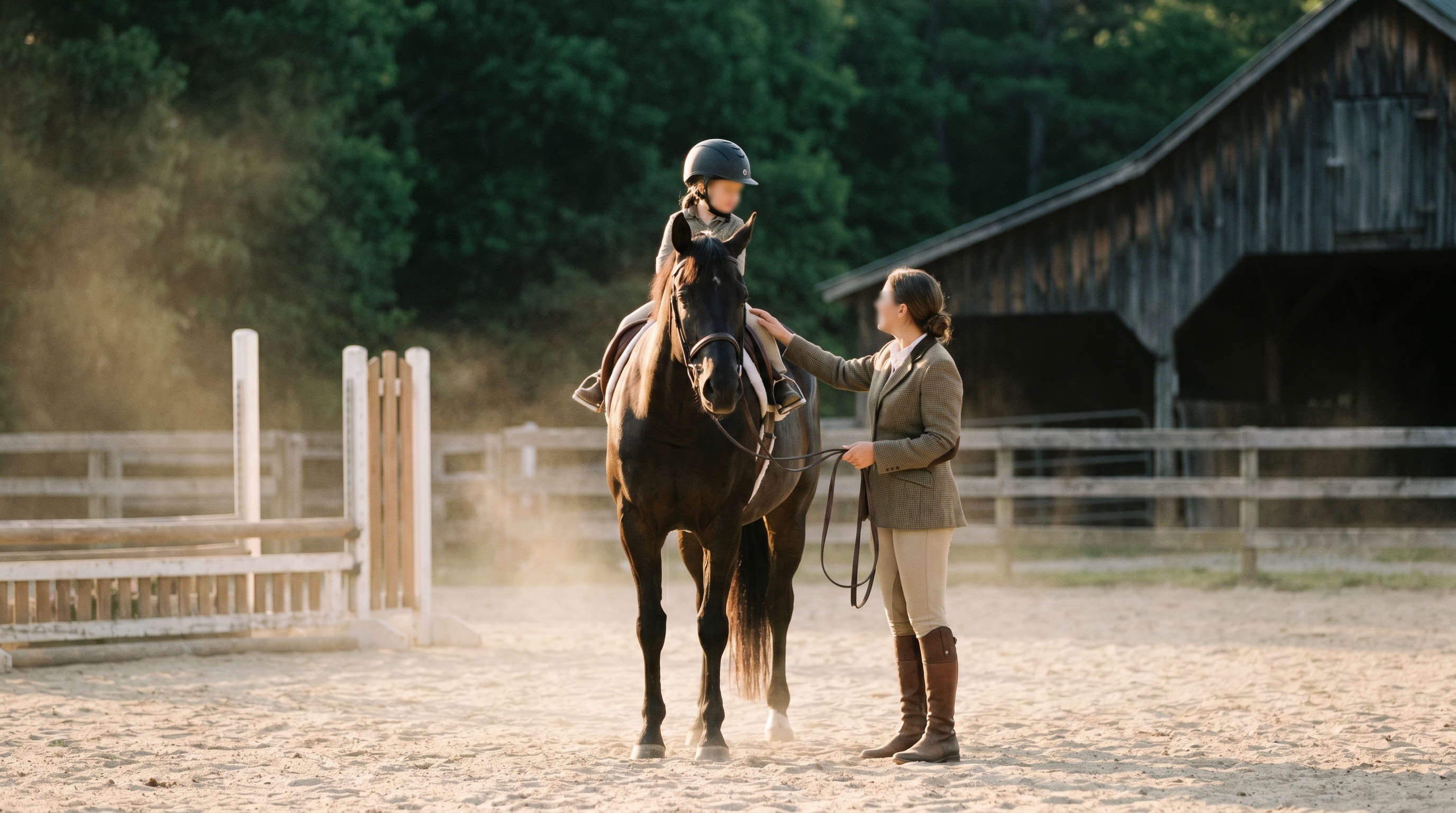
This one is simple. For a true beginner's first lessons, a trainer should be right there on the ground, walking beside the horse or coaching from a few feet away. Not watching from a chair. Not running four riders at once and hoping for the best.
That hands-on attention is the whole difference between feeling safe and feeling abandoned. When you tour a barn, just ask: "Who is with my child during the lesson, and how close are they?" The answer tells you most of what you need to know about choosing a horseback riding instructor who'll actually keep a beginner steady.
The fastest way to know if a barn is right is to watch one beginner lesson from the rail. In five minutes you'll see whether the trainer is teaching or just supervising.
Safety and gear: what a good barn provides
A properly fitted helmet is non-negotiable for riding, and a good beginner barn provides one. You shouldn't have to buy gear before you've decided whether you even like the sport. At our farm a fitted helmet is required and provided for every rider, so all you bring is long pants and closed-toe shoes.
When you're comparing barns, ask what they supply and what they expect you to bring. A barn that hands a first-timer a helmet, explains the rules plainly, and keeps the footwear requirements sensible is a barn that takes safety seriously without making it scary. If you want the full rundown of how a first visit runs, our guide on what to expect at your first horse riding lesson walks through it step by step.
Does the barn teach the style you actually want?
This one gets skipped because beginners assume riding is riding. It isn't. A barn that only teaches one discipline will, quite naturally, tell you that discipline is the right place to start. It might well be. You'd just never hear otherwise.
So ask what they teach, and why. If you don't yet know what you want, the honest starting point is understanding the difference between English and Western riding, because nearly every barn you call sits somewhere on that map. A barn that explains the trade-offs instead of selling you its own answer is a barn worth booking with.
A pressure-free trial beats a hard upsell
Here's a real tell. Some barns won't let you try a single lesson without signing up for a package, a membership, or a season's worth of dates. That's a lot to commit to before you know if your kid even likes horses.
A good barn lets you come once, with no obligation, and decide for yourself. It should feel like a tryout, not a contract signing. If a barn is leaning on you to commit before you've ridden, slow down. The right place is confident enough to let one lesson speak for itself.
Pricing past that first lesson is a fair question, and a straight barn will talk it through with you in person rather than burying it. Ongoing rates depend on how often you ride and what you're working toward, so those are best sorted out face to face.
Local, full-service, and easy to actually visit
The best barn on paper is no good if it's a hassle to reach every week. Riding is a habit, not a one-time trip, so a barn you can get to easily beats a slightly fancier one far away. A good beginner riding barn near me wins almost every time.
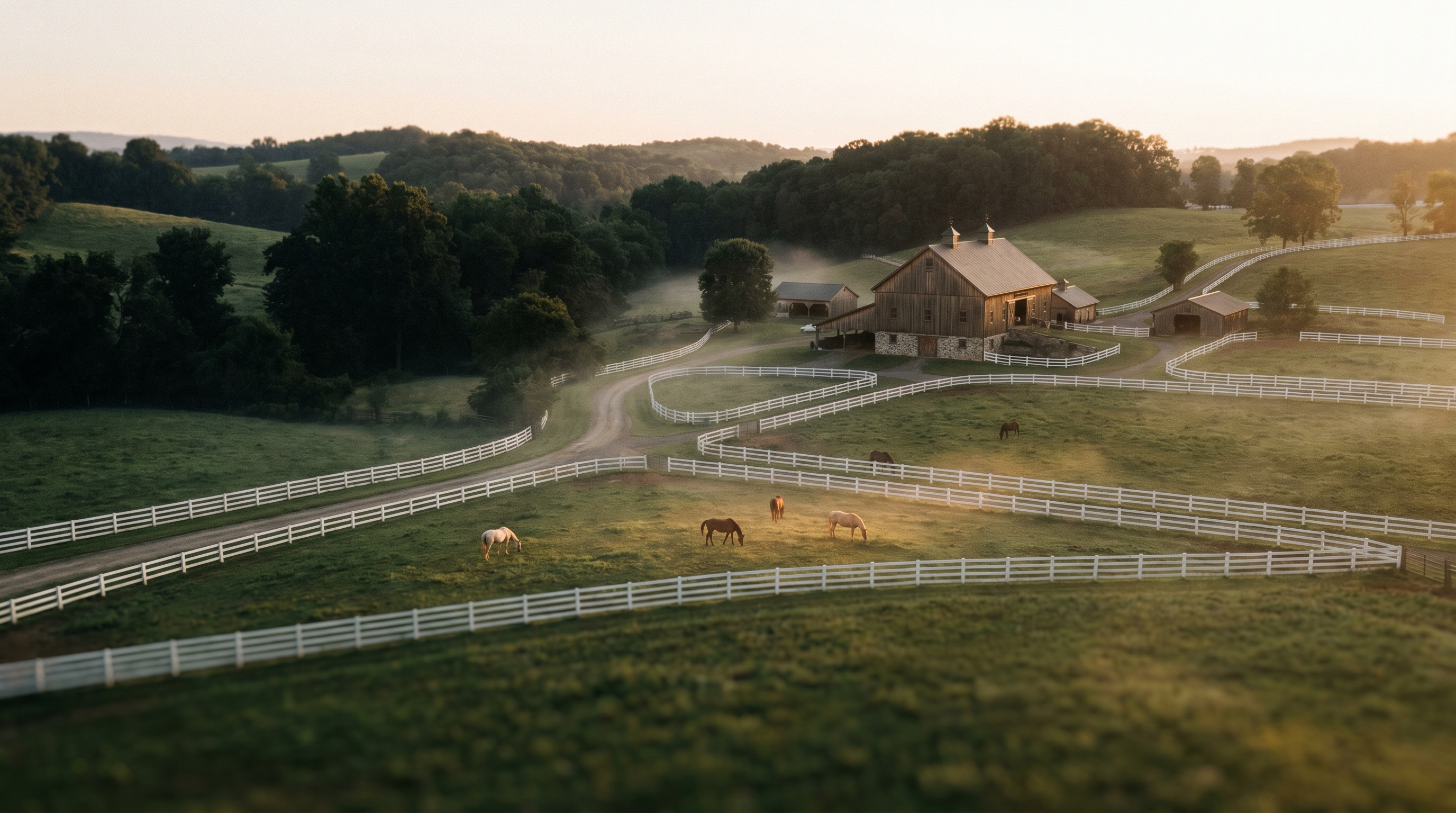
A full-service working farm is also a plus. A place that does boarding, training, breeding, and sales, not just an hour of lessons, usually has the horses, the staff, and the daily routine of a serious operation. You can feel the difference the moment you walk in. We're a working American Saddlebred farm in Phillipsburg, NJ, open year-round, Tuesday through Sunday, and you can read more about our horse riding lessons in Phillipsburg, NJ to see how it all fits together.
One more practical note on what to look for in a riding lesson barn: ask how they handle weather. A good barn keeps in touch and reschedules rather than leaving you guessing.
See if we're the right fit — book a 30-minute trial
You can read every checklist on the internet and still not know if a barn is right until you stand in it. That's exactly why we offer a low-risk way in. Your first lesson is a 30-minute trial for $60, with no obligation and no package to sign. Come watch how we treat a beginner, meet the lesson horses, and see the trainer work right beside your rider.
If it's a fit, great. If it's not, you've spent $60 and an afternoon learning what you're looking for. Either way you walk out knowing more than any review could tell you. Ready to judge for yourself? book your 30-minute trial or call us at (484) 221-3950, and we'll find a time that works.