If you live in Bethlehem and you've been searching for horseback riding lessons, you already know the Lehigh Valley has barns. So the honest question isn't whether lessons exist near you. It's whether it's worth crossing the river and the state line to ride at one particular farm.
Here's the straight answer. Thunder Ridge Farms is at 160 Esposito Road in Phillipsburg, NJ 08865. We are not in Bethlehem and we don't have a second location there. If you ride with us, you're driving to us. This post is about whether that drive earns its place in your week.
Let's deal with the drive first
Phillipsburg sits across the Delaware River from Easton, and Bethlehem sits west of Easton along the same Route 22 and I-78 corridor you already use for everything else. Plenty of Lehigh Valley families make that run without thinking twice.
We won't quote you a drive time, because your street, the hour, and the bridge traffic all change it. Pull up the address, look at it on your own map, and decide with real numbers instead of a promise from a website. That's the fair way to judge it.
The state line is the part that gets in people's heads more than the distance does. It shouldn't. Nothing about a New Jersey barn changes what you bring, what you wear, or what a lesson feels like. It's a bridge, not a border crossing.
"Is there really nothing closer?"
Usually there is something closer. That's true almost everywhere, and pretending otherwise would be silly. The useful question is what the closer option actually is.
Most general lesson barns are exactly that: a place that gives lessons. That can be perfectly good, especially if all you want is an hour on a horse now and then. But a lesson-only barn has a ceiling built into it, and families tend to find that ceiling when a rider wants more than the barn was set up to give.
So what you're weighing isn't ten minutes of driving against ten minutes of driving. It's a lesson program against a working farm. Those are different things, and they're worth comparing honestly before distance decides it for you.
Here's a fair way to test it. Call the barn nearest you and ask what happens after the first year. Ask who trains the horses your rider will be on, and what someone does there once they've outgrown a beginner group. If the answers are good, ride there. Genuinely. Nobody should drive further than they need to.
What a working farm gives a beginner that a lesson barn can't
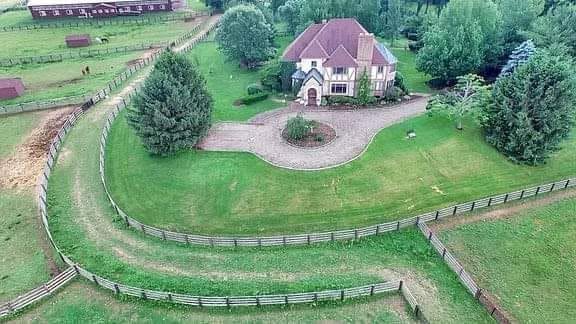
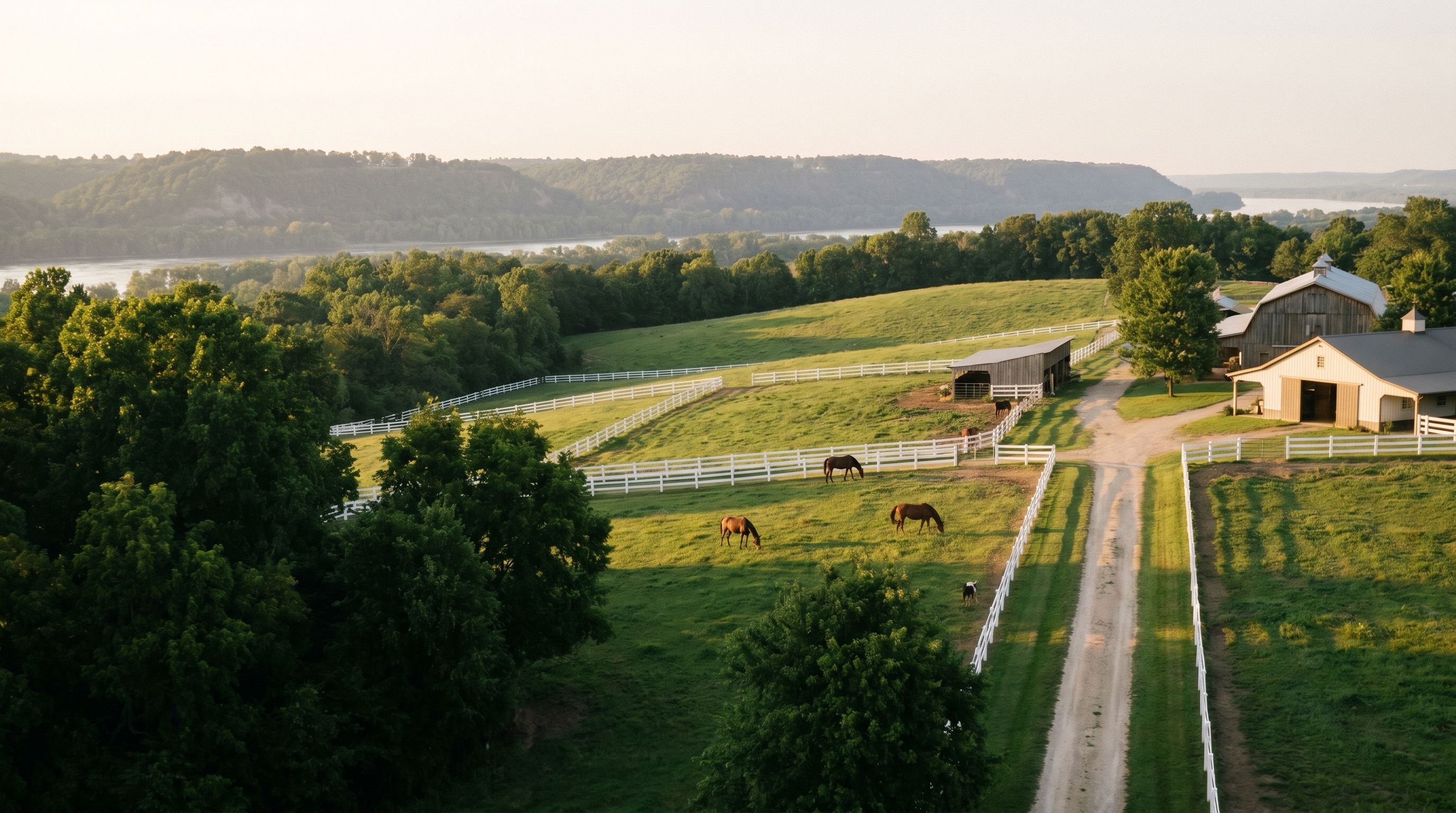
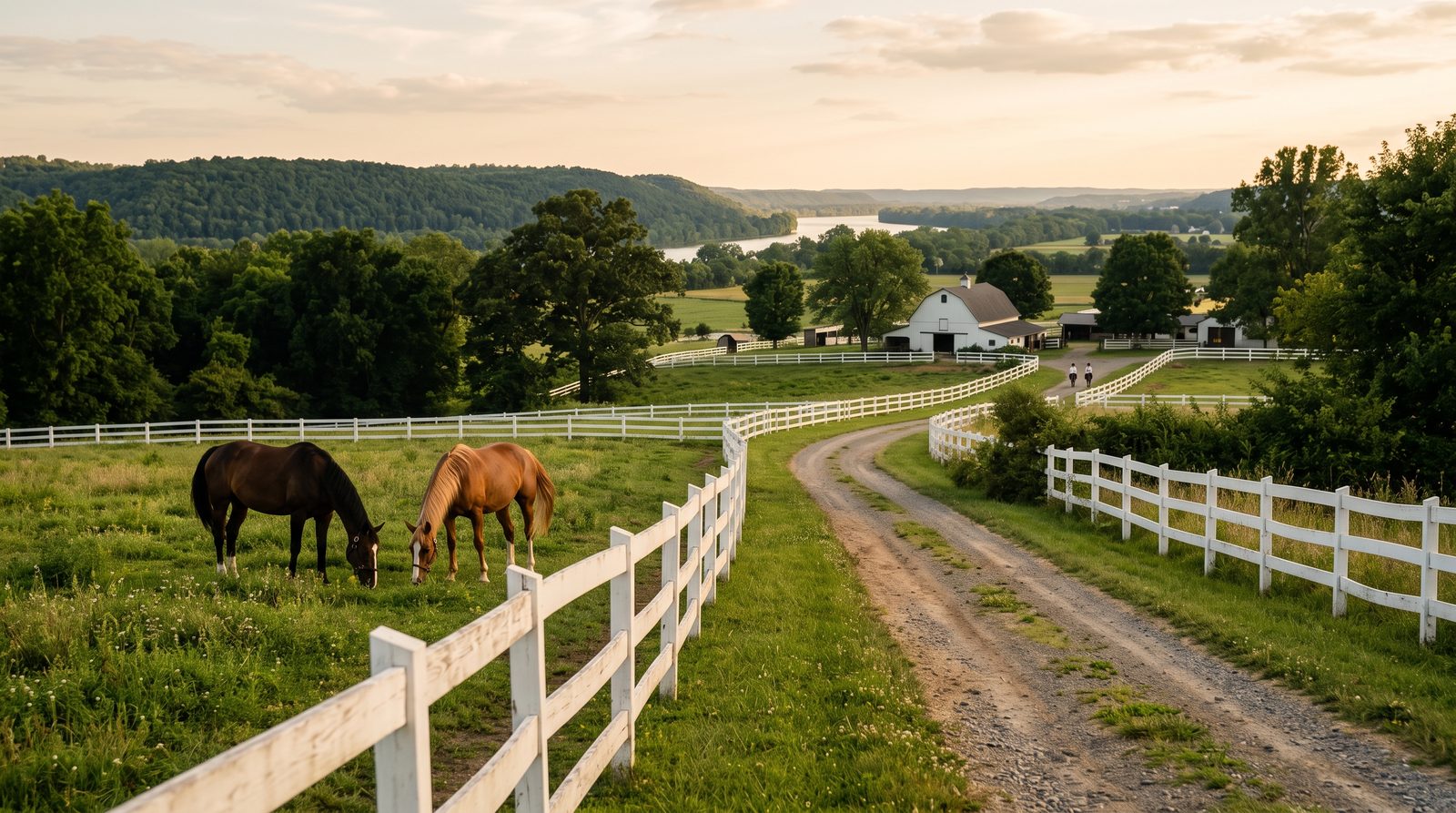
Thunder Ridge is a working American Saddlebred farm. Boarding, training, breeding, horse sales, and equine therapy services all happen on the same property as the lessons. For a family just starting out, that has a few practical effects.
- The horses live here. The people around your rider spend their week with these horses and know each animal's habits.
- Training happens here, not just teaching. That means someone can explain why a horse did something, not just what you should do about it.
- There's somewhere to go next. If riding sticks and your rider eventually owns a horse, boarding and training are already here. You don't have to start over at a new barn.
- There's real life to watch. Foals from an active breeding program, horses in training, horses being prepared for sale. Kids often want to see it.
None of that makes a nearer barn a bad barn. It does mean the two aren't interchangeable, which is the whole reason anyone ever drives past one place to reach another.
The discipline is the other half of the answer
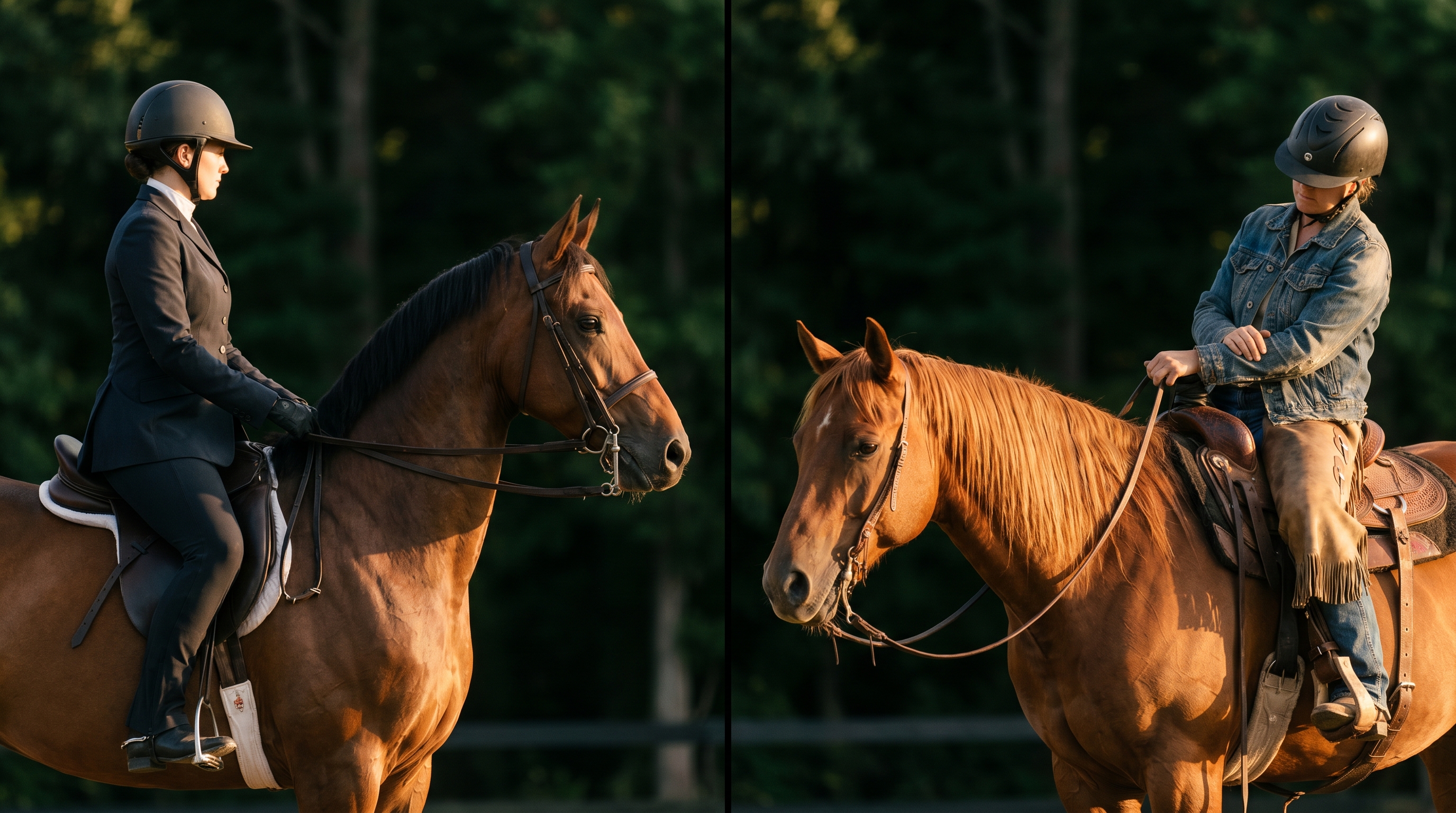
We specialize in Saddle Seat, the English discipline built to show off the high, animated action of the American Saddlebred. It's upright and elegant, and it is not hunt seat, not dressage, and not jumping. It's a distinct style with its own look and its own feel in the saddle.
Saddle Seat isn't taught everywhere, because it needs the breed and the trainers to go with it. If it's what your rider wants, geography stops being the deciding factor pretty quickly. If you've no idea yet, that's normal and completely fine.
We also teach Western riding, the relaxed and grounded style most people picture when they hear "horseback riding," plus driving lessons, where you control the horse from a carriage instead of the saddle. You don't have to pick before you come. Our breakdown of Saddle Seat vs. Western riding is a good way to arrive with an opinion instead of a blank.
What to do on your first visit, and what to bring
Treat the first trip as a look around, not a commitment. You're allowed to be evaluating us while we're getting to know your rider.
- Leave early. Bridge traffic is the one variable you can't control. Arriving with spare minutes beats arriving flustered.
- Wear long pants and closed-toe shoes. Jeans and sneakers are fine. No shorts, no sandals, no dangly jewelry.
- Bring the rider, not a shopping list. You don't need boots or breeches to start — we provide the helmet.
- Watch how the horses are handled. Not the ribbons on the wall. Watch how people move around the animals when nobody's performing for a visitor.
- Ask your real questions out loud. Age, nerves, scheduling, what happens after the first lesson. We'd rather answer them at the barn than have you guessing in the car on the way home.
- Give yourself a few minutes afterward. Walk the fence line. It's a genuinely nice place to stand, and it's part of what you'd be driving for.
The drive is only a cost until you've done it once. After that it's just Tuesday.
Who this is right for, and who it isn't
It's a good fit if you want a breed and discipline specialty, if you'd like room to grow past lessons, or if you've tried a general barn and your rider drifted. Riders start at age 6, and there's no upper limit. Plenty of our riders are adults, from people learning from scratch to people climbing back on after years away.
It's probably not the right call if you want the shortest possible drive and nothing else matters. That's a legitimate priority, and if it's yours, take the closest barn with a clear conscience. Our guide on how to choose a riding lesson barn works just as well on a barn that isn't ours.
If you're weighing the Pennsylvania side more broadly, our page on horse riding lessons near Easton and the Lehigh Valley covers the route in more detail. Riders coming from the New Jersey side can read about riding lessons for Hunterdon County, and the full picture of how our program runs lives in the complete guide to horse riding lessons in Phillipsburg, NJ.
Try it once and decide with your own eyes
You can't settle this from a browser tab. One visit tells you more than a month of comparing websites, because you'll know within a few minutes whether the place feels right and whether the drive actually bothered you.
Our first lesson is a 30-minute trial for $60. No experience needed, no obligation afterward. We're open Tuesday through Sunday, 10 AM to 8 PM, and closed Mondays.
When you're ready, book the $60 trial lesson and we'll confirm a day and time. You can also call us at (484) 221-3950 or email info@thunderridgefarms.biz. Make the drive once. Then you'll know.