Horse driving lessons teach you to control a horse from a cart or carriage behind it, using long reins called lines, instead of sitting on its back. You're still steering, still stopping, still reading the horse. You're just doing it from a seat, with your feet on a footboard.
It's one of the oldest ways people have worked with horses, and it's one of the least talked-about things we teach here at Thunder Ridge Farms in Phillipsburg, NJ. So this is the plain explanation: what driving is, what the equipment does, what a first lesson looks like, and who it tends to suit.
If you've ever loved horses but felt uneasy about being up in a saddle, keep reading. This is often the answer people didn't know existed.
What driving actually is
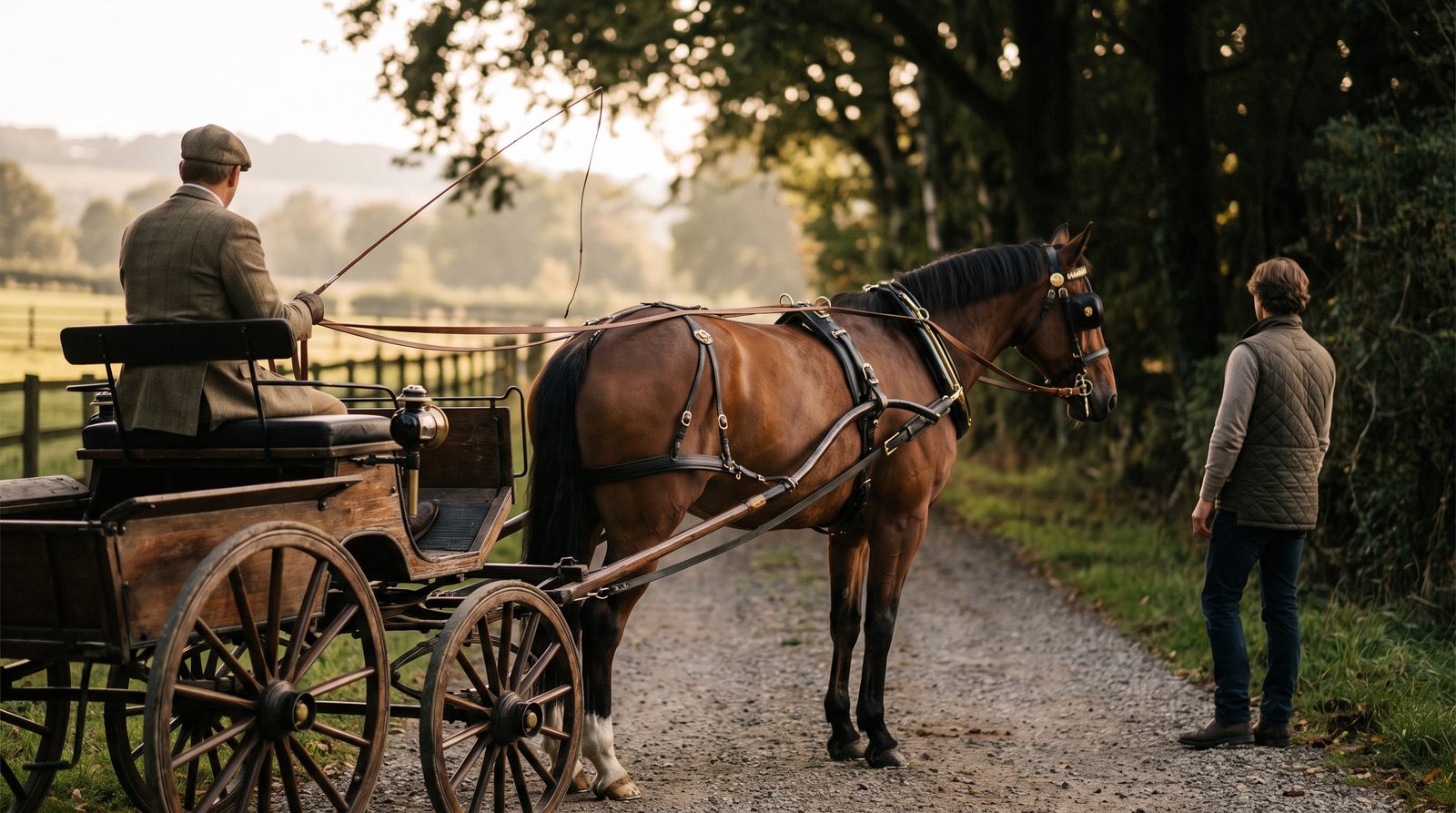
Driving means the horse is in a harness, hitched to a cart or a carriage, and you sit behind it and direct it with the lines, your voice, and a whip used as a signaling aid rather than a punishment.
The big difference from riding is obvious once you say it out loud: your seat and legs are no longer part of the conversation. When you ride, you're cueing the horse with your weight, your legs, and your hands. When you drive, almost everything travels through the lines and your voice. That makes the hands and the voice much more important, and it makes driving a genuinely different skill rather than a lesser version of riding.
It also changes your relationship with the horse's attention. A driving horse can't feel you shift your weight, so it learns to listen closely to what it can hear and what it can feel through the lines. Good driving is quiet. If you're hauling on anything, something has gone wrong upstream.
The basic equipment, in plain words
There's more gear in driving than in riding, and the words are unfamiliar at first. It's simpler than it looks.
- The harness. The set of straps the horse wears. It does two jobs: it lets the horse pull the vehicle, and it lets the vehicle stop and be held back when the horse slows down. The parts have names, and you'll learn them by handling them, not by memorizing a diagram.
- The cart or carriage. A two-wheeled cart is the usual starting point because it's light and simple. Four-wheeled carriages exist and are lovely, but they're not where a beginner starts.
- The lines (reins). Long reins that run from the bit back to your hands. They're your steering and your brakes, and holding them correctly is one of the first real skills you'll learn.
- The whip. Carried, not cracked. In driving it replaces the leg aid — a light touch that says "forward," the way a rider's calf would.
- The shafts and the traces. The parts that connect the horse to the vehicle. Hitching them in the right order matters, which is why hitching is taught carefully and never rushed.
You don't buy any of this to take a lesson. It's all here, it's all fitted for the horse you'll be working with, and you learn on it.
What a first driving lesson looks like
A beginner driving lesson is heavier on groundwork than most people expect, and that's on purpose. You cannot fix a problem in a cart by getting off quickly, so the safety and handling groundwork comes first, every time.
Here's the shape of it:
- Meet the horse and learn to handle it safely. Where to stand, how to lead, how to read what a horse is telling you. A first driving student starts with a calm, experienced horse that has done this many times.
- Learn the harness on the ground. Parts, purpose, and how it goes on and comes off. You'll do this with your hands rather than from a list.
- Watch the hitch, then help with it. Hitching is done in a specific order for good reasons, and your instructor walks you through each one.
- Take up the lines with the instructor beside you. First at a standstill, then at a walk, learning contact, steering, and the voice cues for walk and whoa.
- Drive a short, quiet route. Turns, stops, and starts at a walk, in a controlled space, with your instructor with you the whole time.
Nobody gets handed the lines and waved off. An instructor is with you for a beginner lesson, and the horse you learn on is chosen for exactly this job.
Safety in driving isn't a warning at the start of the lesson. It's most of the lesson. That's what makes the rest of it relaxing.
Who driving is especially good for
Driving quietly solves a problem for a lot of people who'd written horses off:
- People who love horses but are nervous about being in the saddle. This is the biggest group by far. If the height is the sticking point, driving removes it entirely without removing the horse.
- Riders coming back after an injury. Driving lets you stay in the barn, stay working with horses, and keep your hands and eye sharp while your body isn't ready to ride.
- Older beginners. If mounting and dismounting is the barrier rather than the horse, driving sidesteps it. Plenty of people start in their sixties and seventies.
- Riders who want a genuinely new skill. Experienced riders often find driving humbling in a good way. All your weight aids are gone and your hands have to get better.
- People drawn to the tradition. Harness work is old, hands-on, and satisfying in a way that's hard to explain until you've done it.
If nerves are what's holding you back generally, our piece on being nervous about horseback riding is worth a read too. Driving isn't the only route around that, but it's an underrated one.
How driving and riding make each other better
These two aren't rivals. They feed each other.
Driving sharpens your hands. Because the lines are your only physical connection, you learn very quickly what soft, even, honest contact feels like, and that carries straight back into the saddle. Riders who've driven tend to have quieter hands.
Riding, in return, gives you a feel for how a horse moves and balances that makes you a more sympathetic driver. You know what you're asking for.
Driving also teaches ground manners and voice work in a way riding doesn't demand. A horse that drives well leads well, stands well, and listens. So does its handler.
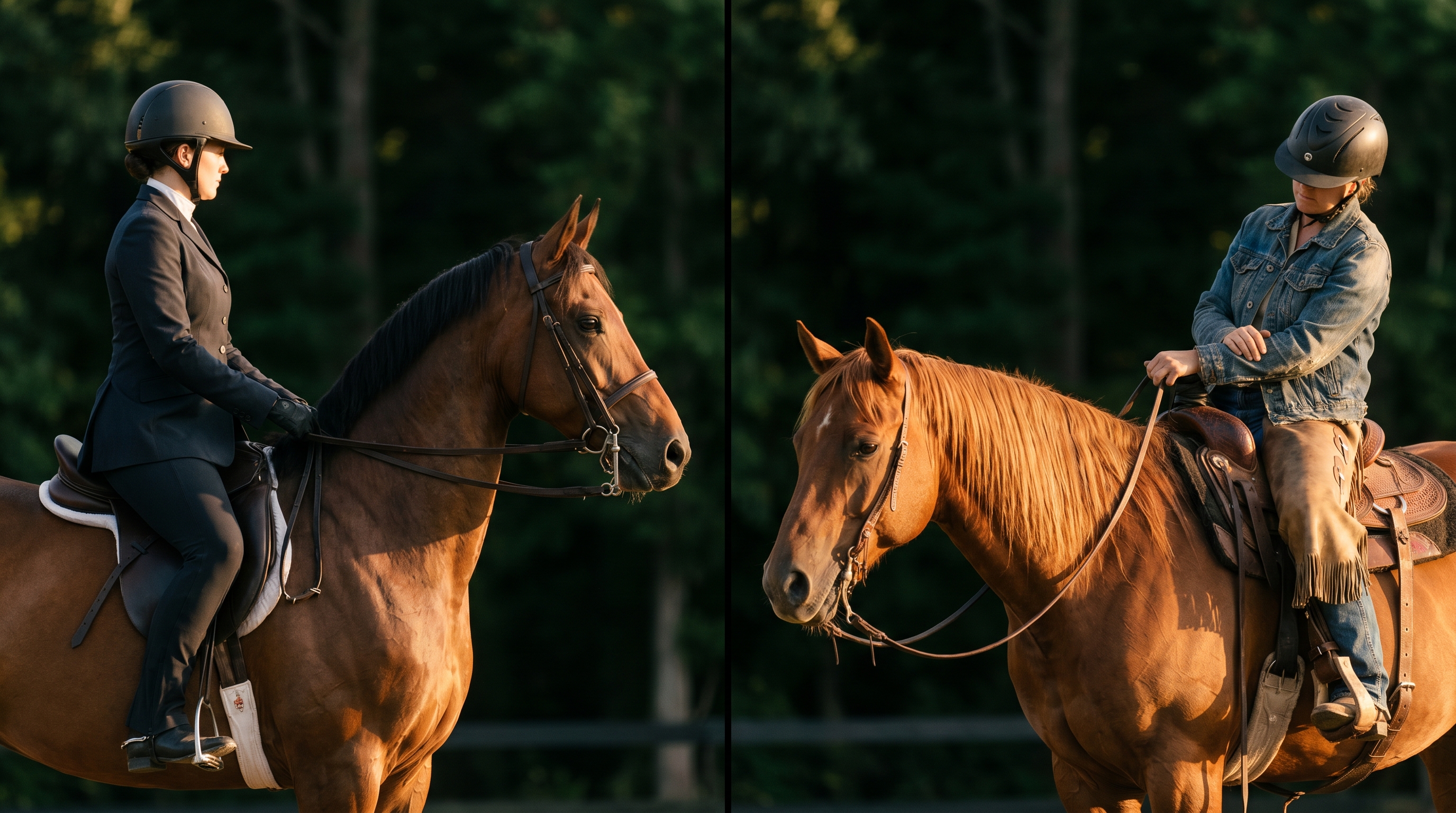
We teach saddle seat, western, and driving on the same farm, which means you're not locked into one path. If you want to see how the ridden disciplines compare before you decide, our explainer on saddle seat riding and our saddle seat vs. western comparison cover both sides.
Getting started, and what to wear
The practical bits are the easy bits. Wear long pants and closed-toe shoes with a flat or low heel. Skip loose scarves, dangly jewelry, and anything that flaps. Gloves are genuinely useful in driving because you're holding lines, so bring a pair if you have them — and if you don't, don't buy any yet.
Lessons here start at age 6 and up. Adults are very welcome, and driving in particular draws adult beginners.
Come a few minutes early so you're not walking in rushed. And plan on it being a hands-on session — you'll be handling harness and horse, not sitting and listening.
Come see whether driving is for you
The honest truth is that most people can't tell whether driving suits them until they've stood at a horse's shoulder and buckled a harness. It either clicks or it doesn't, and it clicks for more people than expect it to.
We're at 160 Esposito Road in Phillipsburg, open Tuesday through Sunday, 10 AM to 8 PM, closed Mondays. If you want the full picture of what we teach and how lessons work, our complete guide to horse riding lessons in Phillipsburg, NJ pulls it together.
The easiest way in is our 30-minute trial riding lesson for $60 — a low-pressure first visit to the farm and the horses. If it's driving you're specifically interested in, say so when you get in touch and we'll talk through the right starting point for you. Book the 30-minute trial for $60, or call us at (484) 221-3950 or email info@thunderridgefarms.biz and just ask. We're happy to answer questions before you commit to anything.