If you're looking at horse boarding in Warren County, NJ, you're making one of the bigger calls a horse owner makes. Where your horse lives every day shapes its health, its temperament, and how well you sleep at night. A good barn means you don't lie awake wondering. A bad one means you're driving out at 9pm to deal with something that never should have happened.
What follows is a working horseperson's take on choosing a boarding facility. It's meant to be useful whether or not you ever call us. Near the end, I'll tell you straight how we handle boarding at Thunder Ridge Farms here in Phillipsburg. No pricing games, no pressure.
What full-service horse boarding actually includes
"Boarding" gets thrown around loosely. Two barns can both say they board horses and mean wildly different things. So before you start comparing prices, get clear on which tier you're actually buying.
Here's the ladder, lowest service to highest:
- Pasture board. Your horse lives out in a field with shelter, hay, and water. It's the cheapest option, and it's fine for a hardy, low-maintenance horse. Less ideal in a hard New Jersey winter, or for a horse that's in real work.
- Self-care board. You rent a stall and do everything yourself: feeding, mucking, turnout. You're buying space, not labor. This only works if you can be there twice a day, every day. Most people overestimate how long that's sustainable.
- Partial board. The barn handles some daily care and you cover the rest. The split varies a lot from place to place, so get it in writing before you assume anything.
- Full-service board. The barn handles daily feeding, turnout and bring-in, stall cleaning, fresh water, and blanketing. You show up to ride a horse that's already been looked after. This is what most owners picture when they say "boarding."
When people search for full service horse boarding NJ, that top tier is what they're after. And the real question isn't whether a barn offers it. It's whether they do it well, every day, on the mornings you're not standing there watching.
Questions to ask any boarding barn before you commit
Tour the place in person first. Then ask these. How a barn answers tells you as much as the answer itself, because a good barn manager actually likes these questions. It means you care about your horse.
- Who's here daily, and who's here at night? Horses don't schedule their emergencies for business hours. Find out who does the last check and how late.
- What and when do you feed? Ask about hay quality, grain, feeding times, and whether they'll follow your horse's specific diet. Inconsistent feeding causes more colic than almost anything.
- How much turnout, and on what footing? A horse stuck in a stall 23 hours a day gets stiff, anxious, and unwell. Daily turnout isn't a luxury.
- What's your emergency plan? Which vet and farrier do they use? Will they call you first or act first? Who makes the call when there's no time to ask?
- Can I see the water, the hay, and the manure pile? Blunt, yes. But clean troughs, good hay, and a managed muck pile say more about a barn's real standards than any brochure ever will.
- What does the contract actually say? Notice period, what's included, late fees, insurance requirements. Read it before you sign, not after.
The barn that answers all six without flinching, and walks you over to look in the corners, is the one you want. Vagueness is the tell.
Why a working training-and-breeding farm makes a difference
Here's the part owners tend to underrate. There's a genuine gap between a barn that only boards horses and a working farm where boarding is one piece of a serious operation.
At a farm that also trains, breeds, and sells, horsemanship is the actual business, not a sideline. For your horse, that shows up day to day:
- Experienced eyes catch things early. People who handle horses all day notice the subtle off-step, the skipped feed, the slightly puffy leg, before any of it turns into a vet bill.
- Training is right there when you want it. Need tune-up work, or want a lesson? You're not trailering out somewhere else for it. It's already on site.
- Standards stay high by default. A barn running a breeding program and a show team can't afford sloppy care. Their own horses' health and reputation ride on it, and boarders benefit from the same standard.
- You learn just by being around it. Spend time near skilled riders and trainers and you pick up good habits without trying. It makes you a better owner.
And when a barn knows one breed deeply, say the American Saddlebred, that knowledge carries into everything: how they cool out a hot horse, how they manage feet, how they bring a horse into condition. If you want the long version on why that breed earns its reputation, here's our guide to the American Saddlebred.
Boarding, training, and lessons under one roof at Thunder Ridge
So here's how we do it. Thunder Ridge Farms is a full working horse farm in Phillipsburg. We don't just rent out stalls. Under one roof we run lessons, boarding, training, horse sales, breeding, and equine therapy services. We specialize in the American Saddlebred, and our team and students compete and win at regional shows in both Saddle Seat and Western disciplines.
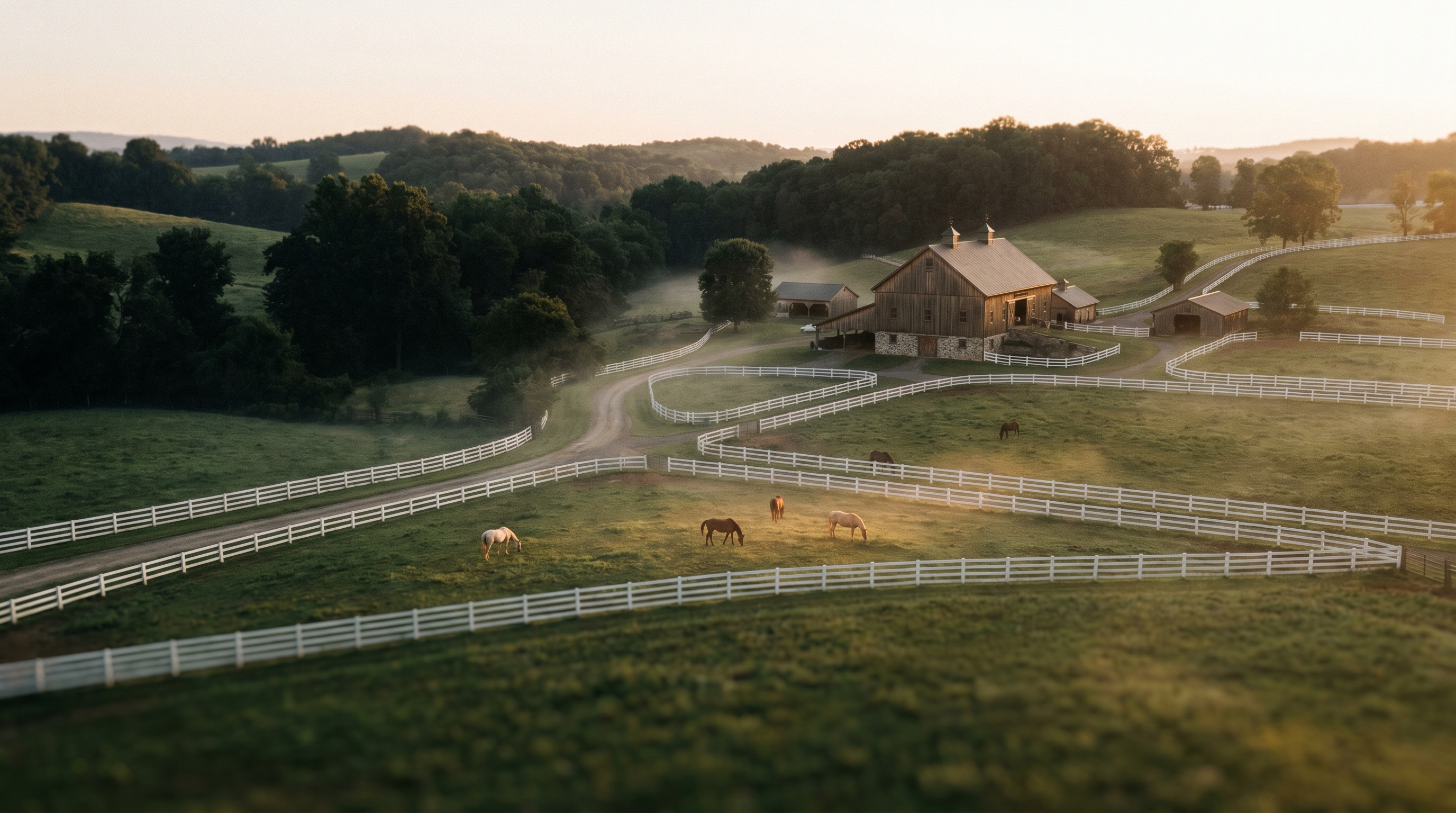
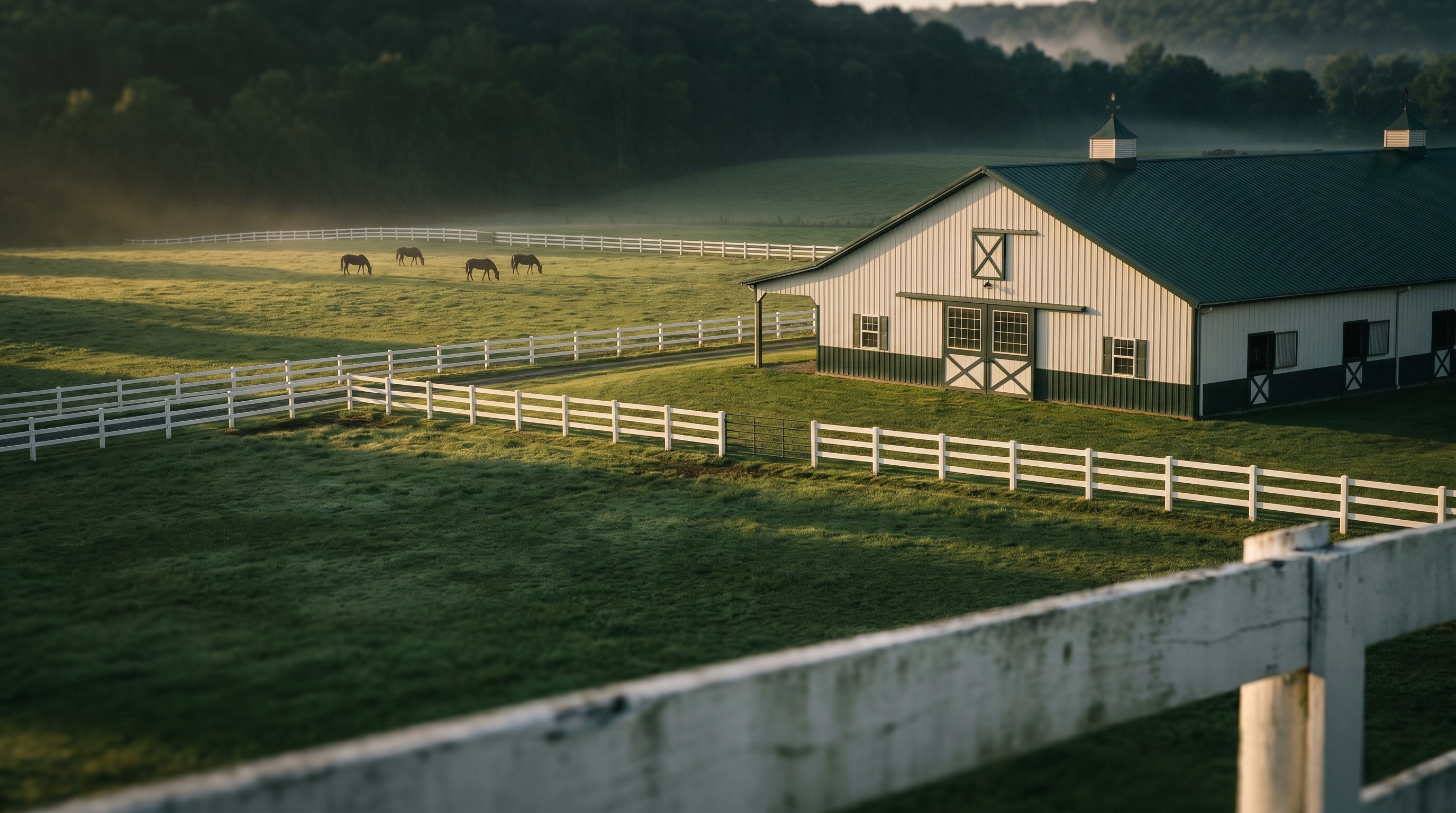
For a boarder, that depth is the point. Your horse is looked after by people who do this at a high level every single day. Want training? It's here. Want lessons? Our trainers are the same ones coaching the show team. And the place itself, the rolling hills and white fences and quiet pastures, is somewhere you'll actually want to spend a Saturday.
We don't post boarding rates online, and that's on purpose. The right setup depends on your horse, the care it needs, and what you want out of it. We'd rather have that conversation by phone or in person and match you to a real fit than sell you a one-size package. Call us at (484) 221-3950 and we'll talk it through honestly.
If you're reading this because you're about to become an owner rather than because you already are one, work through what to know before buying your first horse first. Board is one of the ongoing commitments new owners underestimate most, and it's easier to shop for a barn before there's a horse in the trailer.
And if you're not a horse owner yet, maybe you're a parent with a horse-obsessed kid, or an adult who always meant to learn, start smaller. A single lesson tells you almost everything. Here's our rundown of riding lessons in Phillipsburg, NJ, or you can book a 30-minute trial and just come see the place for yourself.
Serving Warren County NJ and the Lehigh Valley
We're at 160 Esposito Road in Phillipsburg, which puts us in a handy spot for a lot of horse owners. Phillipsburg sits right on the New Jersey–Pennsylvania line, so we're genuinely easy to reach from across Warren County or from Easton and the wider Lehigh Valley on the other side of the river.
If you're searching specifically for horse boarding near Lehigh Valley or a boarding and training facility in Warren County, that location is part of the appeal. You get a serious working farm without a long haul. From I-78, take the Route 22 exit toward Phillipsburg, follow River Road to the Harmony Station Road exit, then turn onto Esposito Road; the farm is at the end of the road.
We're open Tuesday through Sunday, 10 AM to 8 PM, and closed Mondays. If you'd rather get a feel for the farm before you visit, start on our home page and have a look around.
Have a horse, or thinking about it? Get in touch
Where your horse lives is worth a real conversation. If you're weighing horse boarding in Phillipsburg, NJ, or anywhere in Warren County or the Lehigh Valley, come walk the farm, meet the team, and put us through every question on the list above. We like answering them.
Boarding details are handled by phone so we can tailor them to your horse. Reach us at (484) 221-3950 or info@thunderridgefarms.biz.
And if you're newer to all this and want a low-pressure first step before you ever think about owning, we keep a few 30-minute trial lesson spots open each week, and they fill fast on weekends. Book your 30-minute trial and spend time on the farm. Worst case, you've had a great morning around good horses.