Equine therapy for anxiety is structured time with horses meant to support someone who lives with anxiety, and it comes in very different forms. Some of it is clinical work led by a licensed mental health professional. Some of it is calm, hands-on time around horses that isn't treatment at all.
Neither kind cures anxiety. Be wary of anyone who says it does. What it can offer is a different setting, an animal that responds to how you move, and a reason to be outside and present for a while. Some people find that steadying. Some don't. Below is what the work usually involves, why horses get used, and what to ask before you book anything, with us or anyone else.
What people mean by equine therapy for anxiety
The phrase gets used loosely. You'll also see it called horse therapy, or horse riding therapy for anxiety. It helps to sort out the main versions before you start calling around.
- Equine-assisted psychotherapy. Mental health treatment delivered by a licensed clinician, such as a counselor, social worker or psychologist, who works with horses present. The horse is part of the setting. The treatment comes from the clinician.
- Equine-assisted learning. Structured groundwork with horses aimed at things like patience, focus, boundaries and confidence. It can be worthwhile, but it isn't clinical care.
- Riding lessons and barn time. Plain instruction and time around horses. Not therapy in any formal sense, though plenty of riders will tell you the barn is where they feel most settled.
You may also run into hippotherapy. That's a separate thing: a licensed physical, occupational or speech therapist using a horse's movement inside a treatment session. It's not usually what people mean when they search for help with anxiety.
The label matters less than the person running the session and what they're qualified to do. If you want treatment for anxiety, you want a licensed clinician. If you want something calm and hands-on alongside the care you already have, a non-clinical program or riding lessons may fit. We go through all of these terms in more detail in our plain-English guide to equine assisted therapy in NJ.
Why some people with anxiety are drawn to horses
Leave the big promises out of it for a minute. The reasons horses show up in this work are pretty practical.
First, a horse responds to what you do, right now. It reads your breathing, your speed and the tension in your body. Rush toward it and it may step away. Slow down and it usually settles. That feedback is immediate and physical, and some people find it easier to work with than words.
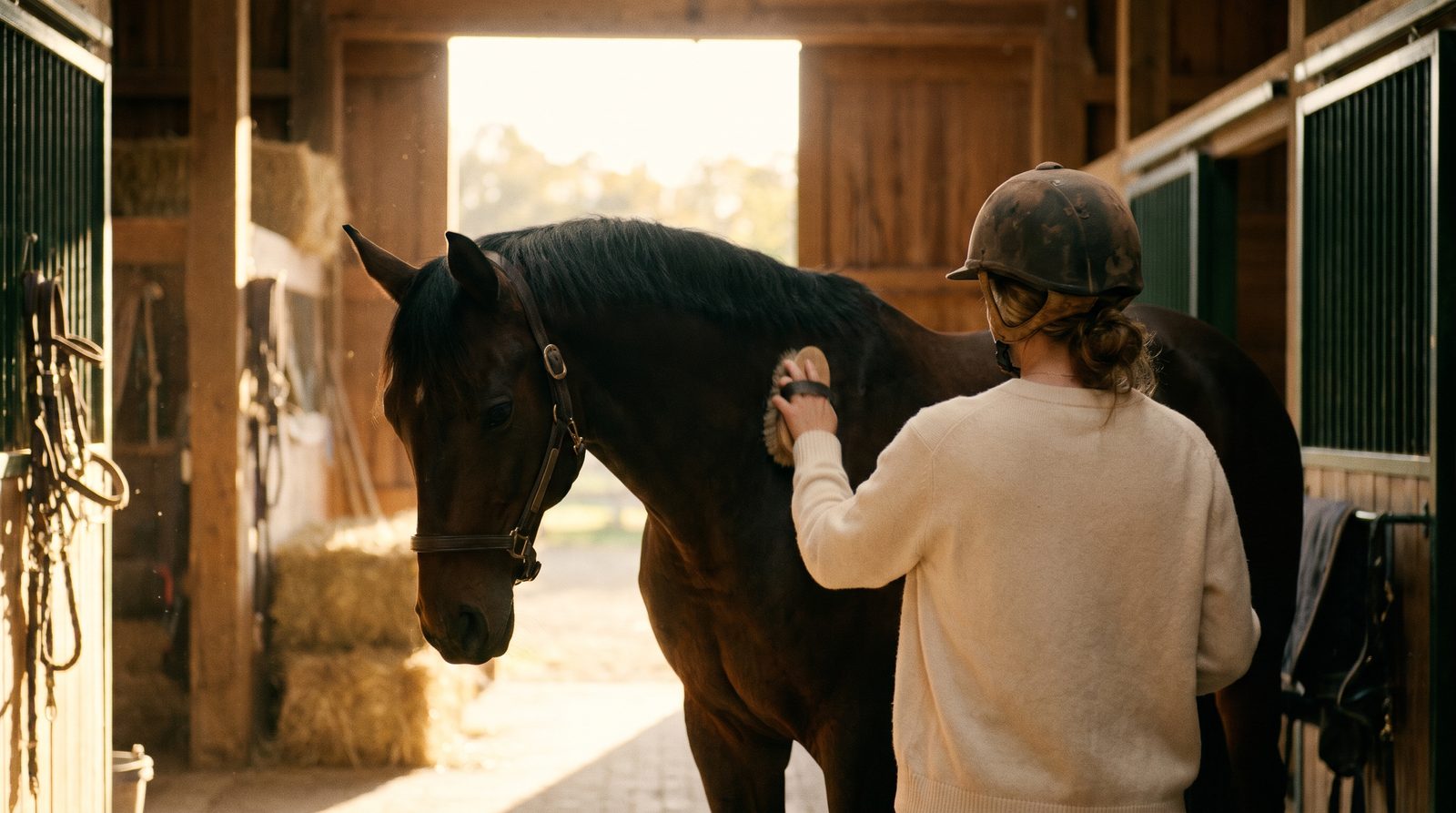
It also pulls your attention into the present. You can't half-pay attention to an animal that size. Brushing, leading and standing beside a horse ask you to notice where your feet are and what the horse is doing. For someone whose mind tends to race ahead, that focus can be a welcome break.
Then there's the quiet. A horse doesn't need eye contact or small talk. For people who find social situations draining, that can feel like a relief.
And you're outside and moving. Fresh air, open space, physical jobs, weather. Whatever else is going on, it's a real change from a screen or an office.
A horse won't ask how your week was. It just notices how you're standing right now, and some people find that a useful break from the noise in their head.
What a session can look like
Every provider runs things a little differently, but sessions built around anxiety tend to start on the ground and move slowly.
- Arriving and settling. A few unhurried minutes to take in the sounds, the smells and the size of everything.
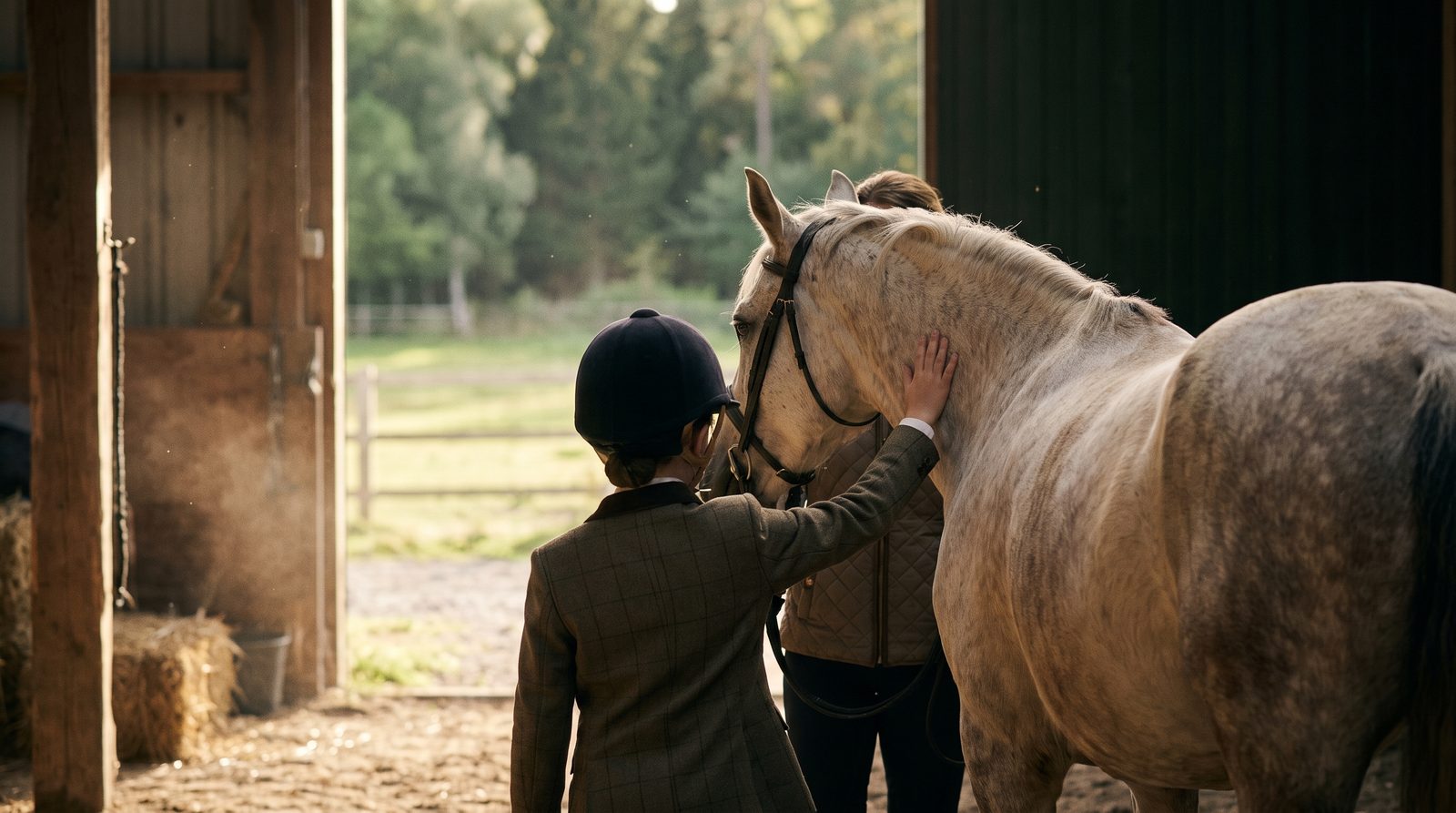
- Meeting the horse. Learning where to stand, how to approach, and how to let the horse get to know you.
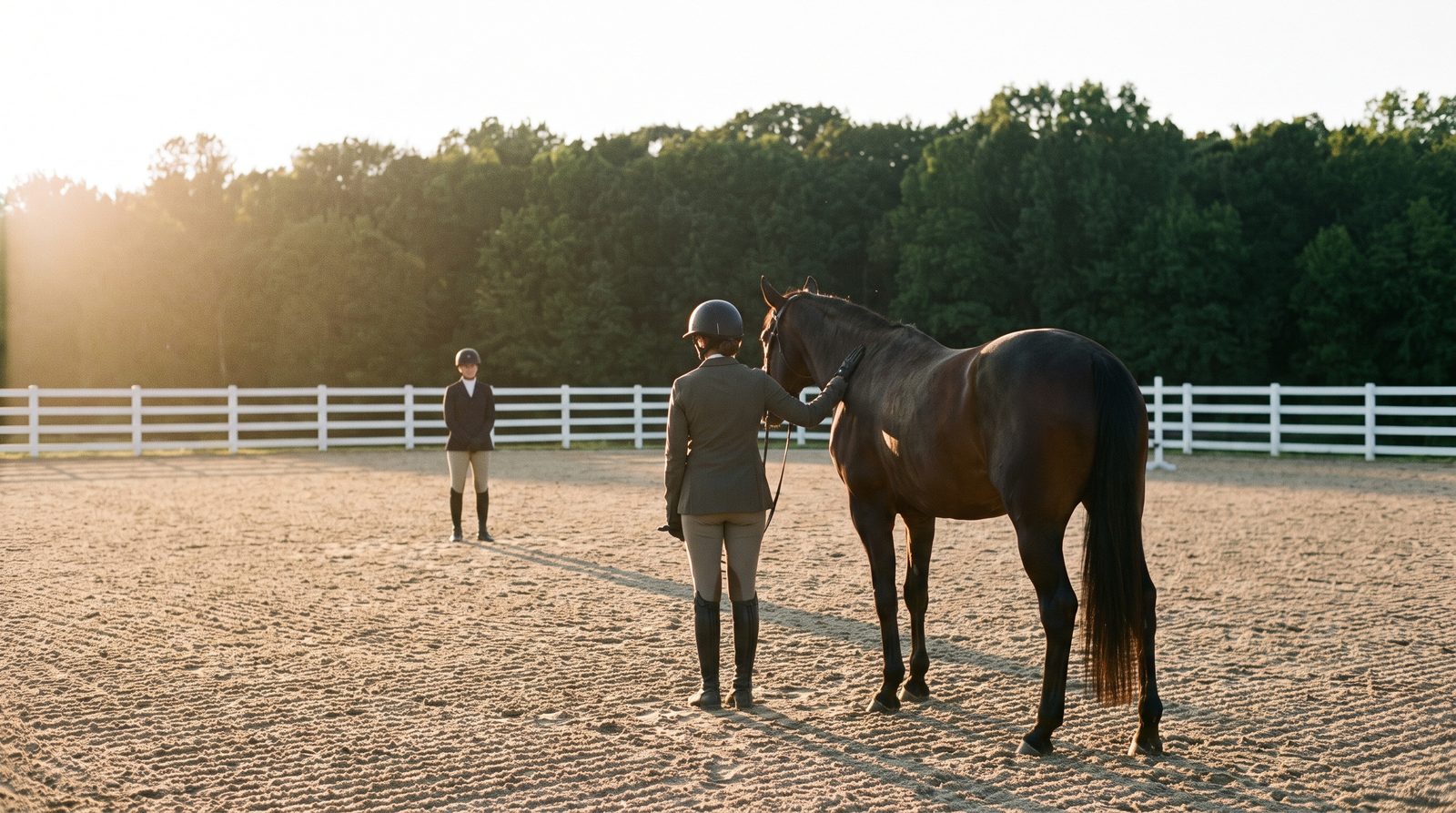
- Groundwork. Grooming, leading and simply standing with the horse. In many programs this is most of the session, and some never involve riding at all.
- Riding, if it's part of the plan. Usually at a walk, with someone close by. In a lot of anxiety-focused work, it's optional.
- Winding down. Putting the horse away, then a short, quiet check-in about how it felt.
Nobody should be asking you to do something you're not ready for. Stepping back to the ground at any point is normal, and a good provider will treat it that way.
If being close to a horse is part of what makes you anxious, that's common and worth taking slowly. We wrote a separate piece for anyone who's nervous about being around horses or riding.
Equine therapy for kids with anxiety, and for adults
The basics are the same at any age, but a few things are worth knowing depending on who's going.
If you're a parent, let your child set the pace. A first visit that's mostly watching from the fence still counts. Try not to pitch it as something that will make them less anxious, because that puts pressure on a visit that should feel easy. Ask the barn what happens if your child wants to stop early, and listen for a calm, flexible answer. If your child is autistic, our guide to therapeutic riding for autistic children covers the questions specific to that.
If you're the adult going, know that plenty of people come to horses later in life, often after years of wanting to and talking themselves out of it. You don't owe anyone an explanation. It's fine to say you're anxious and would like to go slowly. A good barn will simply adjust.
At any age, keep your own doctor, therapist or care team in the loop. They know your situation, and they're the right people to say whether time with horses belongs in the picture.
Questions to ask before you book anything
Ask these of every farm or program you contact, including us. Quick, specific answers are a good sign.
- Which kind of work is this? Clinical therapy, equine-assisted learning, or lessons and barn time.
- Who runs the session, and what are they licensed or certified in? Ask for the actual credential, not a general reassurance.
- Is a licensed mental health professional involved? If yes, in what role. If no, that's fine, as long as it's said plainly.
- What happens, step by step? On the ground and in the saddle, and roughly how long each part takes.
- What if it gets to be too much? Listen for a plan to slow down, take a break or stop without fuss.
- How is insurance handled? Never assume anything is covered. Ask the provider, then confirm with your insurer.
- Can we visit and watch first? If they say yes, go. Seeing the place in person will tell you more than any web page, including this one.
Time with horses, clinical or not, isn't a replacement for care from a qualified professional. If anxiety ever tips into a crisis, call or text 988 to reach the Suicide and Crisis Lifeline, or call 911 in an emergency.
Where Thunder Ridge Farms fits
Thunder Ridge Farms is a working American Saddlebred farm at 160 Esposito Road in Phillipsburg, NJ. We give Saddle Seat, Western and driving lessons. We board, train, breed and sell horses, and we offer equine therapy services.
Nothing on this page is medical advice, and we won't promise what any session will do for anxiety. The honest way to find out what our equine therapy services include is to ask us. Call (484) 221-3950 or email info@thunderridgefarms.biz, tell us what you're hoping for, and ask anything on the list above.
If what you mostly want is quiet time with a horse, the simplest place to start is a lesson. Our 30-minute trial lets you meet a calm, well-trained horse, learn the safety basics, and take a guided ride with a trainer beside you the whole time. You don't need experience or gear. Wear long pants and closed-toe shoes, and we'll provide the helmet. Lessons are for riders age 6 and up, with no upper limit. Our guide to horse riding lessons in Phillipsburg, NJ explains how lessons work here.
We're open Tuesday through Sunday, 10 AM to 8 PM, and closed Mondays. When you feel ready, you can book a 30-minute trial lesson for $60. There's no pressure to sign up for anything after.