If you've searched for equine assisted therapy in NJ, you've probably run into the same problem everyone runs into. Four or five quite different things are being described with almost the same words, and nobody explains the difference before asking you to book something.
Here's the plain version. "Equine-assisted" just means a horse is involved in the work. What that work actually is — clinical mental health treatment, a confidence and skills program, adaptive riding instruction, or a physical therapy technique — changes completely depending on who is running it and what they are licensed to do.
This post is written to be read before you call anyone, including us. No sales angle. Just the vocabulary, the honest questions, and a clear picture of where a working horse farm fits in the middle of all of it.
The four things people call "horse therapy"
These get used interchangeably in conversation and in advertising. They are not the same, and the difference matters more than almost anything else on this page.
- Equine-assisted therapy (or psychotherapy). Clinical mental health work delivered by a licensed mental health professional — a counselor, therapist, social worker or psychologist — who has chosen to do that work with horses present instead of in an office. The horse is part of the setting. The therapy is the licensed clinician's.
- Equine-assisted learning. Not clinical. This is a structured program built around groundwork with horses, aimed at things like communication, patience, boundaries, teamwork and confidence. It can be genuinely valuable. It is not treatment, and the person running it is usually not a licensed clinician.
- Therapeutic riding (adaptive riding). Riding instruction, adapted for a rider with a disability or a specific need. The goal is teaching someone to ride, with the lesson shaped around how that particular rider learns and moves. It's taught by an instructor, not a therapist.
- Hippotherapy. A narrow, specific term. A licensed occupational therapist, physical therapist or speech-language pathologist uses the movement of a horse as a tool inside a treatment session they are already qualified to deliver. The word describes a technique inside licensed therapy — not a program you sign up for.
Why the difference actually matters
Because the words tell you almost nothing about the credential behind them, and the credential is the thing you're really shopping for.
If you are looking for mental health treatment, you want a licensed clinician, and you want to know their license type and what it covers. If you are looking for something enriching and confidence-building for a family member, an equine-assisted learning program or adaptive riding lessons may be exactly right — but you should know going in that it is not clinical care and shouldn't be treated as a substitute for it.
A good provider will tell you which of the four they do, in one sentence, without hedging. A provider who blurs the categories, or who lets you assume the clinical version when they offer the non-clinical one, has told you something useful about themselves.
The honest question isn't "do you offer equine therapy?" It's "who is delivering it, what are they licensed in, and what exactly happens in the hour?"
Why horses at all
Set the claims aside for a second. There are a few plain, non-mystical reasons horses keep turning up in this kind of work.
They respond to what you do, not what you say. A horse doesn't care what you told yourself on the drive over. It reads posture, breathing, speed, tension. If you approach in a rush, it moves off. If you settle, it settles. That's immediate, physical feedback that's hard to argue with, and many people describe it as landing differently than a conversation does.
They're big enough to demand your full attention. You cannot be half-present around an animal that size. Handling one requires you to be in the room, in your body, right now. Some people find that forced focus is the whole point.
The work is physical and it happens outdoors. Walking, leading, grooming, carrying, standing in weather, moving around a barn. Whatever else is going on, that's a real change of environment from an office or a screen, and plenty of people simply feel better for a couple of hours on a farm.
Notice what none of that says. It doesn't say horses fix anything. Some people find this kind of work steadying and some don't, and that's an honest thing for a farm to say out loud.
What a session can look like
It depends entirely on which of the four categories you're in, but sessions across all of them tend to share a shape.
- Arrival and settling. A few unhurried minutes to get used to the space, the noise, the smell, and the sheer size of everything.
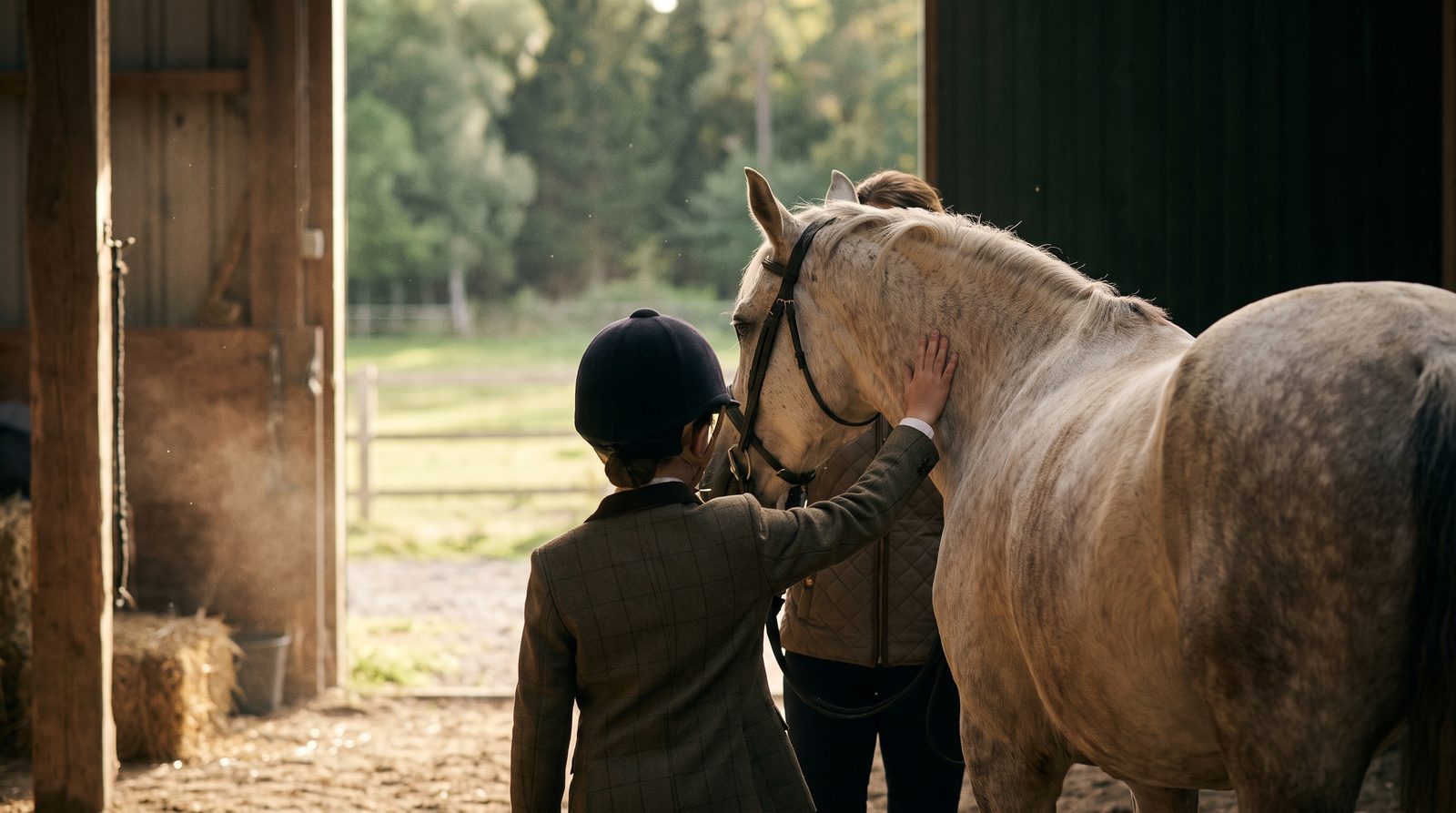
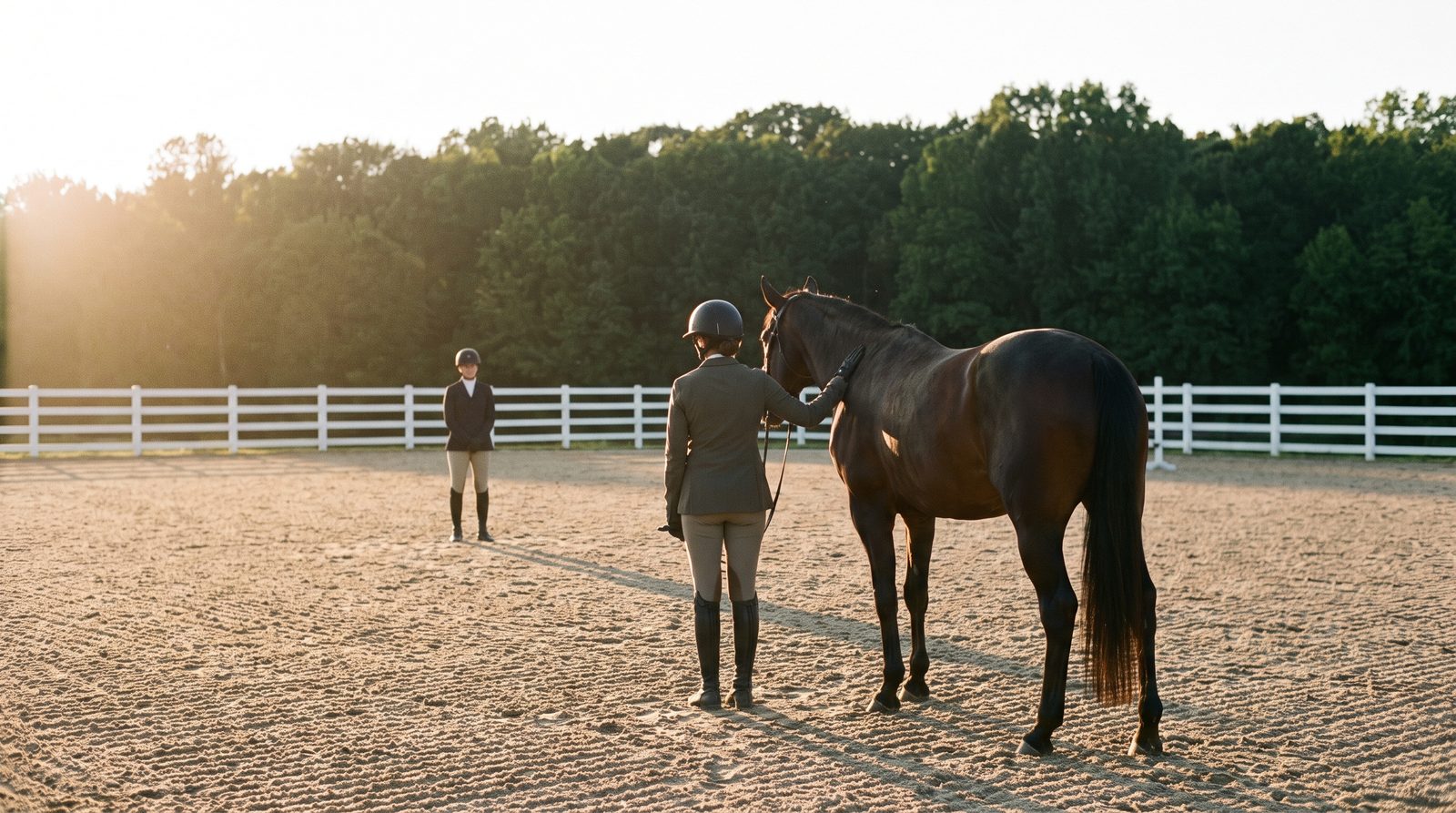
- Groundwork. Often the bulk of the time. Approaching, haltering, leading, grooming, standing quietly. Plenty of programs never get on a horse at all, and that isn't a lesser version of the work.
- Riding, if riding is part of it. In adaptive riding, this is the main event. In other formats, it may not happen at all.
- Winding down. Putting the horse away, a bit of quiet, and a short conversation about how it went.
If you're picturing all of this and mostly feeling nervous about being near a horse in the first place, that's ordinary and worth reading about on its own — we wrote a whole piece for people who are nervous about being around horses.
Questions worth asking any provider in New Jersey
Ask these of us, and of every other farm and clinic you call. The answers should be quick and specific.
- Which of the four are you offering? Therapy, learning, adaptive riding, or hippotherapy.
- Who runs the session, and what are they licensed or certified in? Ask for the actual license or credential, not a general reassurance.
- Is a licensed mental health or medical professional involved? If yes, in what role. If no, that's fine — but it should be said plainly.
- What actually happens in a session? Minute by minute, on the ground and in the saddle.
- How do you handle insurance and billing? Never assume anything is covered. Ask, then confirm it with your own insurer.
- What's the safety setup? Helmets, how many staff per participant, how the horses are chosen, and what happens if a session isn't going well.
- Can we visit and watch first? A yes tells you a lot. So does a no.
One more question, and it isn't for the provider: talk to your own doctor, therapist, or care team before starting anything health-related. They know the situation, and they're the right people to say whether this belongs in the picture at all.
Where Thunder Ridge Farms fits
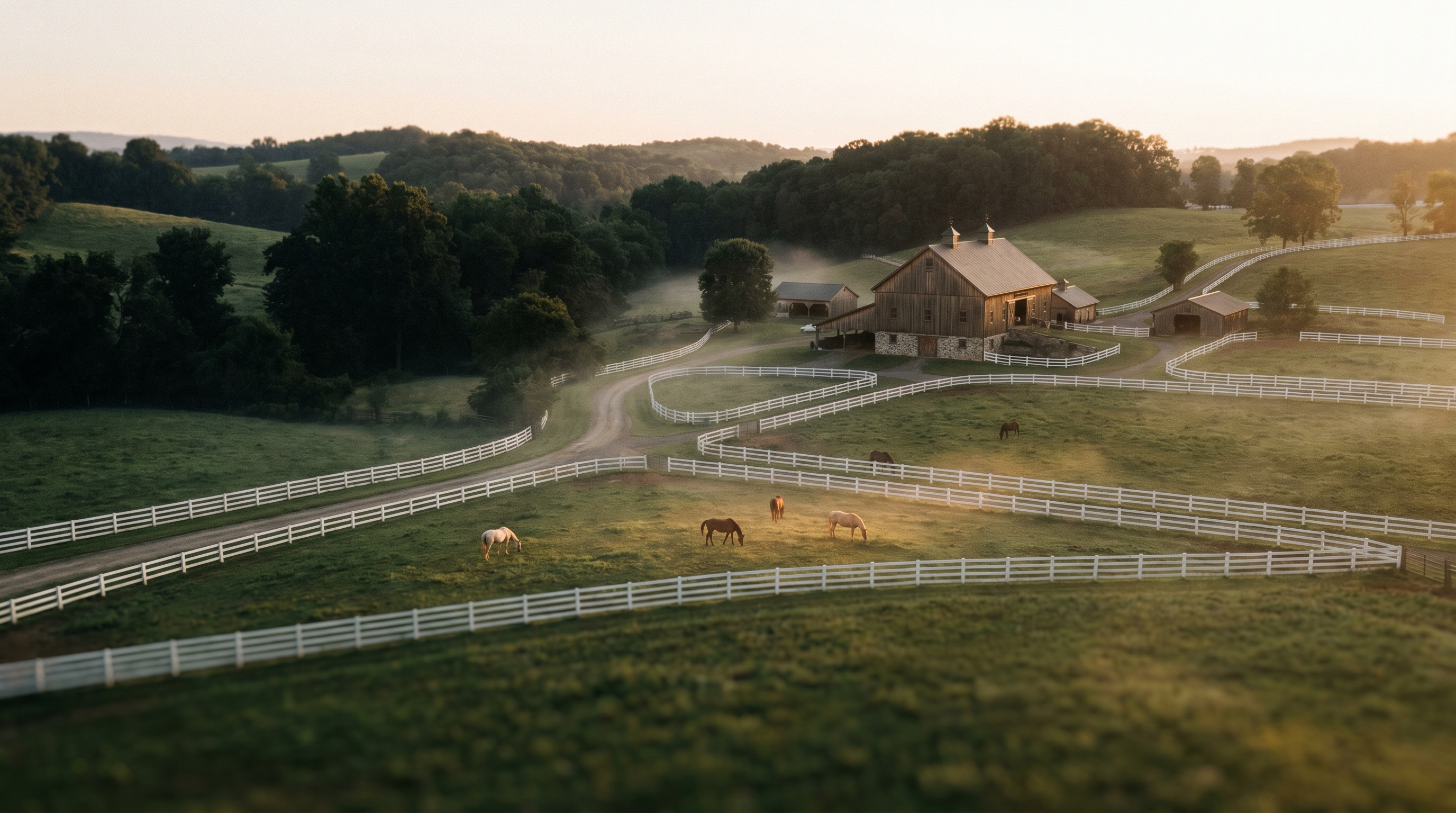
We'll be straight with you. Thunder Ridge Farms is a working American Saddlebred farm in Phillipsburg, NJ. We teach riding, we board, train, breed and sell horses, and we offer equine therapy services.
What we're not going to do on a web page is tell you what that will do for you. We're not going to describe ourselves as clinicians, claim we treat or diagnose anything, or quote you a study. The honest answer to "is this right for my situation?" is a conversation — with us about what our equine therapy services involve, and with your own care team about whether it fits.
If what you're really after is time on a horse, that's a much simpler conversation, and it starts with a lesson. Our full guide to riding lessons in Phillipsburg, NJ covers how lessons work here. If you're researching for an autistic child specifically, we've written separately about therapeutic riding and autistic riders.
So call us at (484) 221-3950 or email info@thunderridgefarms.biz and ask us directly what our equine therapy services include. We'd rather answer the real question than have you guess from a web page. And if you mainly want to find out what being on a horse feels like, you can book the 30-minute trial lesson for $60 and start there instead. We're open Tuesday through Sunday, 10 AM to 8 PM, and closed Mondays.