Horse riding lessons help kids build strength and balance, focus and patience, confidence, empathy, and a real sense of responsibility — all while having fun outdoors with animals instead of screens. Below are nine benefits parents actually notice, plus how to find out if your child loves it with one 30-minute trial lesson.
If your kid is obsessed with horses, you have probably wondered whether lessons are worth it. The short version: the payoff goes far beyond learning to ride. Here's what it actually does for them.
9 real benefits of horse riding lessons for kids
- Physical strength and balance. Staying balanced on a moving horse quietly builds core, leg, and posture strength most sports never reach.
- Coordination and motor skills. Steering, holding the reins, and using hands and legs together sharpens whole-body coordination.
- Focus and patience. Horses respond to calm, clear cues, so kids learn to slow down, pay attention, and try again.
- Confidence and self-esteem. Guiding an animal many times their size gives children a kind of confidence that carries into school and friendships.
- Responsibility. Grooming, leading, and helping care for a horse teaches that a living thing depends on you.
- Empathy and emotional awareness. Horses mirror emotions, so kids learn to read body language and manage their own feelings to keep the horse calm.
- Courage and resilience. Learning something genuinely challenging, and pushing through the wobbly early days, builds grit.
- Time outdoors and unplugged. A lesson is an hour in fresh air on a farm, fully unplugged.
- A healthy lifelong passion. Many riders stay with it for decades. It's an active, social hobby that grows with them.
What a lesson actually looks like for a child
It's worth knowing what produces those nine things, because a riding lesson isn't much like a sports practice.
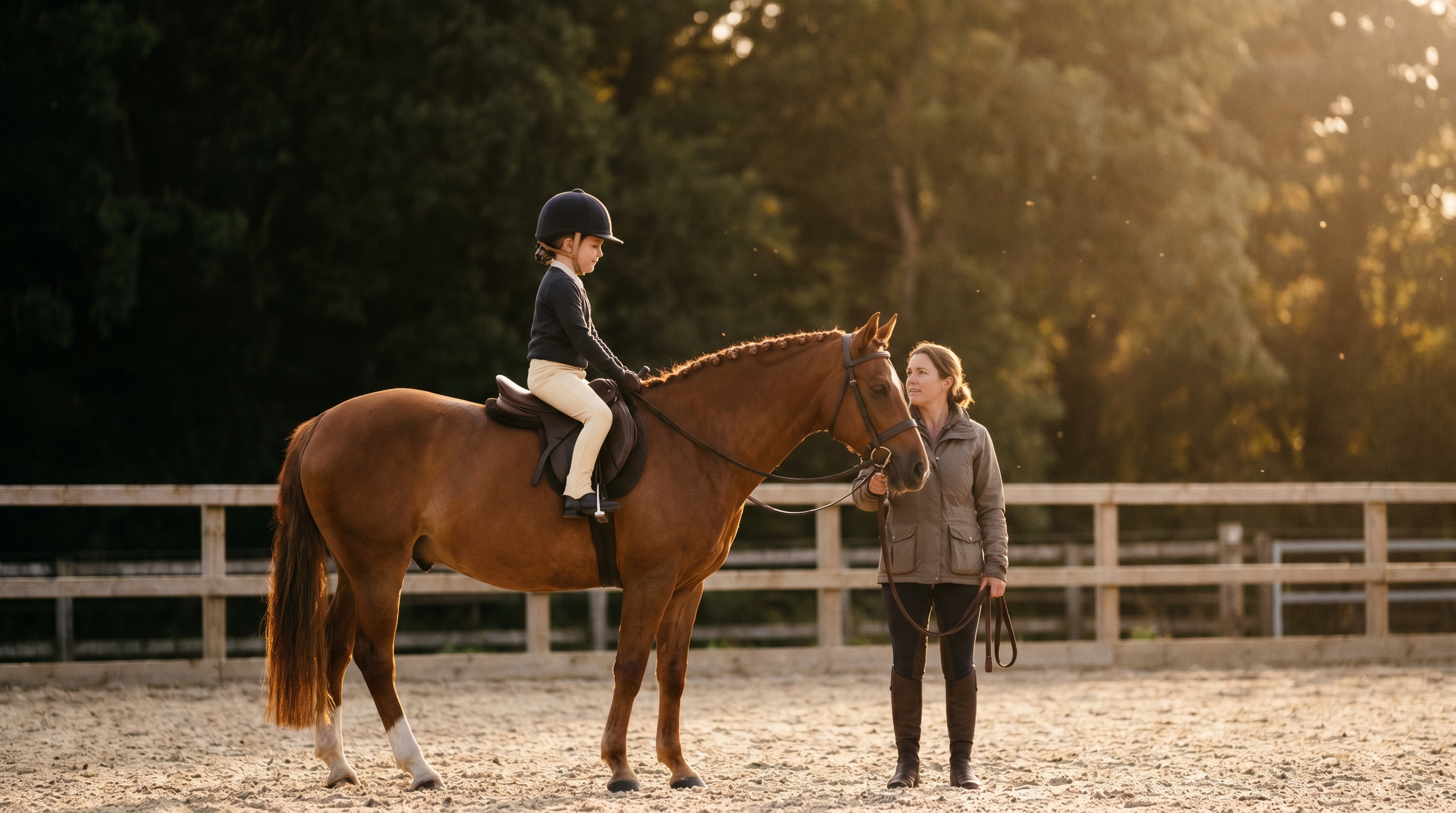
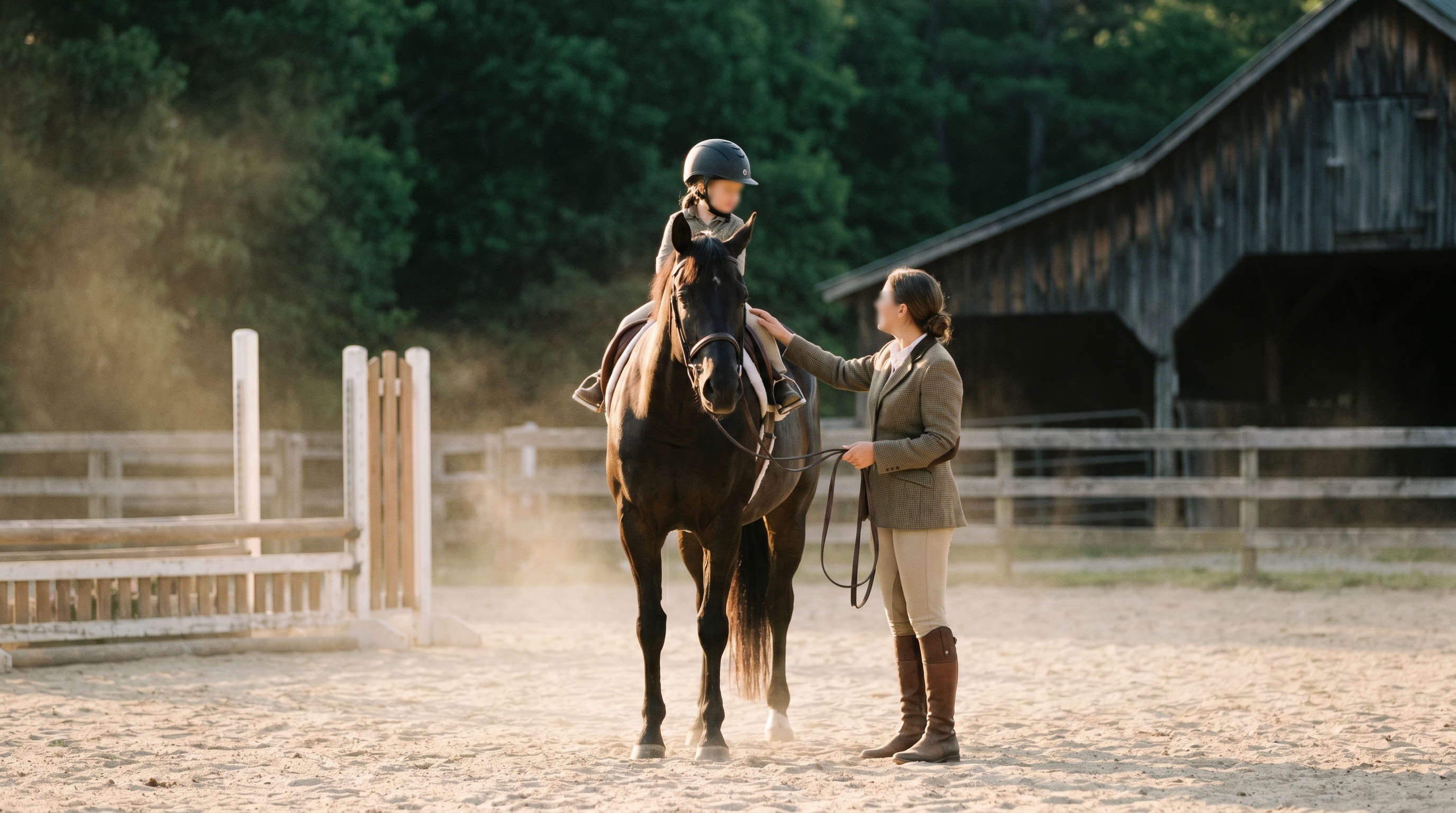
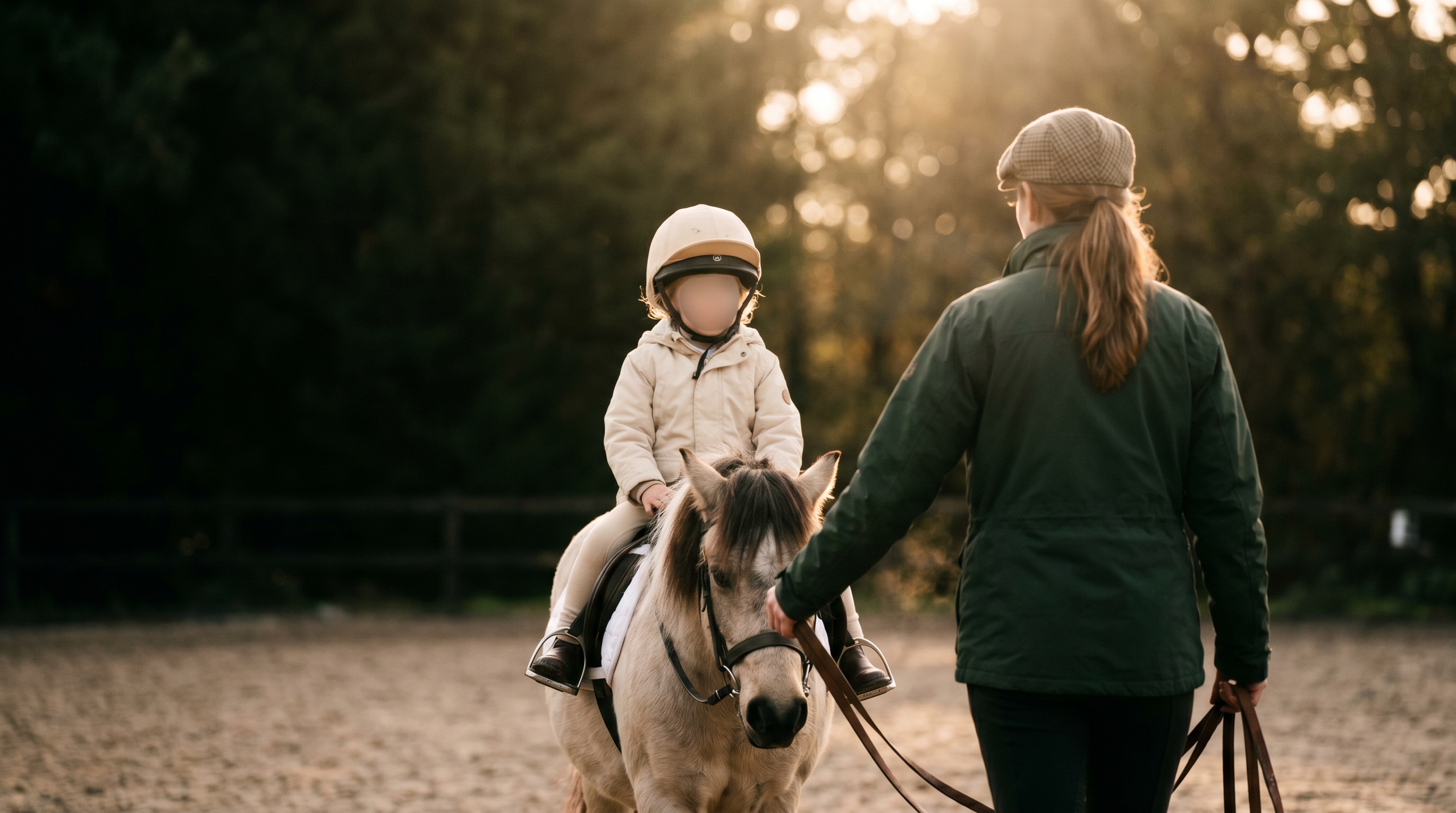
A child arrives and the first thing that happens is not riding. It's meeting the horse: learning where to stand, how to walk up to one, how to read whether it's relaxed. Then the ground basics — leading, mounting, where the hands and feet go. Only then do they get on, and a trainer stays right beside them while they walk, steer, and stop.
The pace is deliberate. There's no drill, no lineup, no waiting their turn while nine other kids go first. That's exactly why the benefits show up: a child gets a full lesson of being responsible for something large and alive, with an adult close enough to keep it safe and far enough back to let it be theirs.
Why horses are such good teachers for children
A horse won't pretend. If a child is anxious or scattered, the horse feels it; when the child settles and gives clear, kind direction, the horse responds. That honest feedback loop teaches self-regulation faster than almost anything a parent can say. Kids learn that calm and consistency get results — a lesson that sticks well beyond the barn.
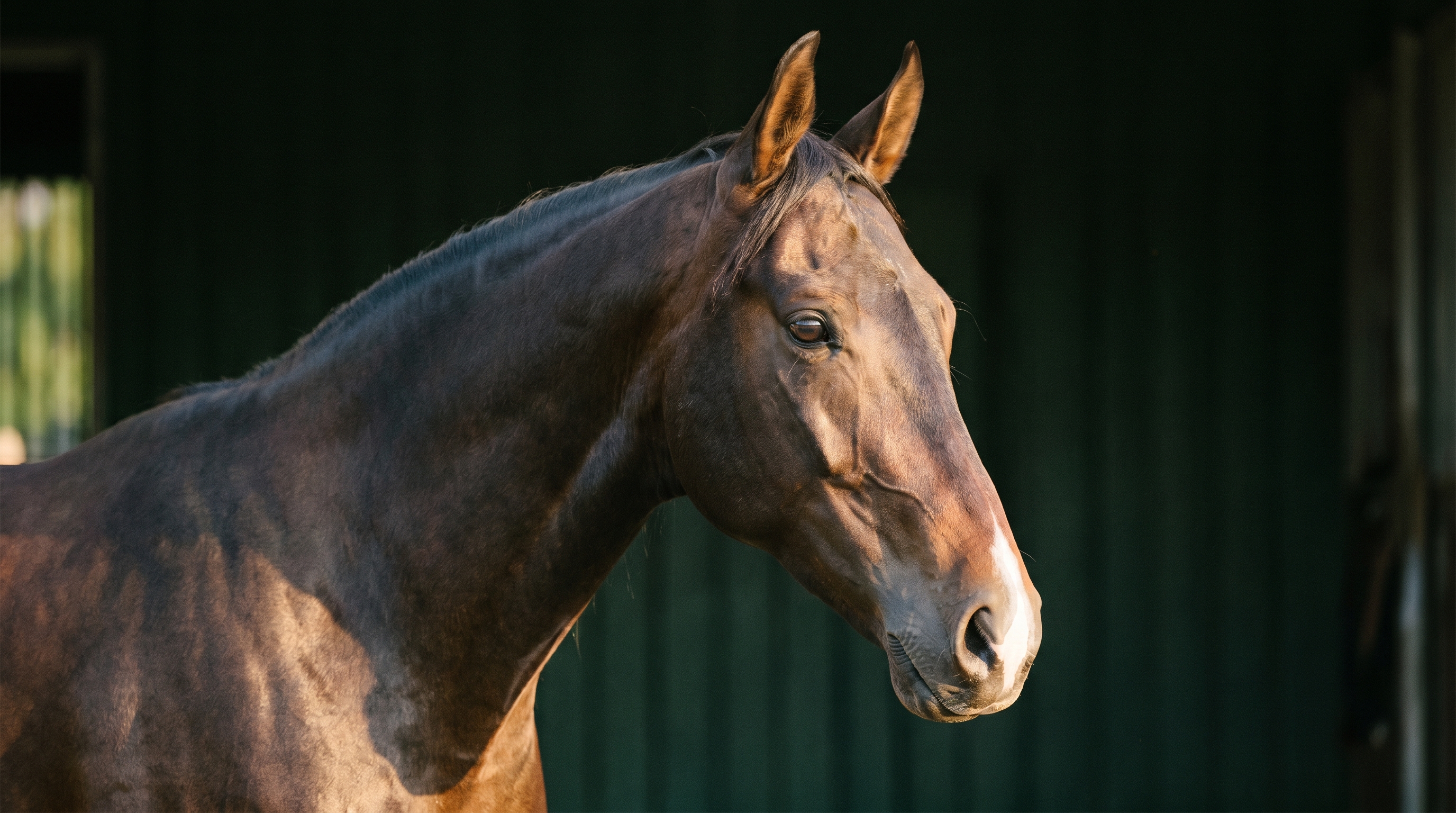
It helps that we specialize in the American Saddlebred, a famously people-loving, intelligent breed. If you want to understand why temperament matters so much for a young rider, our American Saddlebred breed guide explains it.
There's a physical side to that honesty too. A horse reads posture and pressure, not words. A child who is bracing, gripping, or holding their breath gets a horse that feels tight underneath them. A child who softens gets a horse that softens back. Kids work that loop out on their own within a few lessons, and once they have, they've learned something about self-regulation that no worksheet delivers.
The benefits that show up away from the barn
Parents tend to notice the off-horse changes before the riding ones. The changes parents of riding kids tend to notice:
- They're calmer about being bad at something. Riding is humbling early on. A kid who has wobbled through the first month learns that being new is a stage, not a verdict.
- They finish things. Grooming, tacking up, cooling out. The horse still needs the last step even when the fun part is over.
- They speak up. We ask riders to tell us when something feels wrong, and quiet children get a lot of practice at saying so out loud.
- They tolerate weather, dirt, and early mornings. Small thing. It changes a kid.
An honest note on what riding won't do
We'd rather set expectations properly than oversell this.
Riding lessons are not a treatment, and they are not a fix for anything. Some children take to horses immediately and some don't, and a child who doesn't isn't failing at anything. Progress is slow and uneven, the confidence builds over months rather than weeks, and no single lesson turns a shy child into a bold one. Anyone telling you otherwise is selling.
What lessons reliably offer is regular, structured time with an animal that gives honest feedback, supervised by someone who knows what they're doing. Over a long enough stretch, that does a lot of quiet good. It's just not fast, and it's not magic.
Where lessons end and therapy begins
Because we've listed emotional benefits, it's worth being precise about a line that gets blurred a lot.
Standard riding lessons teach riding. Any calm or confidence a child gains is a welcome side effect, not a clinical outcome, and we don't claim it as one. Separately, there's a whole category of work involving horses that gets sold under several confusingly similar names, some of it clinical and some of it not. If that's the direction you're actually looking, read our plain-English primer on what equine assisted therapy in NJ actually means before you book anything, because the terms are not interchangeable.
Parents of autistic children ask us about this often, and the useful part isn't a claim from us — it's knowing what to ask a barn. We put those questions together in therapeutic riding for autistic children, including the things a barn should be able to answer without hesitating. As always, your child's care team should be part of that conversation.
What age can kids start, and is mine ready?
We start riders at age 6 and up. By six, most children have the focus and body awareness to follow a trainer safely. Readiness is about maturity more than the birthday, though, and we walk through the signs to look for in what age kids can start riding lessons.
Safety is the first thing every parent asks about, and rightly so. Here's an honest look at whether horse riding is safe for beginners and exactly how we keep first-timers safe.
The easiest way to find out: a 30-minute trial lesson
You don't have to commit to a season of lessons to see whether your child lights up around horses. Their first lesson at Thunder Ridge is a 30-minute trial for just $60, with no obligation — they'll meet a calm horse, learn the basics, and take a guided ride with a trainer beside them the whole time. For the full picture of how lessons work locally, see our guide to horse riding lessons in Phillipsburg, NJ.
Book your child's 30-minute trial lesson
We're open Tuesday through Sunday, 10 AM to 8 PM, closed Mondays, and we keep first-lesson spots limited so every child gets real one-on-one attention. Weekend slots fill first. Book your child's 30-minute trial or call (484) 221-3950, and we'll find a time that works for your family.