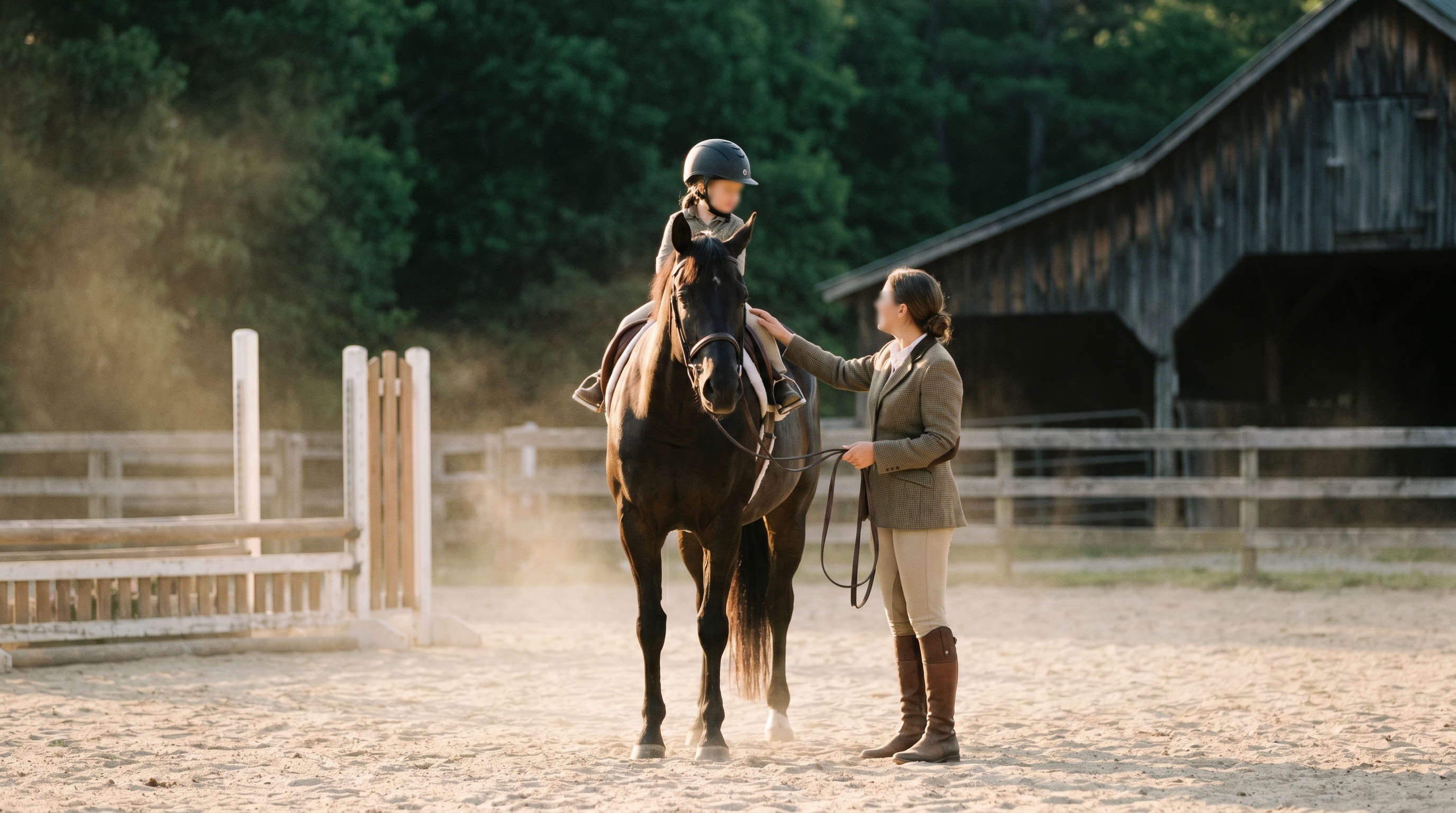
Yes, you can absolutely start horse riding lessons as an adult, and more people do it than you'd think. At Thunder Ridge Farms there's no upper age limit. Adult beginners learn the same calm, three-step way everyone does: meet a gentle horse, learn the basics on the ground, then ride with a trainer right beside you.
If a small voice keeps telling you that you missed your chance, this guide is for you. We'll cover whether you're too old to start (you aren't), what makes adult beginner lessons a little different, and exactly how to take the first, no-pressure step.
Am I too old to learn to ride? Almost certainly not
You aren't too old to learn to ride. Riding is one of the few sports you can pick up at almost any age and keep doing for decades. We regularly start adults in their 30s, 40s, 50s, and well beyond. Horses don't care how old you are, and neither do we.
What matters far more than age is the right horse at the right pace. A calm, well-trained lesson horse and a trainer who moves at your speed turn riding from intimidating into genuinely fun. That's the entire job of a good first lesson.
What's different about adult beginner lessons
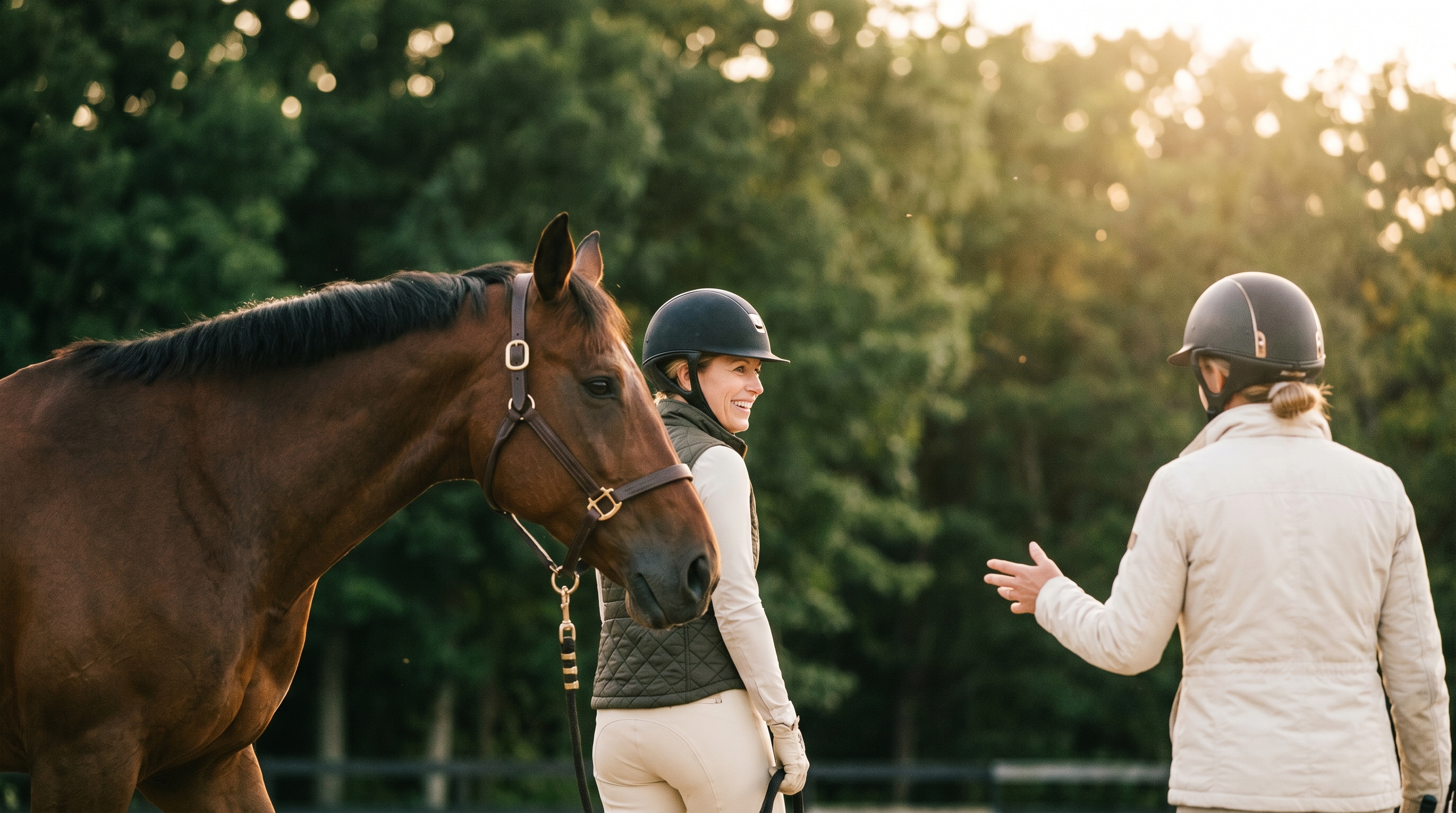
Adults learn a little differently from kids, and a good barn leans into that. You'll probably want to understand the reason behind each instruction rather than just follow it, and you may carry a bit more caution. Both are assets in the saddle.
- You ask better questions. Understanding how a horse thinks is what makes it stop feeling unpredictable.
- You set your own pace. There's no rush to progress and no class of ten-year-olds to keep up with.
- You have clearer goals. Trail riding, showing one day, or simply a calming weekend hobby — knowing what you want shapes the lessons.
For a minute-by-minute picture of how that first hour unfolds, our walkthrough on what to expect in your first horse riding lesson applies to adults every bit as much as kids.
What your first adult lesson looks like
The first lesson is built around one beginner at a time, and it follows three unhurried steps:
- Meet your horse. You learn how to approach, lead, and read a calm horse on the ground before anything else.
- Learn the safety basics. How to mount, how to hold the reins, where your feet sit, and how to stop.
- Ride with a trainer beside you. You walk, steer, and stop at your own pace. No galloping, nothing you aren't ready for.
Safety is the first thing we teach, which is exactly why nervous adults tend to settle quickly. If that's your main hesitation, we answer it honestly in is horse riding safe for beginners.
The three things adult beginners actually worry about
Adults rarely say out loud what's holding them back, so let's put the common ones on the table.
"Am I fit enough?" Almost certainly, for a first lesson. Walking a horse is not strenuous. What it does ask for is some balance and a bit of core, and both build from riding itself rather than being a prerequisite. You'll feel it in your inner thighs the next day. That's normal and it stops happening.
"Am I too heavy?" A fair question and one people are embarrassed to ask, so ask it on the phone and expect a straight answer. Horses have real limits, and a responsible barn matches a rider to a horse that can carry them comfortably rather than pretending the question doesn't exist. We'd far rather have that conversation before you drive out.
"What if I panic?" Then we stop. Sitting on a horse and deciding you'd rather get off is a complete, successful first lesson. You won't be asked to push past your own nerves, and a trainer stays close enough to take the reins.
More than a hobby: what riding gives adults
Beyond being genuinely fun, riding asks something of your whole self in a way most adult routines don't.
- Core strength and balance. Staying centered on a moving horse works muscles a desk job never touches.
- Focus and presence. You can't scroll your phone on a horse. An hour at the barn is an hour fully out of your head.
- Calm. Time around horses is grounding in a way that's hard to describe until you feel it.
- A real skill. You're learning to communicate with a half-ton animal, and that quiet confidence carries off the farm.
Driving: the other way in
Here's an option most adults don't know exists, and it suits a particular kind of beginner very well.
Driving means working a horse from a cart, using long lines and a harness, with your feet on solid boards instead of in stirrups. The horsemanship is real — you're still reading the animal, still giving clear cues, still responsible for what happens — but you're not sitting several feet off the ground, and balance isn't part of the problem you're solving. For someone with a back or hip that rules out the saddle, or someone whose nerves are specifically about height, it's a genuine route in rather than a consolation prize. We teach it, and we explain what a first session covers in our guide to horse driving lessons.
Plenty of people do both eventually. But if riding has always been a no for a physical reason, this is worth asking about.
Getting back in the saddle: returning riders
Maybe you rode as a kid and life got in the way. Returning riders are some of our favorite people to teach. The muscle memory often comes back faster than you expect, but bodies change over the years, so we treat you as a confident beginner and rebuild from a safe, solid base.
There's no ego at a good barn. Tell us what you used to do and how long it has been, and we'll meet you exactly where you are today.
What the first few months tend to look like
One lesson tells you whether you like it. A few months tell you whether you're a rider.
Most adults find the early weeks come in a particular order. First the horse stops feeling unpredictable, which is mostly a matter of understanding why it does what it does. Then your body stops fighting the movement and starts going with it. Then, later than you'd like, steering and stopping become things you do rather than things you think about. The plateau in the middle, where nothing seems to improve for a few weeks, catches everyone and means nothing.
A weekly slot is the usual rhythm, and it works better than cramming lessons together. Riding is a physical skill, and the rest between sessions is part of how it sticks.
What to wear and how to start
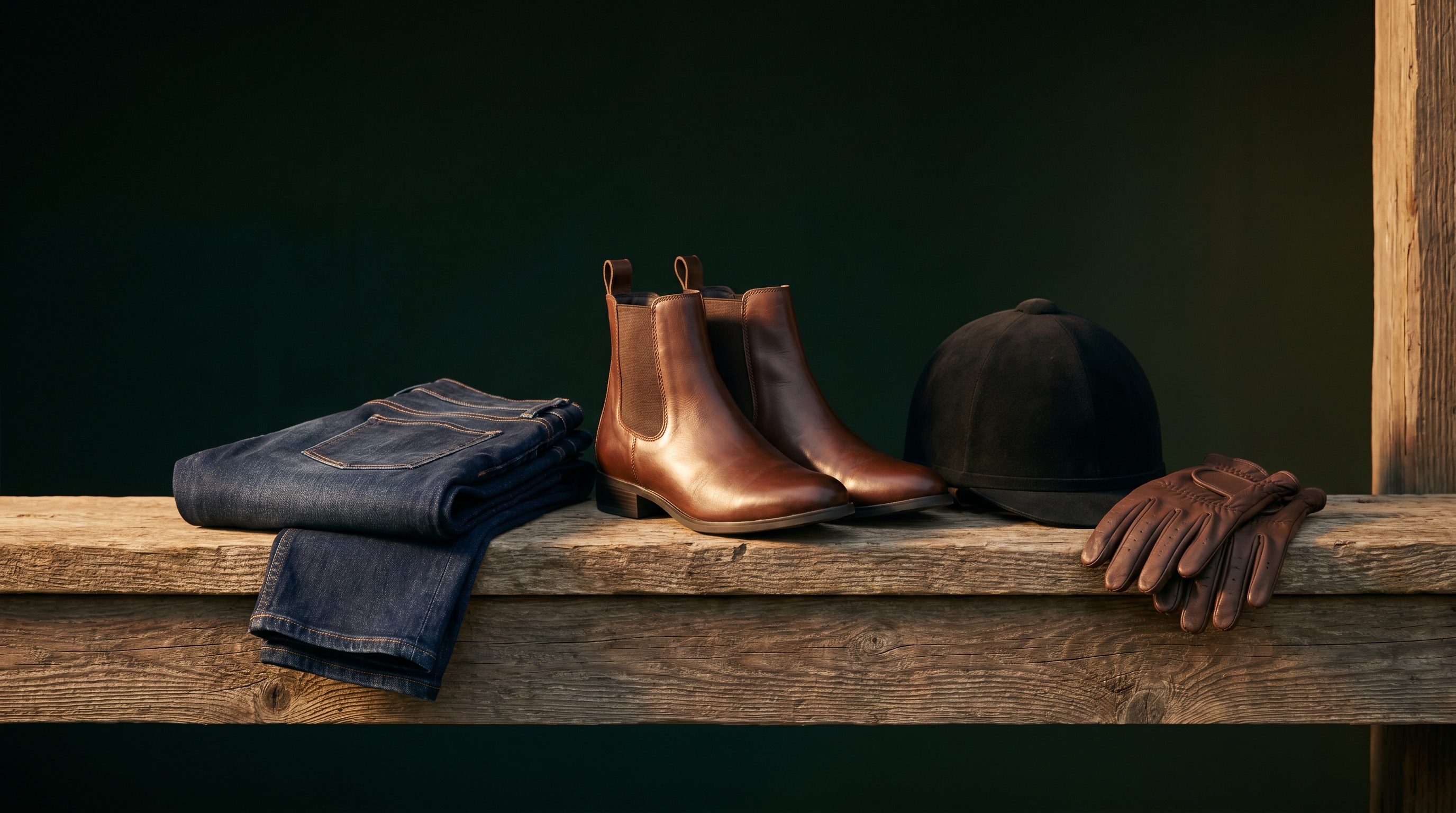
You don't need to buy anything. Wear long pants like jeans and closed-toe shoes, and we provide the helmet and the rest. Our short what to wear to a riding lesson checklist covers footwear and the few things to leave at home.
For the bigger picture of how lessons work in our area, see our complete guide to horse riding lessons in Phillipsburg, NJ.
Book your 30-minute trial lesson
The easiest way to find out if riding is for you is to try it once, with no commitment. Your first lesson at Thunder Ridge is a 30-minute trial for just $60 — no experience, no gear, and no pressure to sign up afterward.
We're open Tuesday through Sunday, 10 AM to 8 PM, and closed Mondays, and we keep first-lesson spots limited so every new rider gets real one-on-one time. Book your 30-minute trial or call (484) 221-3950, and we'll find a time that works.