Most people can sit on a calm horse and walk it around a ring, with an instructor beside them, in their very first lesson. Getting to the point where you'd call yourself a rider, safe and independent at a walk, trot, and canter on a horse you don't know, usually takes many months of regular lessons, and for plenty of people it takes longer than that.
That's the honest answer, and it's frustrating, because nobody wants a range. So let's do the useful thing instead: break down what actually happens along the way, and what genuinely speeds it up or slows it down.
Anyone who tells you a fixed number of lessons is guessing. Riding isn't a course you complete. It's a physical skill you build, like swimming or a musical instrument, on top of a partner who has opinions of their own.
Milestones, described by what you can do
Timelines lie. Capabilities don't. So here's the progression riders actually move through, in order, with no promised dates attached.
- Sitting comfortably at a walk, and steering. You're on the horse, your body isn't fighting it, and you can ask it to go left, right, and forward. Many riders reach this in their first lesson or two, with support.
- A balanced trot, posting or sitting. This is the first real wall, and the first big win. The trot bounces, and learning to move with it instead of against it takes repetition. When posting finally clicks, it clicks all at once.
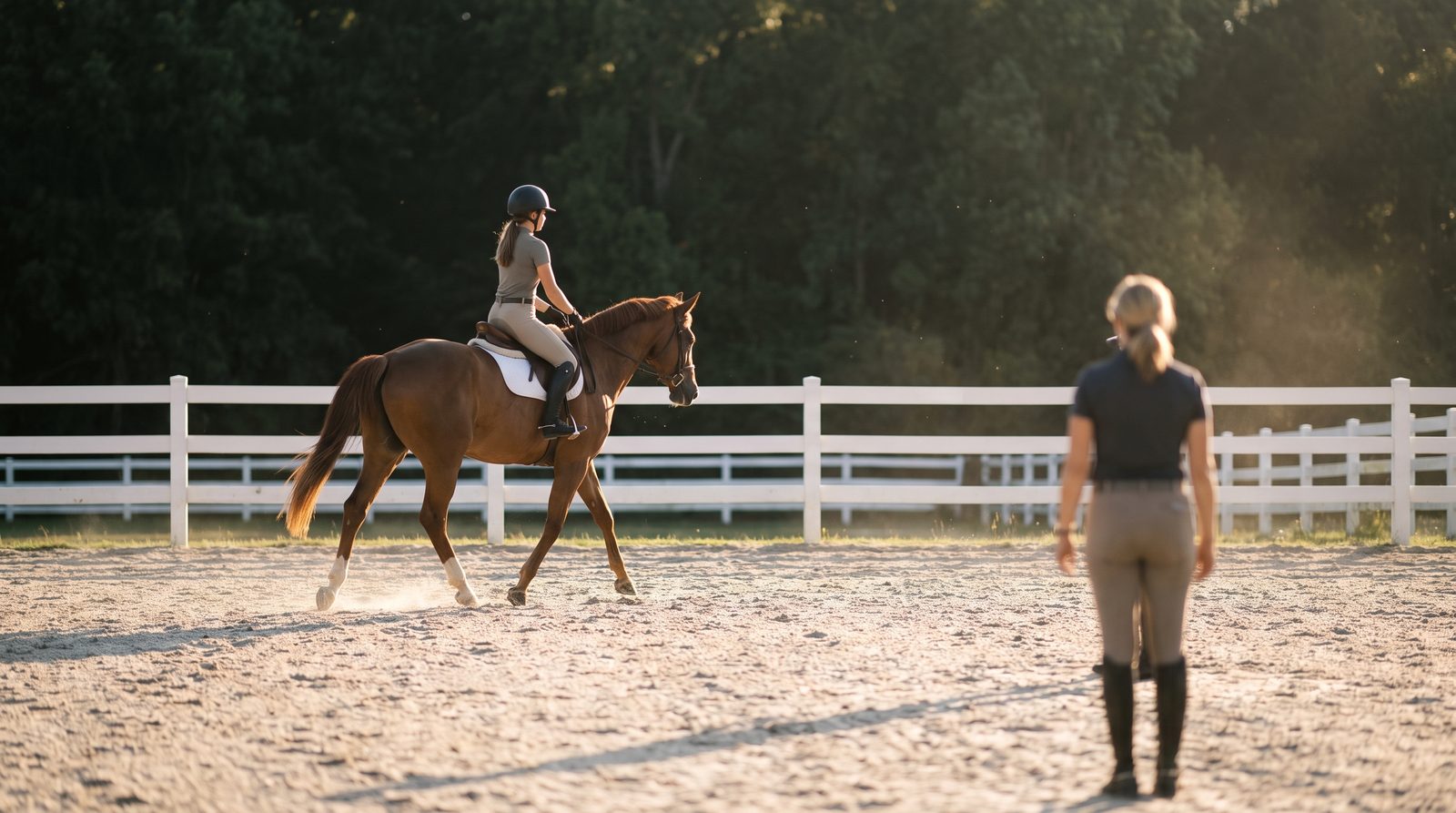
- Confident independent control at walk and trot. No lead rope, no hand on the bridle. You start, steer, and stop on your own, and you can fix small problems without being told. This is where a lot of people stop feeling like a passenger.
- Canter. Faster, smoother than the trot, and mostly a confidence hurdle. Riders who are relaxed by this stage often find it easier than they expected. Riders who are still tense find it harder.
- The long stretch afterward. This is where you stop thinking about yourself and start reading the horse. You notice a tight back, a distracted ear, a shift in energy, and you adjust before anything happens. This part is open-ended. Lifelong riders are still working on it.
Notice that the first four have rough edges but real finish lines. The fifth doesn't. That's the honest shape of learning to ride.
What actually changes the timeline
Two people can start the same week and be in completely different places six months later. Here's what's usually behind that.
- How often you ride. The single biggest factor. Weekly beats sporadic every time, because your body forgets patterns between long gaps. Twice a week moves faster than once, but consistency matters more than frequency.
- Age and fitness. Kids often pick up balance quickly because they're fearless and light. Adults usually understand instructions better and improve more deliberately. Core strength and general fitness help, but no one needs to be an athlete.
- Nerves. Underrated, and often the real bottleneck. A tense body can't feel what a horse is doing. Fear doesn't make you a slow learner, but unaddressed fear will hold you at a plateau. If this is you, our piece on being nervous about horseback riding is a good place to start.
- Whether you ride the same horse. Riding one familiar horse builds confidence fast. Riding different horses builds skill faster, because you learn to adapt instead of memorizing one animal. Good programs mix both, in that order.
- Quality of instruction. An instructor who explains why in plain language, and who corrects one thing at a time, will get you further than one who just calls out commands.
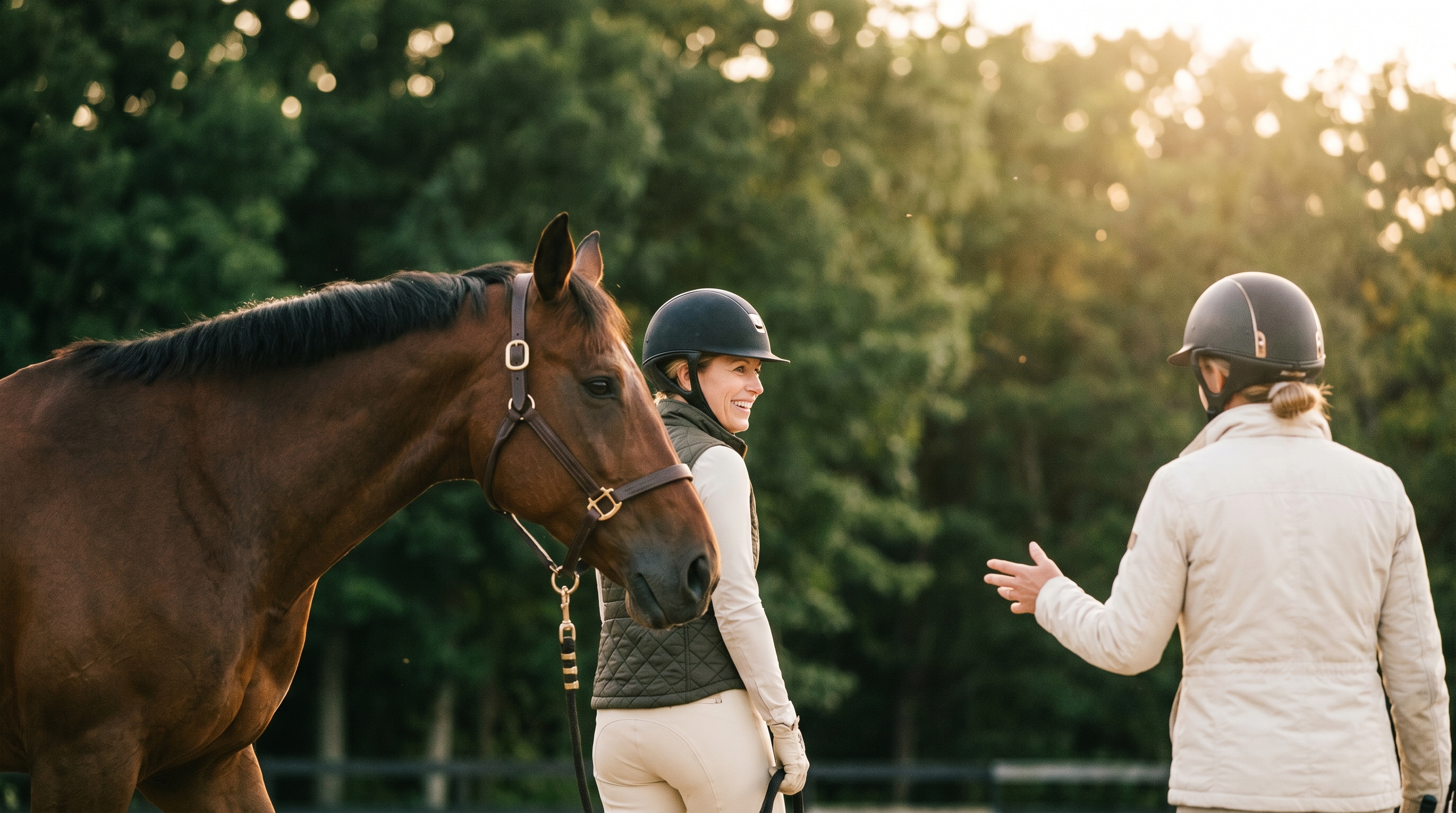
- Time spent on the ground. Grooming, tacking, leading, watching other lessons. It looks like it isn't riding, but it's where horsemanship comes from, and riders who do it read horses noticeably better.
On the frequency question specifically, we go deeper in our guide to how often you should take riding lessons. The short version: pick a rhythm you can actually keep.
Adult beginners: the honest version
Adults ask this question more anxiously than anyone, usually with a quiet worry underneath it: am I too old to get good at this?
No. But your path looks a bit different from a nine-year-old's, and it's worth knowing how.
What's harder as an adult: you have further to fall in your own head. You understand risk, you've got a job on Monday, and you've spent decades not being a beginner at anything. That self-consciousness is often the biggest brake, not your body.
What's easier: you learn from explanation. Tell an adult why their heel needs to drop and they'll fix it and keep it fixed. Kids get there by repetition; adults can get there by understanding, and that's a genuine advantage. Adults also tend to be consistent, and consistency beats natural talent over a year.
The riders who get somewhere aren't the naturally gifted ones. They're the ones who keep showing up when it's cold and they're tired.
Many adult beginners find the trot takes longer than they'd like and the canter comes easier than they feared. If you're starting from zero as a grown-up, our page on adult riding lessons for beginners covers what to expect without the sugarcoating.
The plateau, and why it isn't failure
At some point, usually somewhere after the early wins stop arriving weekly, progress goes flat. You'll ride a lesson and feel like you were worse than last week. Then another. It's discouraging enough that this is where a lot of people quit.
Here's what's actually happening. Early on, you improved by adding skills, and every lesson had something new in it. Later, you improve by refining, and refinement is invisible from the inside. Your hands get quieter by an inch. Your timing gets better by a fraction of a second. You can't feel a change that small, but the horse can, and your instructor can see it.
The plateau is also where your standards jump. You've learned enough to notice your own mistakes for the first time. Feeling worse is often the direct evidence that you got better.
What helps: ask your instructor to name one specific thing you've improved that you haven't noticed. Ride a different horse. Spend a lesson on something unrelated. And keep the appointment, because the far side of a plateau always arrives on an ordinary day you weren't expecting anything from.
So what does "learning to ride" actually mean?
Part of why this question has no clean answer is that people mean different things by it.
- "I want to ride a horse once." That happens on day one, safely, with an instructor beside you.
- "I want to be comfortable and in control." Months of regular lessons for most people, not weeks.
- "I want to ride any horse, competently." Years. And that's the normal answer, not a discouraging one.
- "I want to compete." Depends entirely on the discipline and the goal, and it's a conversation to have with an instructor who has watched you ride.
Decide which one you actually want before you measure yourself against a timeline. Most people who say they want to "learn to ride" mean the second one, and that goal is very much reachable with a steady weekly habit.
For the full picture of how lessons work, who they're for, and the styles we teach, see our guide to horse riding lessons in Phillipsburg, NJ.
The only way to start the clock
You can't research your way to an answer on this one. How fast you learn depends on things nobody can predict from the outside, including how you feel the first time a horse moves underneath you.
So start there. Your first visit is a 30-minute trial lesson for $60, with no experience needed. Long pants and closed-toe shoes — we provide the helmet. Riders start at age 6, and there's no upper limit.
Your instructor will pair you with a horse suited to a first-timer and stay right beside you, and you'll leave with a far better sense of your own timeline than any article can give you. When you're ready, book your 30-minute trial lesson, or call us at (484) 221-3950 with questions first. We're at 160 Esposito Road in Phillipsburg, open Tuesday through Sunday.