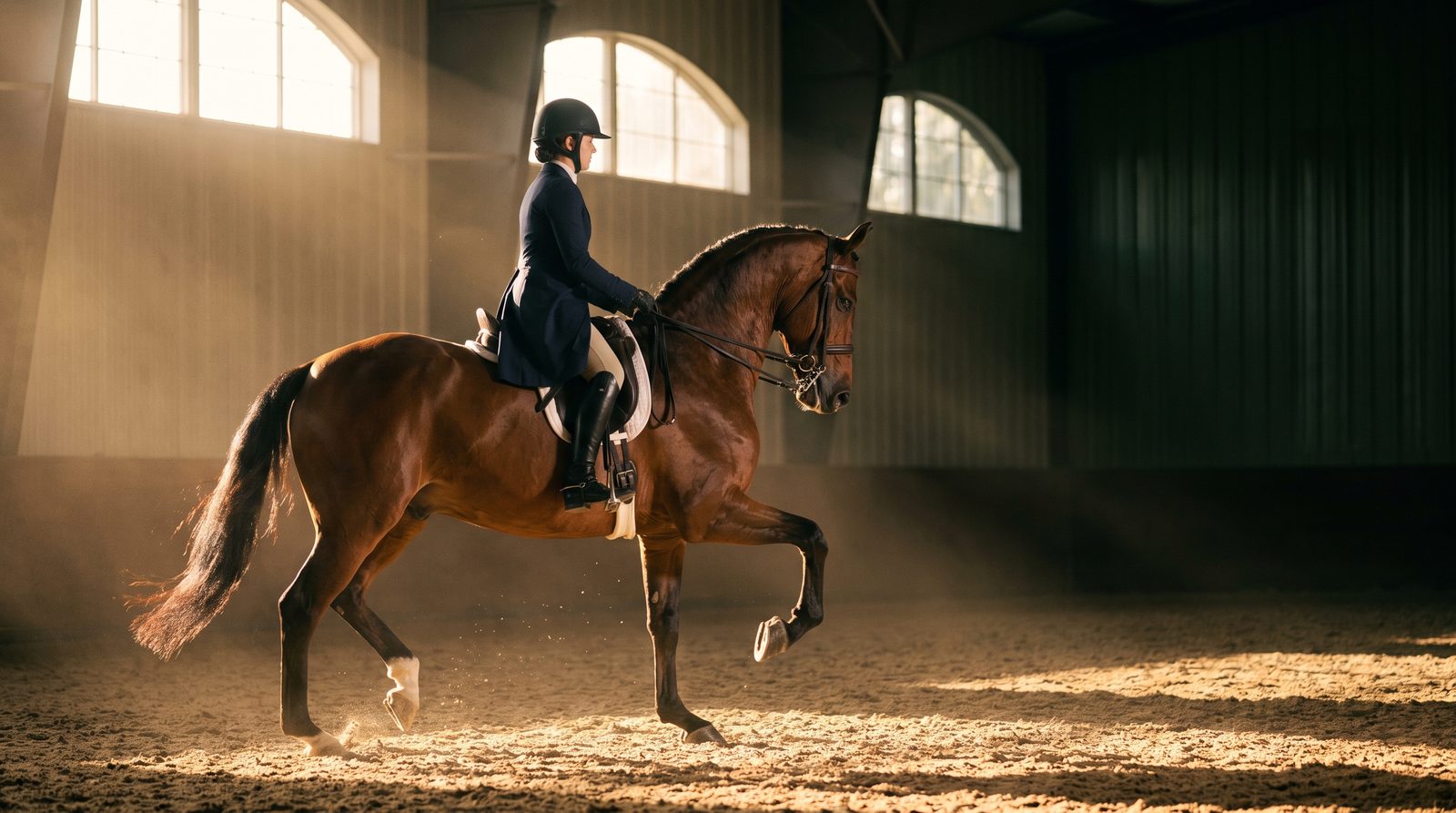
A first horse show day is mostly waiting, a little riding, and a lot of nerves packed into a few minutes in the ring. If you know the shape of the day ahead of time, most of the fear is gone before you load the car.
Below is how a first horse show day usually runs, what to pack, and what helps with ring nerves, for the rider and for the parent at the rail. Our own team and students compete in Saddle Seat and Western, so this comes from people who know show mornings.
What a first horse show day actually looks like
Every show runs a little differently, but the day tends to follow the same rhythm. Here's the usual order:
- Arrive early. Give yourself time to park, find the stabling area, and get your bearings before anything is expected of you.
- Check in at the show office. Confirm your entries and pick up your back number, the card the rider wears so the judge and announcer can tell riders apart.
- Get dressed and get the horse ready. Grooming, tack, a last wipe of the boots. Many riders change into show clothes as late as they can to keep them clean.
- Warm up. Most shows have a warm-up area where riders loosen up before their class. It can feel crowded, so keep your spacing and follow your trainer's plan.
- Wait for your class. Classes run in order, and the schedule often drifts. Listen for calls over the loudspeaker or at the gate as your class gets close.
- Ride your class. In most rail classes, riders enter together and the announcer calls each gait. You work the ring one direction, reverse, then work the other way.
- Line up. Riders line up in the center while the judge finishes, then placings are announced and ribbons handed out.
The class itself may be over in a handful of minutes. The rest of the day is getting there, getting ready, and waiting. If a first show feels long, nothing went wrong. That's just what shows are like.
A first show isn't a test of how good you are. It's practice doing what you already know in a new place, with more people watching.
How do you know a rider is ready for a first show?
There's no set number of lessons and no magic age. Readiness is about whether the rider can handle a horse calmly and safely in a busy, unfamiliar place. Signs that usually point to yes:
- They can steer, stop, and control their speed on their own, without the trainer stepping in.
- They stay steady when something unexpected happens, like another horse passing close.
- They're comfortable at every gait their class will ask for, in both directions.
- They actually want to go. Showing because a parent wants it rarely goes well.
Many shows offer classes for newer riders, such as walk-trot classes, where nobody is asked to canter. In the Saddlebred world you'll also hear about academy classes, which are meant for riders who learn on lesson horses. Names and rules vary from show to show, so read the prize list (the show's schedule and class descriptions) with your trainer before you enter anything.
The person who should make the call is the rider's trainer. They watch the rider in lessons and know which horse and which class will make a first show a good experience. At Thunder Ridge, the trainers who coach our show team in Saddle Seat and Western are the same people who teach first lessons, so that conversation can happen in person when the time comes.
If you're curious about the discipline built to show off the Saddlebred's high, animated action, start with our guide to what Saddle Seat riding actually is.
What to pack for your first horse show
Pack the night before. Show mornings start early, and the thing you forget is always the thing you need.
For the rider
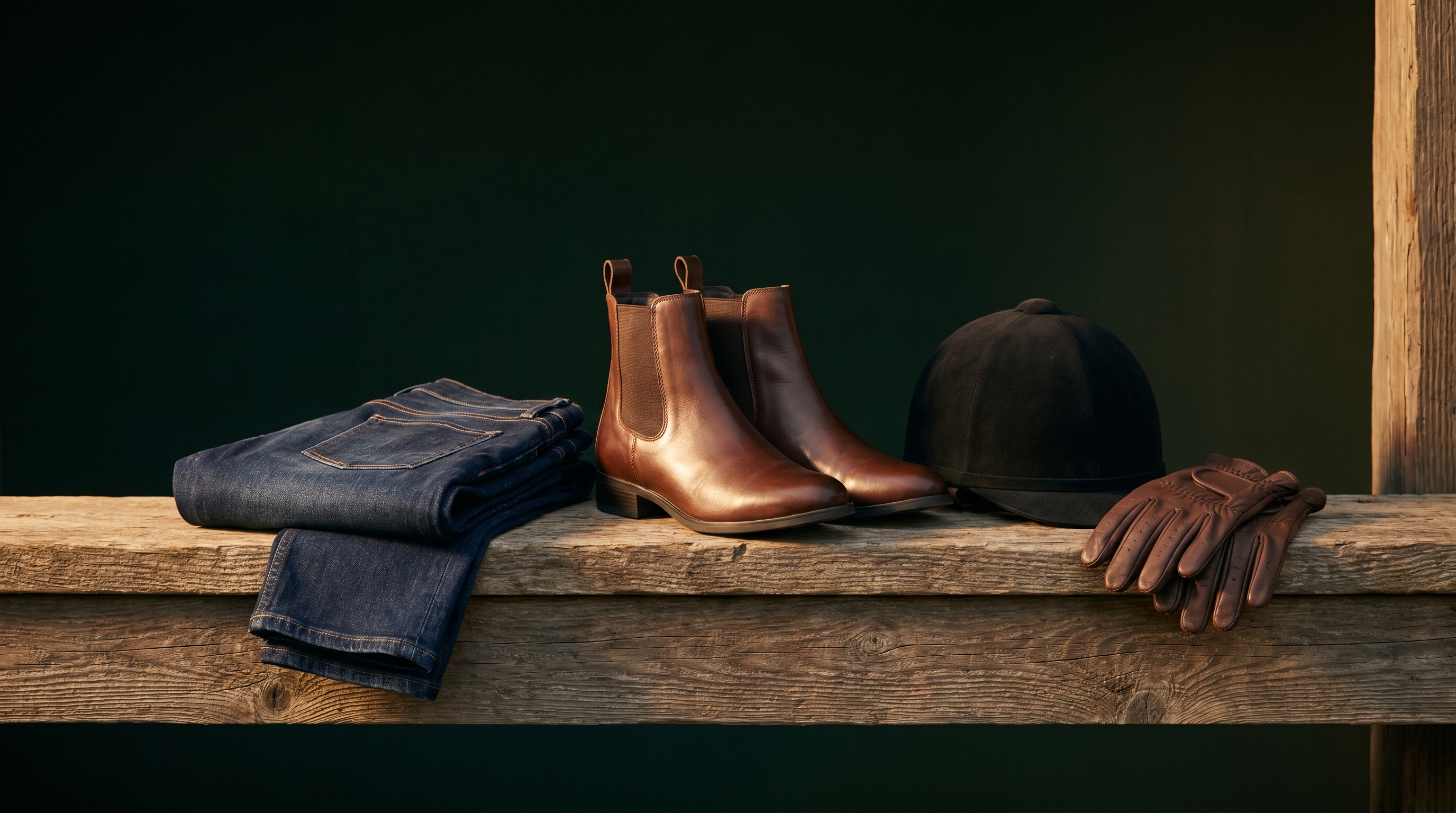
- Show clothes in a garment bag. What you wear depends on the discipline and the class. Saddle Seat riders traditionally wear a fitted suit with long jodhpurs and jodhpur boots. Western riders usually wear a show shirt, pants, chaps, boots, and a hat or helmet. Ask your trainer what your class calls for before you buy anything.
- A riding helmet. Helmet rules differ by show, age, and discipline. Check them ahead of time, and pack one either way.
- Hair supplies. Hair nets, bobby pins, and elastics. Neat hair is part of the turnout in most classes.
- Gloves, spare socks, and safety pins for the back number.
- Everyday barn clothes to change into, so show clothes stay clean until it's time to ride.
For the day
- Water and easy snacks. Nervous riders forget to eat, then fade by afternoon.
- Layers and a rain jacket. Show grounds can swing from chilly to hot in one day.
- Sunscreen, a folding chair, and a rag for last-minute dust on boots.
- A small first aid kit for people, with bandages and any personal medication.
- The class schedule, printed or saved on your phone, with your classes circled.
If you're riding a barn horse, ask your trainer early who brings what, so nobody assumes someone else packed the bridle. And if all of this is new, our guide to what to wear for a riding lesson covers the everyday basics that show clothes build on.
Ring nerves: what they are and what helps
Almost every rider gets nervous before a first class, and plenty of experienced riders still do. A tight stomach, shaky hands, a sudden need for the bathroom: that's your body getting ready for something that matters to you. It isn't a sign you don't belong there.
What tends to help:
- Breathe out longer than you breathe in. A few slow exhales at the gate settle your body faster than a pep talk.
- Pick one job. Don't try to remember everything. Choose one cue, like "eyes up" or "heels down," and hold on to that.
- Let the horse help. A seasoned show horse has done this before and can carry some of the confidence for you.
- Keep your routine. Warm up the way you do at home. Familiar steps make a strange place feel smaller.
- Expect a mistake or two. A late transition, a missed call, a wobbly reverse. Judges see it all day. Keep riding and finish the class.
Nerves often hit hardest while waiting at the gate. Once you're moving and listening for the announcer, there's less room to worry. If nerves around horses are bigger than show day, our post on feeling nervous about horseback riding goes deeper.
For parents: how to help from the rail
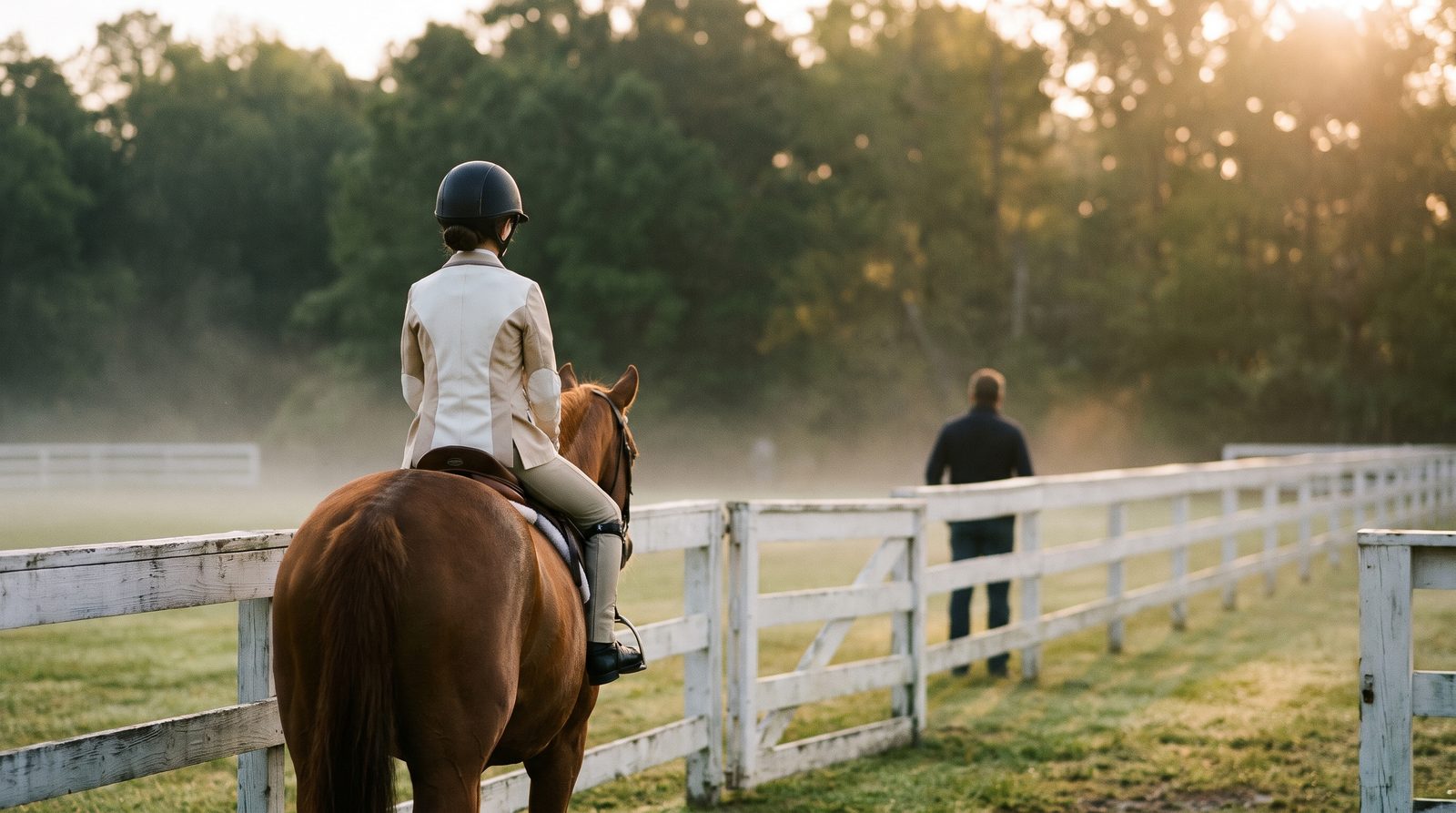
Parents get nervous too, and kids pick up on it. Your job on show day is simpler than it feels.
- Be the calm one. Keep your voice easy, even if your stomach is in knots.
- Leave the coaching to the trainer. Two voices giving instructions confuse a rider. Cheer, and save the tips for another day.
- Handle the logistics. Snacks, water, schedule, sunscreen. Taking those off your rider's plate is real help.
- Ask about the ride before the ribbon. "What felt good out there?" lands better than "How did you place?"
- Mind the traffic. Show grounds are busy. Keep siblings close and step aside for riders heading to the ring.
Whatever happens in the ring, a first show is a big step. The ribbon matters less than a rider who wants to go back.
Every first show starts with a first lesson
If showing feels far off right now, that's normal. Every rider in a show ring had a first day on the ground, meeting a horse up close.
At Thunder Ridge Farms in Phillipsburg, NJ, that first day is a 30-minute trial lesson for $60. You'll meet a calm, well-trained horse, learn the safety basics on the ground, and take a guided ride with a trainer beside you the whole time. No experience or gear needed, just long pants and closed-toe shoes. We provide the helmet. Riders start at age 6, with no upper limit.
Walk through Thunder Ridge and you'll see the championship ribbons and trophies our team and students have earned at shows across the region. Your rider might want that someday, or might just want to ride for fun. Either way, it starts in the same place. For the bigger picture of how lessons work here, read our guide to horse riding lessons in Phillipsburg, NJ.
We're open Tuesday through Sunday, 10 AM to 8 PM, and closed Mondays. When you're ready, book a 30-minute trial lesson and we'll call to confirm a day and time. There's no pressure to sign up for anything after.