Buying your first horse is one of those decisions that feels enormous right up until you do it, and then feels enormous in a completely different way afterwards. It's a wonderful thing. It's also a living animal that needs you every single day, including the days you're sick, snowed in, or away for work.
So this is a calm, practical guide, written the way a barn owner would talk you through it over a fence rail. Some of it is cautionary. None of it is meant to talk you out of anything. Plenty of people buy their first horse and never regret a minute of it. The ones who struggle are almost always the ones who skipped a step here.
First, honestly: are you ready?
There's no license for this, so you have to be your own gatekeeper. A few signals suggest you're genuinely ready rather than just excited:
- You're riding consistently. Not "I rode a lot as a kid." Regularly, now, on more than one horse, over a stretch of months.
- You're comfortable handling a horse on the ground. Catching, leading, tying, grooming, picking out feet, handling one that's a bit fresh. Riding is maybe a fifth of horse ownership.
- You know what you want to do with it. Show? Trail? Quiet arena riding? Driving? A horse suited to one of those may be wrong for another.
- Your instructor thinks you're ready. Ask them directly and be willing to hear no. A good instructor will tell you the truth.
- You've spent time at a barn in bad weather. January mud at six in the morning is the real test, not a July afternoon.
If two or three of those aren't true yet, that's not a rejection. It's a to-do list, and it's a much cheaper one to work through than a horse that doesn't suit you.
The commitments first-time buyers underestimate
The purchase is the small part. What follows is ongoing, and it's the part that surprises people. We won't attach figures to any of it, because costs vary enormously by region and by horse. Ask around locally to find out what these actually run in your area, then build a real budget from real numbers.
Here are the categories to plan for:
- Board, or the cost of keeping the horse at home, which is its own set of expenses and a great deal more labor.
- Farrier work on a regular cycle, all year, whether the horse is in work or not.
- Routine vet care: vaccinations, worming, wellness checks.
- Dental care, which people forget about and horses very much need.
- Tack and equipment, plus replacing it as it wears out or as the horse changes shape.
- Insurance, both for the horse and liability, worth asking about early.
- The emergency fund. Not optional. Horses find creative ways to injure themselves, and a colic in the middle of the night doesn't wait for payday.
And above all: time. A horse doesn't care that you have a work trip, a newborn, or the flu. Somebody has to show up.
Be honest about winter, too. Dark by five, frozen buckets, mud everywhere. Riding time shrinks and chore time doesn't. The people who stay happy in horse ownership are the ones who thought about February before they signed anything.
Where to look, and who to bring with you
Word of mouth beats the internet almost every time. Tell your instructor, your farrier, your vet, and the people at your barn that you're looking. Good beginner-safe horses often change hands quietly, within a network, before anyone posts them anywhere.
Online listings and sales barns are worth watching too. Just read them the way you'd read a used car ad. "Green but willing" means green. "Needs an experienced rider" means exactly that, and it means not you, not yet.
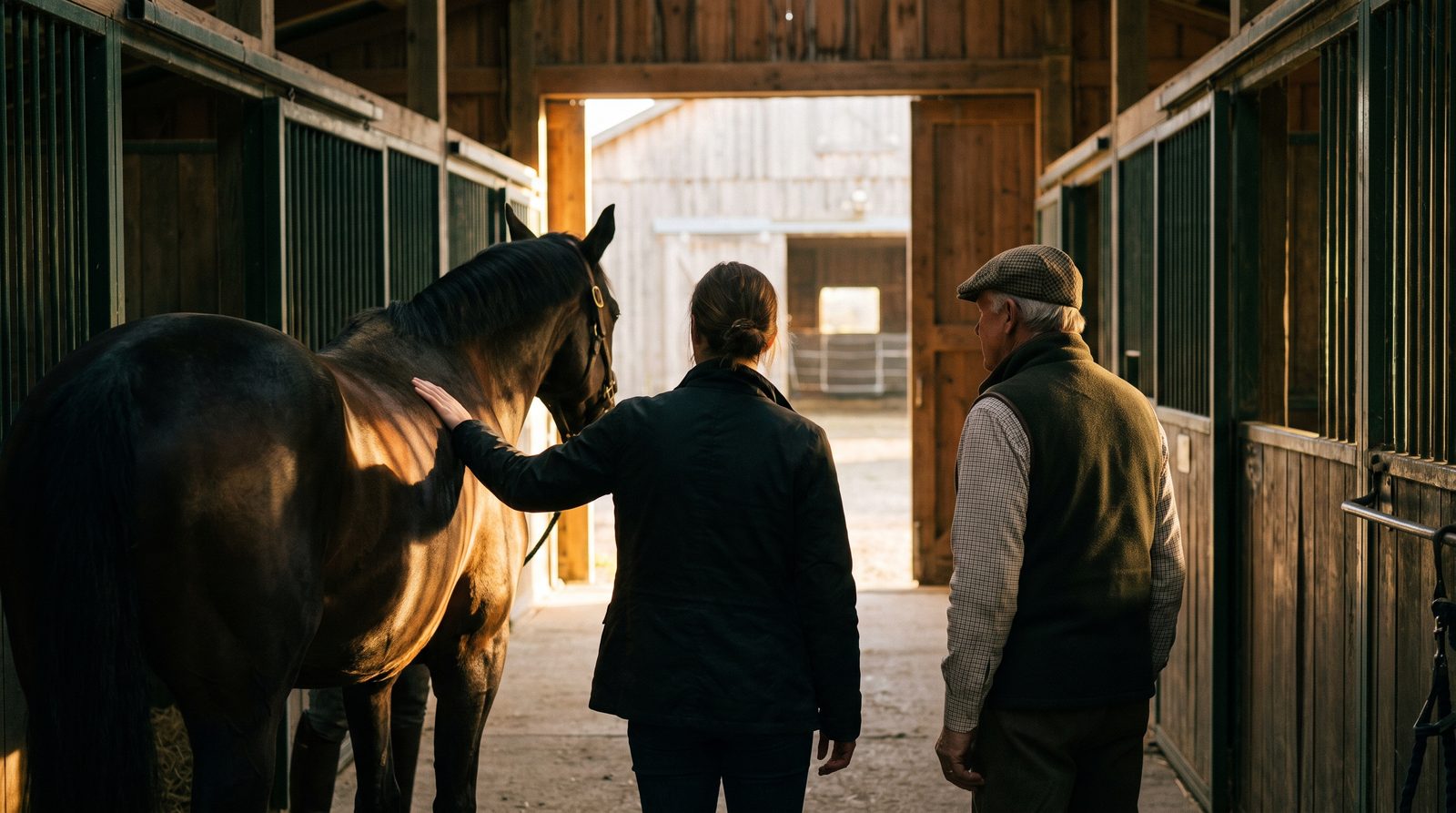
Then the single most important piece of advice in this whole guide: bring your instructor to every viewing. Pay them for their time if you need to. It is the cheapest insurance in horse shopping. They'll spot the things you can't yet, ask the questions you wouldn't think to ask, and, crucially, they'll tell you no when you've already fallen in love with a horse in the first five minutes. That happens to everyone.
It also helps to have narrowed down what type of horse you're looking for. Our guide to the best horse breeds for beginners is really a guide to why breed matters less than temperament, training and age, which is exactly the lens you want when you start reading listings.
What to ask a seller
Ask plainly and listen for specifics rather than adjectives. Vague answers are the tell.
- Why are you selling? There are plenty of good reasons. You just want to hear one.
- How long have you had the horse, and what did it do before?
- What is it doing right now, weekly? A horse that hasn't been ridden in six months is a different animal from the one in the video.
- Who rides it? If only a professional rides it, that tells you something.
- Any history of lameness, colic, ulcers, or injury? Ask directly.
- Is it on any medication or supplements? And what happens without them?
- How does it load, clip, tie, and behave for the farrier and vet? These matter more than anything you'll do in the saddle.
- Any vices or quirks? Every horse has some. Honest sellers say so.
Watch how the horse is caught and tacked up before you ride, too. If it's already saddled and warmed up when you arrive, ask to see it brought in from the field next time. There will be a next time.
Try the horse more than once, on more than one day
Any horse can have one good day, and any horse can have one bad one. A single visit tells you almost nothing reliable.
Go back. Ride it on a different day, at a different time, in different weather if you can. Ride it in the arena and outside it. Handle it on the ground, pick out its feet, walk it past something noisy. Ask to see it after a few days off, not just after a schooling session.
If a seller resists a second visit, that's information. Reasonable sellers expect it, because reasonable sellers want the horse to land somewhere it will stay.
The pre-purchase exam, and the paperwork
Have a vet you chose, not the seller's vet, examine the horse before money changes hands. This is the pre-purchase exam, and skipping it is the classic expensive mistake in first-time horse buying. It costs something up front and it can save you a great deal of grief.
A pre-purchase exam doesn't produce a pass or a fail. It produces information: what the vet finds, what it might mean for the work you want to do, and what to keep an eye on. Talk it through with your vet and your instructor together, then decide.
On paperwork, keep it boring and written down. A bill of sale naming both parties, the horse, the date and the terms. Any registration papers, and a plan for transferring them. Health and vaccination records, and a Coggins test where required for transport. If a trial period is on the table, get its length, its conditions, and who is responsible for what all written out before the horse leaves the property. Not every seller offers a trial, and that's normal.
Where to start: talk to a barn that does all of it
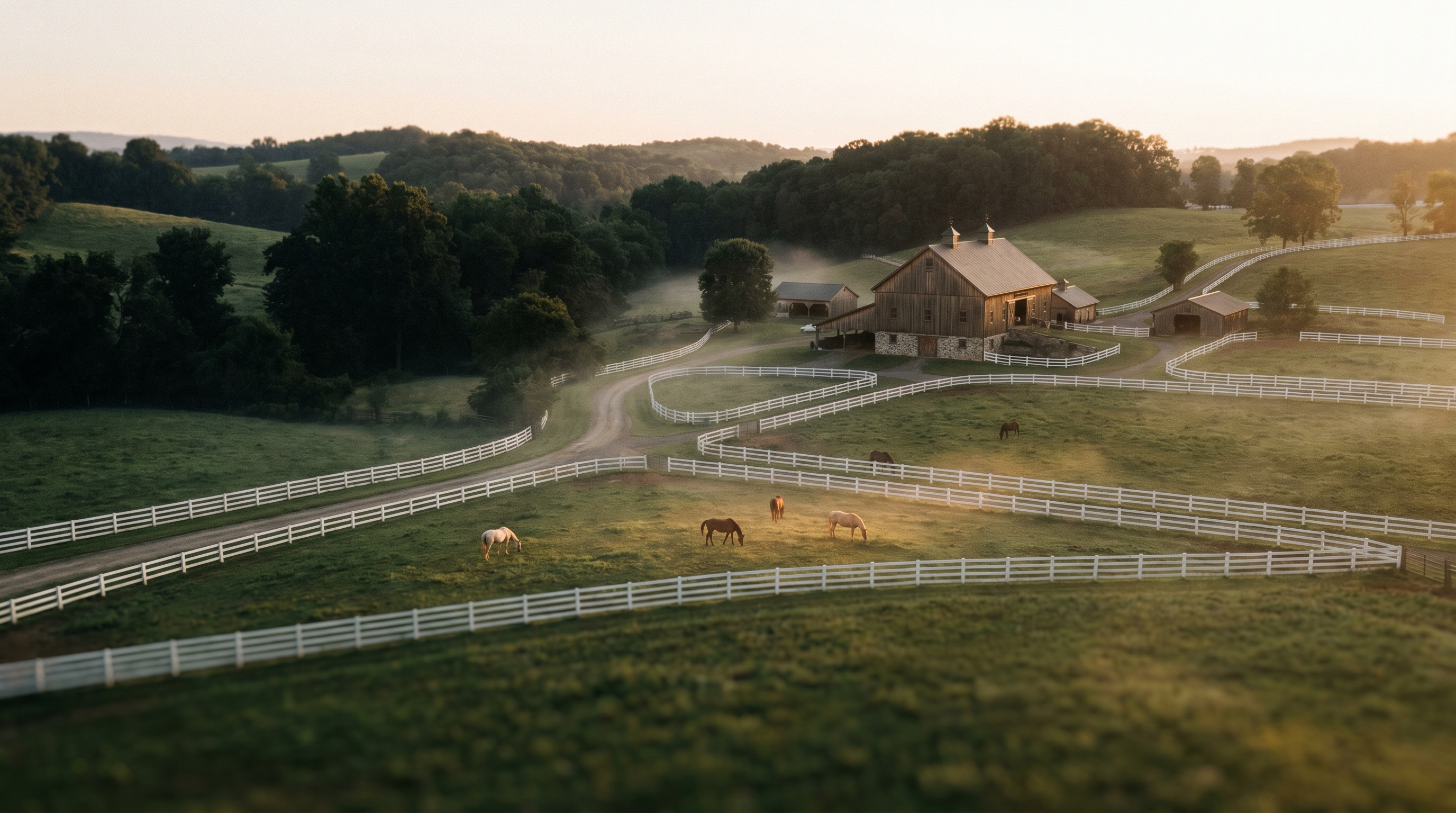
The most useful thing a first-time buyer can do is get close to a working farm and stay there a while. A place that runs lessons, boarding, training, sales and breeding under one roof sees the whole arc of horse ownership, and the people there can tell you honestly whether you're ready and what to look for.
Thunder Ridge Farms in Phillipsburg does all of those things. If you're weighing whether to buy, come talk it through with us in person. And if you're going to need somewhere for a horse to live, our guide to horse boarding in Warren County, NJ covers what full-service really includes and the questions to ask any barn before you commit.
If you're earlier than that, and honestly most people are, the right first step is more saddle time, not more listings. Our overview of horse riding lessons in Phillipsburg, NJ explains how lessons work for kids from age six and for adults starting from scratch.
We're open Tuesday through Sunday, 10 AM to 8 PM, closed Mondays, at 160 Esposito Road. Call (484) 221-3950, or book a 30-minute trial lesson for $60 and come spend some time around horses before you buy one.